


Double Kick Pedal article
The Complete Guide to Double Kick Pedal
A double kick pedal transforms bass drum playing by operating two beaters from one foot. This guide covers mechanics, technique and how to choose a pedal matching your drumming style.
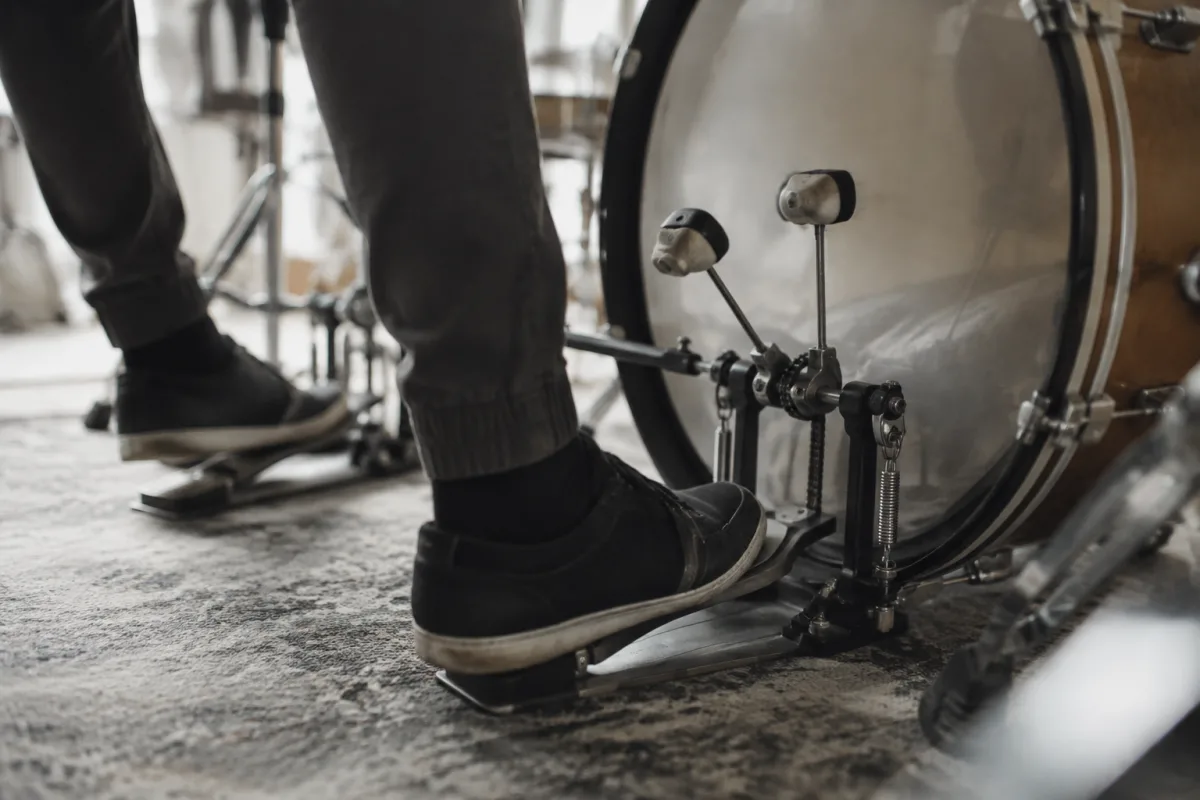
A double kick pedal is essential equipment for drummers seeking velocity, style range and technical expression. This specialised pedal operates two bass drum beaters using a single foot, transforming how drummers interact with their kit. From metal and progressive rock to electronic music production and jazz fusion, the double kick pedal has become a defining tool for contemporary drumming. Whether you're exploring faster kick patterns, adding complexity to your playing or joining a genre demanding rapid bass drum techniques, understanding double kick pedals is fundamental. This guide explores how they work, what makes them different, and how to choose one matching your drumming style.
Understanding the Double Kick Pedal
A double kick pedal is fundamentally two bass drum beaters connected to one foot pedal. The primary beater operates directly from your foot; the secondary beater is driven by a chain or belt system tied to the primary. When you press the pedal, the primary beater strikes immediately; as the pedal rises, the returning motion drives the secondary beater. This mechanical relationship allows alternating beater strikes from a single foot, enabling fast, complex bass drum patterns impossible with a standard single pedal.
The double kick pedal requires different technique than a standard pedal. Rather than simply depressing and releasing, you create a rocking motion—your ankle controls the primary beater while your foot's lifting motion drives the secondary. Learning this coordinated movement takes practice, but once mastered, opens vast rhythmic and technical possibilities.
Mechanical Types: Chain vs. Belt Drive
Double kick pedals employ either chain or belt drive systems connecting the secondary beater to the primary. Chain-drive pedals are more common and traditionally preferred. The metal chain offers direct mechanical coupling—your foot's motion is immediately transmitted to the secondary beater with minimal lag. Chain drive provides crisp, responsive feel and tight control, ideal for tight, precise playing.
Belt-drive pedals use a rubber or fabric belt instead of chain. Belts operate more smoothly and quietly than chains, absorb vibration and provide a softer, more forgiving feel. Some players prefer the smoothness; others find belts too "mushy" for the control they demand. Choice between chain and belt is personal—try both if possible.
Key Features and Specifications
When evaluating a double kick pedal, consider several factors. Beater weight affects response—lighter beaters accelerate faster (useful for speed), heavier beaters deliver more attack and power. Adjustable beater weight lets you dial in your preference. Pedal board length affects leverage—longer boards provide mechanical advantage for power, whilst shorter boards feel more responsive.
Adjustability is crucial. Quality double kick pedals feature height-adjustable footplate, adjustable beater distance, adjustable chain/belt tension and swappable beaters (hard plastic, felt-wrapped, wood-core). This flexibility lets you customise feel to match your playing style and preferred sound. Budget pedals offer less adjustment—if you choose one, ensure it's still customisable enough for your needs.
Stability is non-negotiable. A double kick pedal should remain absolutely motionless whilst playing. Cheap pedals with wobbly bases undermine technique and confidence. Quality pedals feature weighted bases and secure footplate mounting.
Technique and Learning Curve
Playing a double kick pedal requires mastering an entirely different technique than standard bass drum pedals. Rather than working the pedal up and down (like depressing an accelerator), double kick pedals demand a rocking motion—your ankle creates the primary motion whilst your entire foot creates the secondary upstroke. This is muscle memory you must develop through dedicated practice.
Beginners typically struggle initially, but improvement comes quickly with consistent practice. Most drummers reach playable proficiency in 2–4 weeks; advanced control and speed take longer. Start slowly with simple patterns—single strokes, then doubles, then rolls—building speed gradually. Rushing the learning process invites bad habits and injury.
Professional instructors specialising in technique are invaluable. Learning proper double kick form from the start prevents compensatory movements that become hard to break later.
Applications and Genres
The double kick pedal dominates metal drumming, where blast beats (alternating hand and foot patterns at extreme speed) are genre standards. Progressive rock employs complex polyrhythmic patterns requiring double kick control. Jazz fusion uses double kick for technical display and rhythmic complexity. Electronic music producers use double kick for programming intricate kick drum patterns. Grindcore and extreme metal make double kick pedals nearly mandatory.
Beyond these genres, the double kick pedal appears increasingly in pop, indie rock and even hip-hop production, wherever drummers want technical capability and stylistic flexibility.
Building Speed and Endurance
Double kick pedal speed doesn't come from force—it comes from relaxation and refined technique. Many beginners grip the footplate too tightly, creating tension that actually limits speed. Relaxed ankles and feet move faster. Building speed is progressive—start at comfortable tempos (60–80 BPM), then gradually increase. Speed naturally follows technique mastery.
Endurance develops through playing patterns at controlled tempos for extended periods. Your legs will tire initially, but conditioning improves quickly. Professional drummers spend hours daily on double kick technique, building extraordinary endurance and precision.
Choosing a Double Kick Pedal
Budget options (£100–300) work fine for learners, though adjustability may be limited. Mid-range pedals (£300–800) offer excellent adjustability, build quality and responsiveness—suitable for serious players. Professional pedals (£800+) feature premium materials, extensive customisation and are built for intensive touring and studio use.
Try pedals if possible—feel is personal. Features matter less than comfort and responsiveness matching your playing style. Read reviews from drummers with your genre and technical level, not just professionals playing far beyond your current capability. A mid-range double kick pedal matching your needs beats an expensive one that doesn't feel right.
Maintenance and Care
Double kick pedals require regular maintenance. Clean and lightly lubricate the chain or belt periodically. Check tension occasionally—chains can stretch, belts wear. Tighten footplate bolts regularly; vibration from playing can loosen them. Replace felt-wrapped beaters when worn—hard plastic underneath doesn't feel or sound right.
Proper maintenance extends a pedal's lifespan and ensures consistent feel and responsiveness.
Conclusion
A double kick pedal opens vast technical possibilities for drummers willing to invest time in learning. The learning curve is real but surmountable with consistent practice and proper instruction. Whether you're exploring technical metal, chasing complex jazz rhythms or simply expanding your drumming vocabulary, mastering the double kick pedal is rewarding and enjoyable. Start with a quality mid-range pedal, learn proper technique from a qualified instructor, practice consistently, and you'll soon be executing patterns you once thought impossible.



Comments