


Double Kick Pedal article
Double Kick Pedal for Beginners: A Complete Guide
Learning double kick pedal intimidates many drummers, but it's attainable through smart practise. This beginner's guide covers technique, drills, realistic expectations, and how to stay motivated through the learning process.
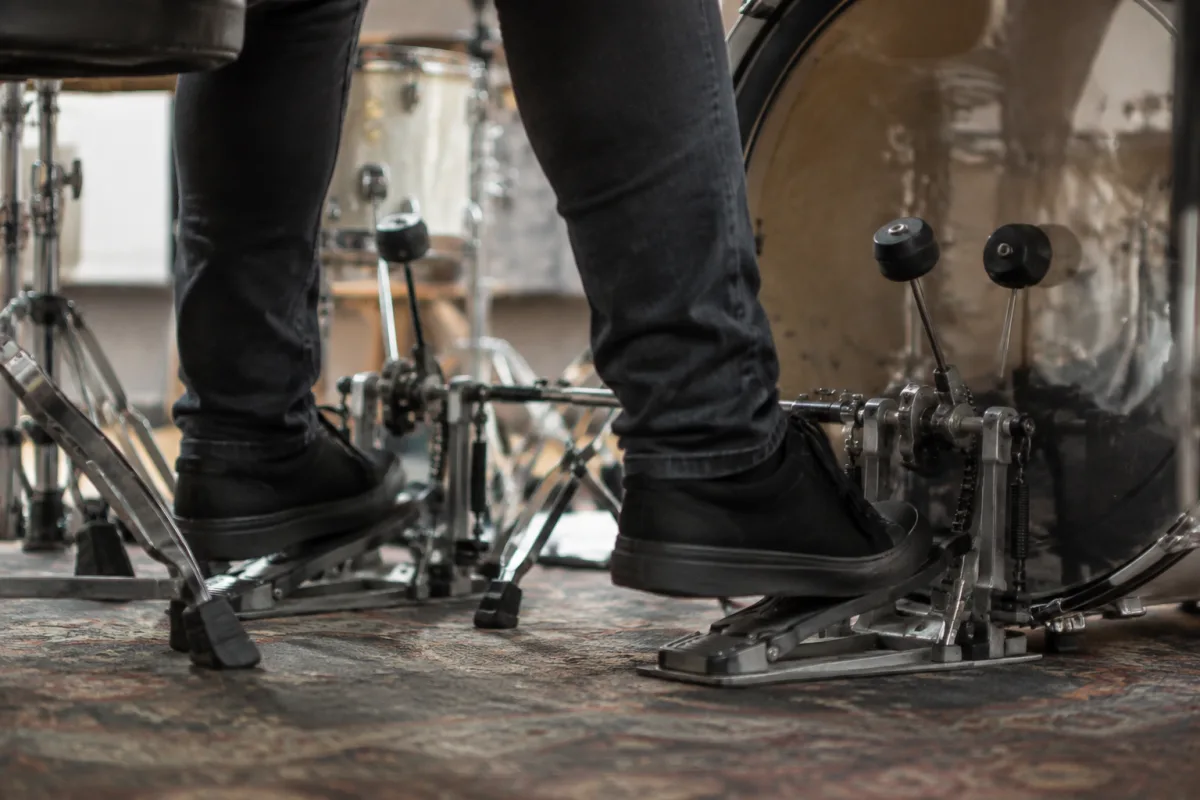
Double kick pedal technique intimidates many drummers, but it shouldn't. Learning a double kick pedal is fundamentally about coordination, repetition, and patience—exactly like any drum skill. If you're a beginner wondering whether to tackle double kick pedal, the honest answer is yes, you're ready, but approach it strategically. This guide walks you through the reality of learning a double kick pedal: what you'll need, what to expect, how to practise effectively, and how to avoid the frustrations that make drummers quit.
Why Beginners Should Consider Learning Double Kick Pedal
If you're comfortable with single-pedal technique, learning a double kick pedal opens doors. Metal and hard rock almost require double kick pedal capability. Fusion and jazz progressively demand it. Progressive rock absolutely needs it. But beyond genre demands, learning a double kick pedal develops your foot independence, timing precision, and overall drumming maturity. The effort pays dividends across all your playing.
More importantly, learning a double kick pedal proves to you that you can master unfamiliar techniques through deliberate practice. That confidence—that you can tackle difficult skills and succeed—matters as much as the actual foot speed you develop. Many beginners who overcome the double kick pedal challenge become dramatically more ambitious musicians overall.
What You Need Before Learning Double Kick Pedal
You don't need expensive equipment to start learning a double kick pedal. Here's what beginners actually require:
- A drum kit with two bass drums or a double kick pedal: Either works. A double kick pedal (two pedals on one bass drum) is cheaper and space-efficient—perfect for beginners. Some drummers prefer two bass drums for tone, but cost and portability make a double kick pedal the sensible beginner choice.
- Proper footwear: Wear flat shoes with a firm sole when learning double kick pedal. Trainer soles are too soft; you'll lack control and develop bad habits.
- A practise pad or click track: Learning a double kick pedal on drums is loud. A bass drum pad lets you practise quietly and focus on technique without disturbing flatmates or neighbours.
- Patience and realistic expectations: Most drummers spend 3–6 months learning a double kick pedal competently and years mastering it. This isn't quick, but it's attainable.
That's genuinely all you need to begin. Don't wait for the "perfect" double kick pedal or expensive extras. Most beginner drummers who overthink equipment never actually start.
Getting Started: Your First Weeks Learning Double Kick Pedal
The foundation for learning a double kick pedal is simple mechanics. Follow this progression:
Week 1–2: Ankle technique: Your ankles, not your knees or thighs, drive the double kick pedal. Sit at the kit with feet flat. Play a steady beat using only ankle motion—no knee, no hip, just ankle. It feels awkward. Do it anyway. This is the foundation of learning a double kick pedal.
Week 3–4: Single-foot patterns: Play basic patterns: bass, bass-rest-bass (quarter notes), then eighth notes. Still using one foot only. Master these before moving to both feet. This sounds tedious, but drummers who rush this phase struggle for months when learning a double kick pedal.
Week 5–8: Introducing the second foot: Play steady quarter notes on the bass drum (double kick pedal), alternating feet: right, left, right, left. Go slowly—aim for 60 bpm initially. This is the moment learning a double kick pedal "clicks" for many drummers. Suddenly your feet move independently. Celebrate this moment.
Months 2–3: Building speed and control: Gradually increase tempo from 60 to 100 bpm, then 120 bpm. By month three, if you've practised daily, you'll play competent double kick pedal patterns at moderate speeds.
Common Beginner Mistakes When Learning Double Kick Pedal
Rushing the learning process: Beginners often jump to fast patterns before mastering basic coordination. This creates tension in the legs, sloppy technique, and frustration. Learning a double kick pedal correctly takes time. Embrace the slow, boring early weeks.
Using upper-leg movement: Thigh and knee motion slow you down and cause fatigue when learning a double kick pedal. Relax the thighs, keep knees slightly bent, and let ankles do the work. This feels counterintuitive but transforms your double kick pedal control.
Neglecting posture: Poor posture makes learning a double kick pedal harder. Sit upright with the drum throne height adjusted so your thighs are roughly parallel to the ground. Your feet should rest flat on the pedals naturally. Slouching or sitting too low sabotages your learning.
Practising inconsistently: Learning a double kick pedal requires daily practise—20–30 minutes minimum. Three days a week isn't enough; your muscles forget patterns. Beginners who practise five or six days a week progress dramatically faster than inconsistent practitioners.
Ignoring your hands: Some drummers obsess over double kick pedal speed and forget their hands. Learning a double kick pedal is pointless if you can't coordinate it with independent hand patterns. Integrate your feet with basic fills from day one.
Practising Double Kick Pedal: Drills That Work
Effective practise accelerates your learning. When learning a double kick pedal, focus on these drills:
Metronome alternation: Set the metronome at 60 bpm. Play steady quarter notes on the double kick pedal, alternating feet. Increase tempo by 5 bpm every two minutes. Aim to reach 120 bpm comfortably. This single drill develops 80% of your double kick pedal control.
Single-beat isolation: Play one bass drum beat, pause, play one beat, pause. This teaches precision and prevents sloppy rushing when learning a double kick pedal.
Hands and feet coordination: Play basic grooves (right hand on hi-hat, left hand on snare) while maintaining steady double kick pedal quarter notes. This is harder than it sounds and teaches you that learning a double kick pedal is only part of drumming.
Speed bursts: Play a pattern for 16 beats at controlled tempo, then play eight beats at maximum comfortable speed, then return to normal. This trains speed safely when learning a double kick pedal.
Managing Frustration While Learning Double Kick Pedal
Learning a double kick pedal is frustrating. Some days your feet feel disconnected, control vanishes, and you question why you started. This is normal. Every accomplished double kick pedal player experienced this plateau. Expect it. Accept it. Push through it.
Break practise sessions into chunks. Twenty minutes of focused learning beats an hour of frustrated thrashing. When learning a double kick pedal feels hopeless, step away for a day and return refreshed.
Progress Milestones When Learning Double Kick Pedal
Celebrate these achievements. They signal real progress:
- Playing steady eighth notes at 80 bpm without thinking (month 1–2)
- Playing at 120 bpm with minimal tension (month 2–3)
- Adding hand independence while maintaining foot patterns (month 3–4)
- Playing basic metal drum patterns comfortably (month 4–6)
- Reaching 150+ bpm eighth notes with control (month 6–12)
Taking Your Double Kick Pedal Skills Further
Once you're comfortable with basics, learning a double kick pedal becomes exploring complexity: blast beats, polyrhythms, extreme speeds in metal contexts, and jazz independence. Watch our complete guide to double kick pedal for advanced techniques and equipment comparisons.
Your Double Kick Pedal Journey Starts Now
Learning a double kick pedal isn't a secret reserved for naturally gifted drummers. It's a skill, like any other, and skills are learned through consistent, intelligent practise. Start slow, focus on ankle technique, practise daily, and trust the process. In six months, you'll be astounded at your progress. In a year, double kick pedal will feel natural. The awkward kid sitting at the drums frustrated at their uncoordinated feet? That's where every drummer started. You're not behind; you're exactly where you need to be.


Comments