


Turntable Stylus article
Turntable Stylus for Beginners: A Complete Guide
A turntable stylus is your gateway to vinyl music. Learn what it does, how long it lasts, and how to look after it so your records sound brilliant for years.
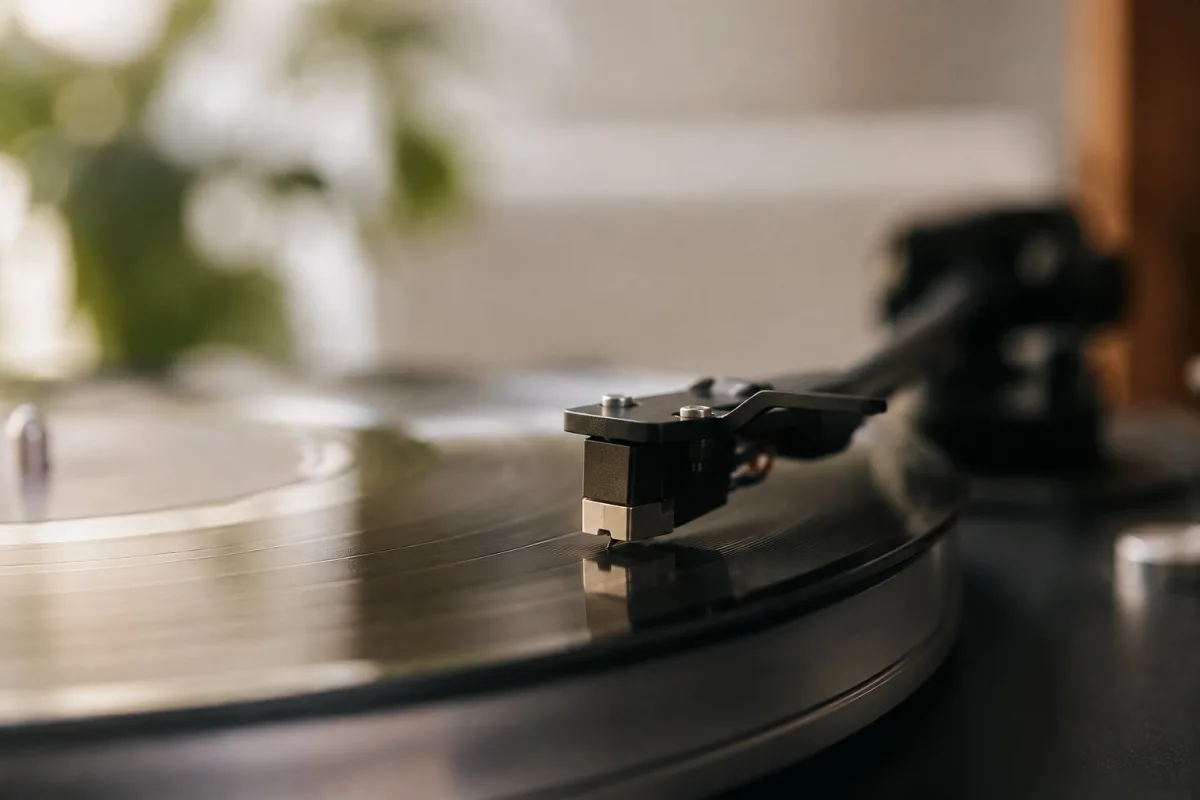
If you've just bought your first turntable or inherited one from a relative's attic, you might be staring at what looks like a tiny piece of jewellery and wondering what on earth it has to do with the music coming out of your speakers. That's the stylus—and it's genuinely the most important part of your entire turntable setup. Without it, you've got expensive furniture. With it working properly, you've got a gateway to some of the best listening experiences available.
The good news: you don't need to understand exactly how it works to look after it. You just need to know a few basics.
What That Tiny Needle Actually Does
Imagine your favourite album as a collection of impossibly thin grooves, thousands of them spiralling across each side of the record. The stylus—that diamond tip mounted on the end of a tiny arm—rests in those grooves. As your record spins, the stylus physically rides the groove walls, vibrating as it traces the audio information cut into the vinyl. That vibration travels up to your turntable's cartridge (the bit that holds the stylus), which converts those vibrations into electrical signals your amplifier understands. And that's how a mechanical needle becomes music.
Pretty remarkable, really.
The Three Stylus Types You'll Encounter
Styli come in different shapes, and the shape affects what your turntable sounds like.
Conical styli are the most common, especially on budget turntables. They're rounded at the tip and forgiving of slightly imperfect records and setups. They don't retrieve every detail possible, but they're reliable and affordable.
Elliptical styli have different vertical and horizontal radii, which means they can follow high-frequency information more accurately than a conical stylus. Most enthusiasts upgrade to an elliptical stylus because they genuinely do sound better—clearer, more detailed, with better stereo imaging.
Line-contact and more advanced profiles (MicroLine, Shibata) are the premium options. They're fantastically detailed but demanding. They require more precise setup and react poorly to dirty records or incorrect tracking force. Save these for when you've got your fundamentals dialled in.
For a beginner, an elliptical stylus is where you should aim. It's the sweet spot between detail, cost and ease of use.
Bonded Diamond or Nude Diamond?
The stylus tip itself is made from diamond (for most quality cartridges). There are two construction types: bonded and nude.
A bonded stylus has a small diamond tip glued to a metal shank. It's simpler to manufacture, cheaper, and perfectly adequate.
A nude stylus uses a larger or complete diamond piece mounted directly to the arm holding it. It might be marginally more responsive, but the difference is subtle and depends on your complete system. A quality bonded stylus will sound excellent.
Don't let anyone convince you that nude is automatically better. It isn't.
Looking After Your Stylus: The Basics
This is crucial. A stylus is delicate, and the way you treat it determines how long it lasts and how well it sounds.
Use the stylus guard: Your turntable came with a small clear plastic guard. Use it every time you remove the stylus from the cartridge or move the turntable. That guard is protecting a £20–200 investment.
Clean it carefully: If your stylus needs cleaning, brush it gently from back to front (following the groove direction). Never brush sideways or front-to-back—you can bend the tiny arm holding the stylus. Most importantly, keep your records clean. Dust on the record transfers to the stylus, and a dusty stylus sounds distorted even when it isn't worn.
Don't touch it: Avoid touching the diamond tip with your fingers. Skin oils can affect its performance and your records.
Handle with care: A stylus that's been dropped or struck might sound fine initially but could be damaged internally. If you suspect an impact, have it inspected before assuming everything is okay.
How Long Does a Stylus Actually Last?
A specialist guide suggests approximately 1,000 hours as a general reference for a diamond stylus. That sounds like a lot—and it is. That's roughly three hours of listening every single day for nearly a year. But it's only a planning estimate. Your actual mileage depends on:
— How many hours you actually use it
— Whether you keep your records and stylus clean
— Whether your tracking force is set correctly
— Whether your cartridge is properly aligned
Do all those things, and your stylus might last even longer. Neglect any of them, and you'll be replacing it sooner.
Warning Signs Your Stylus Needs Replacing
Listen for these clues:
Increased sibilance: Vocals sound hissy or harsh.
Inner-groove distortion: The later tracks on your record side sound fuzzy or distorted.
Loss of treble clarity: High notes sound dull instead of crisp.
Unequal channel balance: One channel seems quieter than the other.
Visible wear: If you inspect the stylus under magnification and it looks worn or damaged, replace it.
If you notice these signs, replace your stylus. A worn stylus doesn't just sound worse; it can actually damage your records through increased friction.
Replacement and Setup
When you do need to replace your stylus, order the exact model your cartridge manual specifies. Some cartridges have removable styli (you just buy a new stylus insert); others require replacing the entire cartridge. Your manual will tell you which.
When your replacement arrives, take time to set it up properly. Balance your tonearm, set your tracking force correctly, and align your cartridge. This takes an afternoon but pays dividends forever after. Your records and your ears will reward you.
The Bottom Line
Your stylus is the only part of your turntable that touches your records. Everything else in the chain—your cartridge, your tonearm, your amplifier—is responding to what the stylus does. Treat it with respect, keep it clean, and set it up properly. Do those things, and you've got years of excellent listening ahead.



Comments