


Turntable Stylus roundup
Turntable Stylus: A Complete Buyer's Guide
Buying a replacement turntable stylus doesn't have to be complicated. Know your cartridge model, choose the right profile for your system, and order from a trusted specialist retailer.
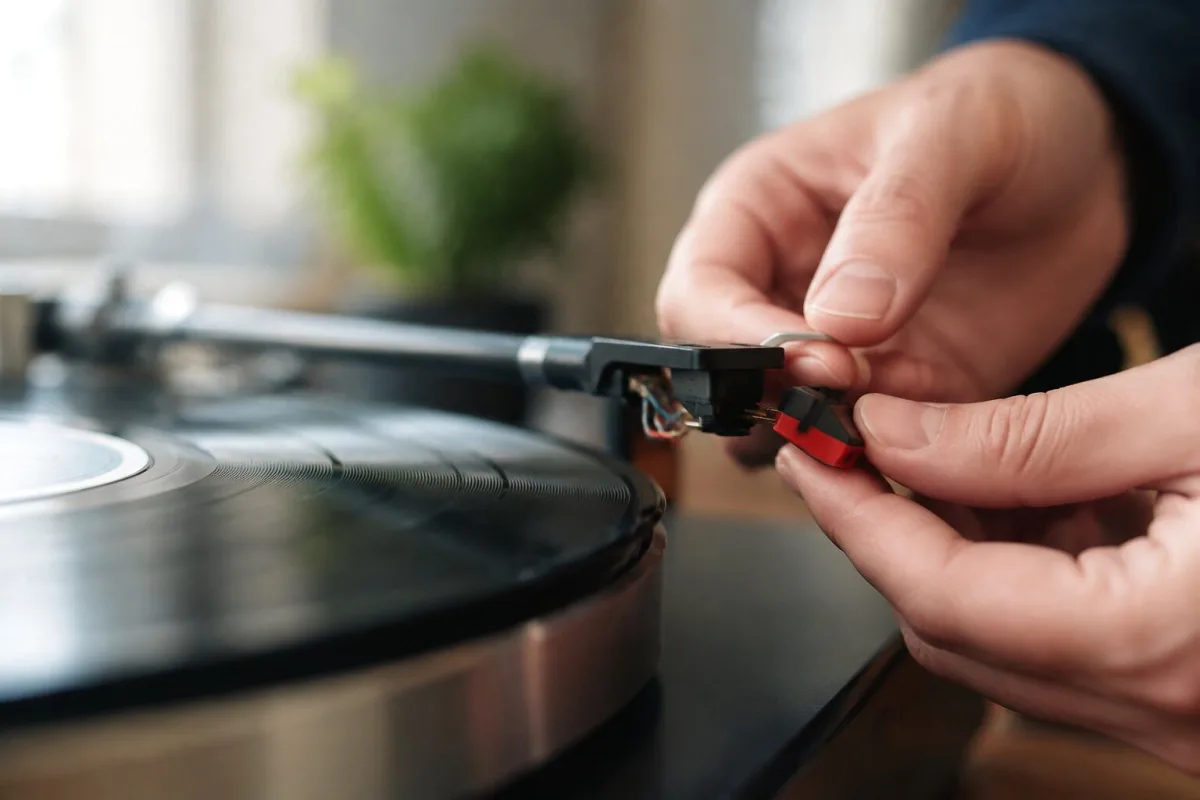
Buying a replacement turntable stylus feels straightforward at first—find your turntable model online, click a button, and wait for a box to arrive. Then you realise that "turntable stylus" returns thousands of results, none of which seem quite to match your setup. The confusion isn't accidental. Your turntable might have been sold with one cartridge, but the previous owner upgraded it. The cartridge you're looking to replace might come in a dozen variants. And the stylus replacement world is genuinely fragmented, with manufacturers using different naming conventions and compatibility rules.
The good news: once you know what to look for, buying the right stylus is manageable. It demands five minutes of accuracy, not hours of research.
Start with Your Cartridge, Not Your Turntable
This is the crucial bit. Your turntable's brand and model won't tell you which stylus you need. What matters is your cartridge—the larger assembly that holds the stylus. A Technics SL-1200, for instance, shipped with different cartridges depending on the year and region. A Music Hall turntable might have arrived with an Ortofon 2M Red or a Sumiko cartridge. If you buy based on turntable model alone, you could easily order something incompatible.
So first, identify your exact cartridge model. Look at the cartridge body itself—there's usually a model number printed on it. If you can't read it, the turntable's manual will list it. Failing that, contact the turntable's manufacturer or the retailer where you bought it. Write down the precise model number.
Stylus Replacement Types: Three Common Scenarios
Once you know your cartridge, you need to determine what type of replacement you're buying.
Removable stylus: Many modern cartridges—particularly the Audio-Technica AT-VM, Ortofon 2M and Sumiko ranges—have replaceable styli. The stylus is typically a small insert that clips into the cartridge body. You can buy just the stylus without replacing the entire cartridge. This is the simplest and most economical approach. Check your cartridge manual for the exact stylus part number.
Non-removable stylus cartridges: Some cartridges, particularly higher-end designs and many moving-coil models, have the stylus permanently bonded to the cartridge body. If the stylus wears out, you must replace the entire cartridge. This is more expensive but sometimes necessary.
Moving-magnet versus moving-coil: Most consumer turntables use moving-magnet cartridges, which are relatively affordable and have replaceable stylus options. Moving-coil cartridges, often found on high-end systems, are generally more expensive and frequently require complete cartridge replacement. If you're uncertain which you have, your manual will specify.
Information You'll Need Before Ordering
Gather this information before you click buy:
1. Exact cartridge model and part number: Audio-Technica AT-VM95ML. Ortofon 2M Red. Sumiko Olympia. Be specific. "Generic Audio-Technica cartridge" isn't enough.
2. Exact stylus part number: If your cartridge has a removable stylus, the replacement stylus has its own part number. The Ortofon 2M Red, for instance, uses an OM10 stylus; the 2M Blue uses an OM20. They look similar but aren't interchangeable.
3. Tracking-force range: Your replacement stylus (or cartridge) will have a manufacturer-specified tracking force range, usually between 1.25 and 2.5 grams. Write this down so you can set it correctly.
4. Stylus profile: Conical, elliptical, line-contact, MicroLine or Shibata. This is largely a matter of how much detail you want and how much precision your setup can handle. Elliptical is the practical middle ground for most listeners.
5. Headshell and mount type compatibility: Some tonearms use removable headshells (SME or universal types); others have fixed mounting. Verify that your replacement cartridge physically fits your tonearm.
6. Whether you need a complete cartridge or just a stylus replacement: This determines whether you're spending £30 on a stylus insert or £150–300 on a new cartridge.
Where to Buy
Reputable specialist retailers—Elusive Disc, Crutchfield, U-Turn Audio and Audio-Technica's official channels—all stock current products with accurate compatibility information. Their websites usually include detailed specification sheets. If a vendor can't confirm compatibility or won't guarantee it, buy elsewhere. Generic online marketplaces sometimes sell counterfeit or misidentified products, so avoid those unless you're absolutely certain of the part number.
Bonded Versus Nude Diamond: A Practical Consideration
When you're looking at stylus options for your cartridge, you'll see both bonded and nude diamond variants. A bonded stylus has a small diamond tip attached to a metal shank and is generally less expensive. A nude stylus uses a larger or complete diamond piece mounted directly to the cantilever and costs more.
The practical difference? A nude stylus might offer slightly improved responsiveness and reduced moving mass, but whether you'll actually hear it depends on your complete system and your ears. For most listeners, a quality bonded stylus is entirely adequate and a sensible place to start. If you're upgrading later, a nude variant might be worth exploring.
Setting Up Your New Stylus
Once it arrives, don't just drop it on the record. A new stylus demands proper setup: correct tracking force (measured with a stylus gauge or set via the tonearm counterweight), accurate cartridge alignment using a protractor, and anti-skate adjustment. Spend an afternoon getting these right, and your new stylus will reward you with years of reliable playback.
The Bottom Line
Buying a turntable stylus isn't complicated once you know what to look for. Identify your cartridge, find the correct replacement part number, check the tracking force, and order from a specialist retailer. Don't guess based on turntable model, and don't buy generic "universal" styli. Accuracy on these five points matters far more than finding the absolute cheapest option. Your records—and your ears—will thank you.



Comments