


Akai Mpc One article
The Complete Guide to Akai Mpc One
The Akai MPC One brings legendary MPC workflow to beat-makers and producers at an accessible price. Explore sampling, sequencing, build quality, and why this instrument is perfect for anyone serious about making beats.
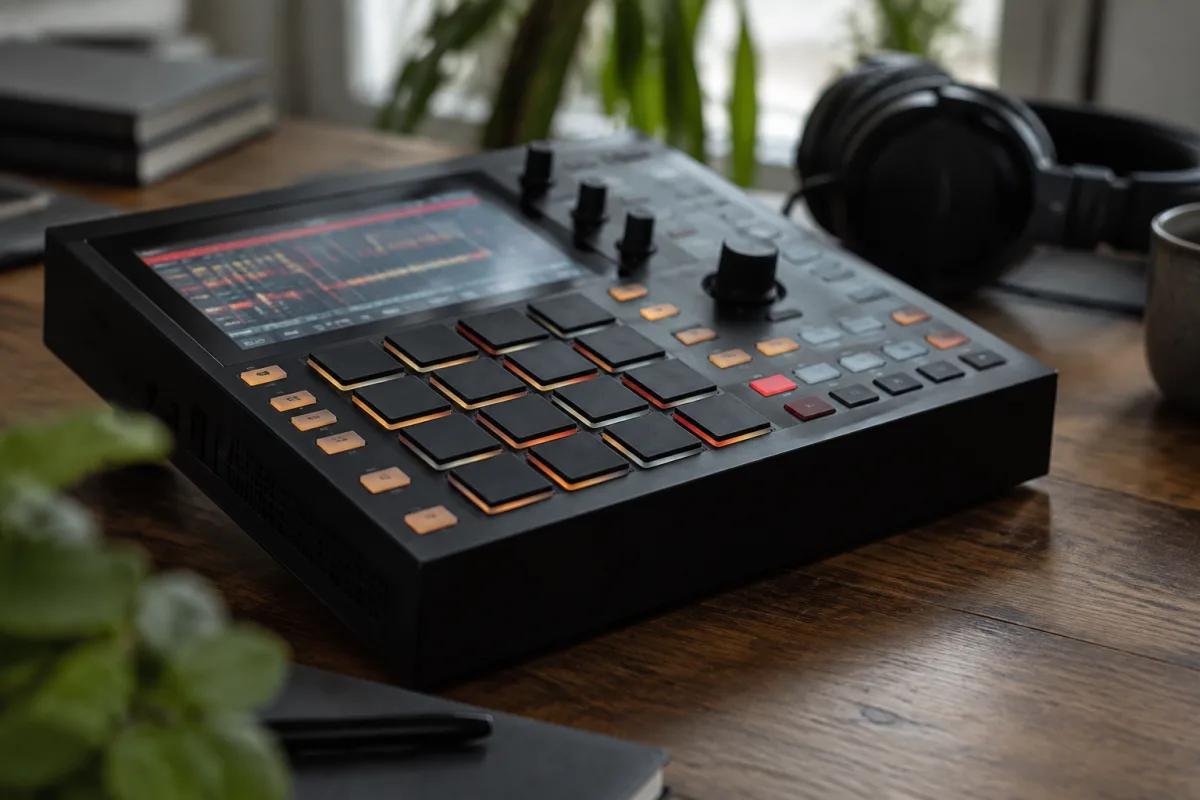
The Akai MPC One represents a turning point in beat-making equipment—the legendary MPC workflow condensed into an affordable, genuinely portable instrument that doesn't compromise on capability. For decades, the MPC has defined how producers and beat-makers work, and the One makes that workflow accessible to anyone serious about making music. If you've watched producers make beats with MPCs and felt intimidated by the price or complexity, the Akai MPC One demolishes both obstacles. This sampler delivers the core MPC experience—finger-drum accuracy, sample manipulation, and a workflow that feels natural once you understand the basics—without unnecessary features bloating the price or the learning curve.
What Is the Akai MPC One
The Akai MPC One is a compact production tool that combines sampling, sequencing, and beat-making in a single standalone unit. Unlike software on a computer, the Akai MPC One is a hardware instrument—you interact with actual pads, buttons, and a display, not a mouse. This tactile approach is exactly what made the original MPC legendary. The Akai MPC One contains the essential features from decades of MPC refinement without the boutique price.
What makes the Akai MPC One special is its balance. It's powerful enough for professional production yet simple enough that you can make your first beat within an hour of unboxing. Akai engineers stripped away complexity whilst preserving the workflow that defines MPC production. The result is an instrument you actually want to use, not a feature-overloaded device that requires consulting manuals constantly.
Build and Physical Design
The Akai MPC One ships in a compact, lightweight package that fits in a backpack. The 16-pad grid is the heart of finger drumming—each pad is responsive and sensitive to velocity, meaning subtle finger strikes produce different sounds than hard strikes on the same pad. The layout is familiar to anyone who's used an MPC: the classic 4x4 pad arrangement hasn't changed fundamentally because it works exceptionally well.
Buttons and knobs cluster around the pads logically. The display is compact but legible. The Akai MPC One includes a built-in speaker—tiny, but useful for quick checks without running cables to a mixer. Connections include USB for computer integration, audio outputs, and headphone out. Everything feels solid without being excessively heavy. Build quality is appropriate for an instrument at this price point—not boutique, but robust enough for touring.
Sound Engine and Sampling Capabilities
The sound engine in the Akai MPC One does two things brilliantly: play existing sounds and manipulate samples you record or load. Akai includes sounds in the box—drum kits, instruments, effects—so you can make complete beats immediately. The sampler allows recording audio directly into the Akai MPC One or loading samples from your computer via USB. Sample manipulation is where the Akai MPC One shines: chop, pitch, time-stretch, and rearrange audio with efficiency that makes the workflow feel natural.
The 16 pads can trigger different samples, play different pitches of a single sample, or trigger drum sounds. Multi-samples let you record one sound at multiple pitches, then play them from the pads with full keyboard range. For beat-making and production, this versatility is exactly what you need.
Sequencing and Workflow
The sequencer in the Akai MPC One captures what you play on the pads in real time, then lets you quantise, edit, and refine the performance. This is the MPC approach: play your beat, adjust it afterward. It rewards live performance sensibility rather than exhausting piano-roll editing. The Akai MPC One includes a step sequencer too for precise, programmed patterns if that's your preference.
Timing and groove are built into the Akai MPC One's sequencer. Shuffle, swing, and groove quantise options let you drift performances slightly off the grid for human feel. For producers coming from grid-locked DAW workflows, this groove control is liberating. Your Akai MPC One beats immediately sound less robotic, more musical.
Akai MPC One vs. the Original MPC
The legendary MPC3000 and MPC2000 cost thousands and are increasingly hard to find. Used original MPCs fetch premium prices because the workflow is genuinely that good. The Akai MPC One isn't identical to vintage units—the display is digital rather than a tiny LCD, the sounds are modern—but the core workflow is recognisably MPC. If you've played vintage MPCs, the One feels familiar within minutes. If you're new to MPC production, the One teaches you the workflow without overwhelming you.
Software Integration
The Akai MPC One connects to computers via USB and works as a controller for Akai's MPC software and other DAWs. This flexibility is valuable if you want to use the Akai MPC One as a dedicated beat-making tool or integrate it into a larger production setup. Firmware updates add features, so the Akai MPC One becomes more capable as Akai releases upgrades.
Learning the Akai MPC One
The learning curve for the Akai MPC One is surprisingly gentle. The controls are logical, and the layout follows conventions established over decades. Within an hour of patient exploration, you'll have a complete beat. Within a week of regular use, you'll understand the philosophy. The manual is clear, and online tutorials specifically for the Akai MPC One are abundant. Akai actively supports the instrument with firmware and community engagement.
Who Should Choose the Akai MPC One
The Akai MPC One suits beat-makers, producers, and musicians who want to leave their computer behind and work with hardware. If you sample-based hip hop, trap, or electronic music attracts you, the Akai MPC One is the entry point professionals recommend. Beginners ready to invest seriously in music production find it encouraging—you make real beats on day one. Established producers might add the Akai MPC One to their setup as a portable, independent beat-making tool.
Conclusion
The Akai MPC One proves that excellent beat-making equipment doesn't need to be expensive or complicated. By focusing on core capabilities and workflow, Akai created an instrument that works for beginners and satisfies professionals. Whether you're making your first beats or adding a portable tool to an established setup, the Akai MPC One delivers. The MPC workflow is legendary for good reason—it encourages creative play, rewards skill development, and produces music that sounds intentional. The Akai MPC One makes that legacy accessible.


Comments