


Akai Mpc One Buying guide
Akai Mpc One: A Complete Buyer's Guide
The Akai MPC One is affordable, portable, and powerful. This buying guide helps you decide if it suits your production workflow.
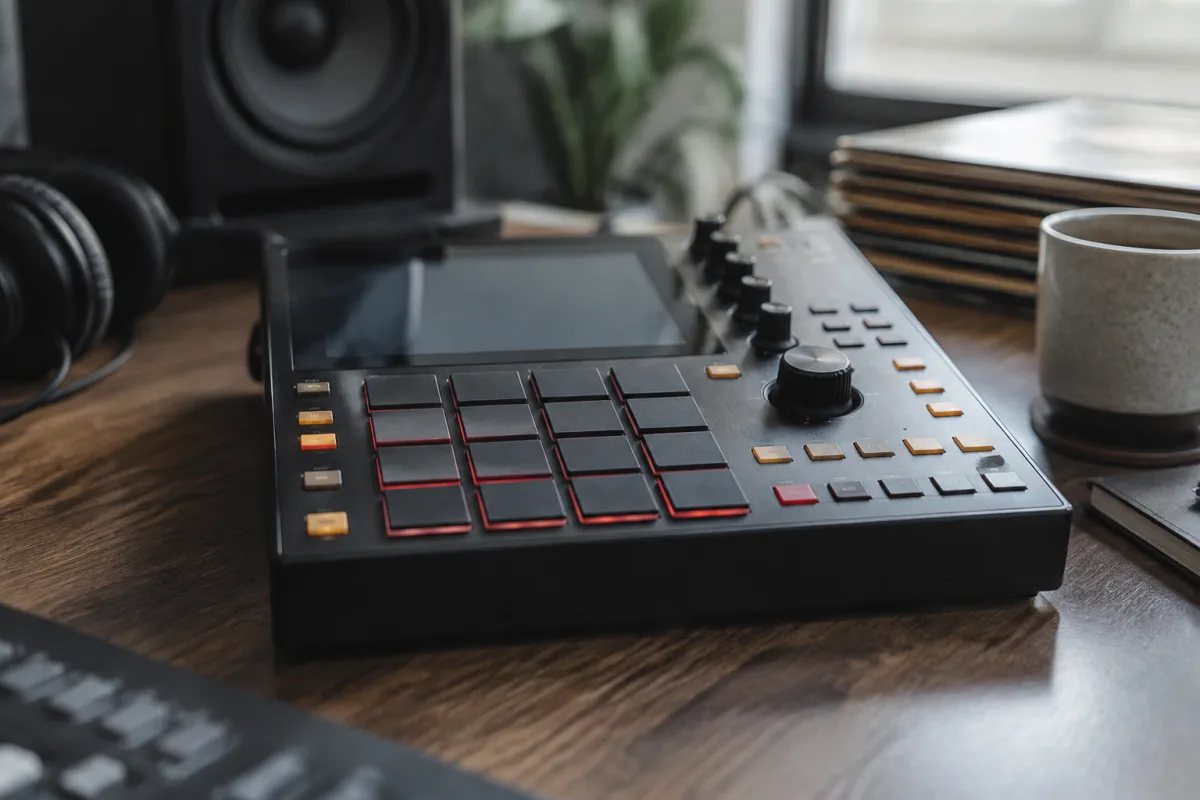
The Akai MPC One is the most accessible MPC ever made, delivering legendary beat-making power in a compact format. Yet choosing whether an Akai MPC One suits your workflow requires understanding its limitations, workflow differences, and how it compares to other controllers. This buying guide covers specifications, production workflow, and realistic use cases so you invest in the right production tool for your style.
Understanding the Akai MPC One Specifications
The Akai MPC One is a standalone sampler and beat-making instrument featuring 16 16-velocity-sensitive pads, onboard storage, and full production capabilities without a computer.
- 16GB onboard storage
- 16-pad grid layout (iconic MPC design)
- Touch-sensitive display screen for navigation
- Built-in sounds (drums, percussion, synths)
- Full sampler functionality
- Sequencer for arrangement
- USB connectivity for file transfer
- USB audio interface (for DAW recording)
- Footswitch and expression pedal inputs
Akai MPC One vs. MPC Live II and MPC Key 61
Akai’s lineup offers three distinct approaches to beat-making and production.
| Model | Form Factor | Best For | Price |
|---|---|---|---|
| Akai MPC One | Compact 16-pad sampler | Beat-making, sampling, bedroom production | £400–£500 |
| MPC Live II | Standalone with built-in keyboard | Full production, gigging, performance | £800–£1,000 |
| MPC Key 61 | Keyboard-integrated with pads | Musicians who need both keys and pads | £600–£800 |
Akai MPC One Workflow: Standalone vs. DAW Integration
The Akai MPC One works in two modes: standalone (fully independent) or as a controller for your computer DAW.
Standalone: Create entire beats, sequences, and arrangements on the hardware without a computer. Intuitive for fingers-on workflow. Ideal for bedroom producers, performers, and anyone who wants to work without screens. Limited by screen size and storage space.
DAW Controller: Connect via USB to Ableton, Logic, or any DAW. Use the 16 pads as a performance instrument, sampler trigger, or drum controller. Export sequences to your DAW for additional layers and mixing. Expands possibilities infinitely.
Most professional users employ both modes: create core beats on the hardware, then layer and arrange in their DAW.
Sound Engine: Built-in Samples and Sound Design
The Akai MPC One ships with hundreds of drum sounds, percussion, and instrument samples.
- Factory library: Professional drum kits, one-shot samples, melodic instruments. Genre-diverse from hip-hop to electronica to world percussion.
- Sampling: Record directly into the unit via microphone input. Layer your own sounds with factory library samples.
- Sound customization: Onboard pitch, time-stretch, and effects editing. Limited compared to a full DAW but sufficient for quick modifications.
- Third-party expansions: Purchase additional sound packs (£15–£50) to expand the library.
Performance and Gigging Capabilities
The Akai MPC One is portable but has practical limitations for live performance.
- Battery life: None (mains powered only). Requires external power for live use — a limitation for mobile gigging.
- Portability: Compact and lightweight. Fits backpack easily. Practical for bedroom to small venue use.
- Durability: Solid construction; designed for gigging. Pads are velocity-sensitive and responsive for expressive performance.
- Connection options: Stereo output, USB audio interface, MIDI over USB. Connect to powered speakers or a mixing console easily.
Akai MPC One Budget and Price Considerations
- Entry-level production: £400–£500 for the hardware. One of the cheapest standalone samplers available.
- Sound expansions: Budget £50–£200 for additional sound packs if the factory library doesn’t suit your genre.
- Accessories: Stand, cables, external storage (micro-SD for samples). £50–£150 total.
- Total investment: £500–£700 to buy an Akai MPC One and essential accessories.
Common Use Cases for the Akai MPC One
The Akai MPC One excels in specific contexts and falls short in others.
- Hip-hop and beat-making: Perfect. Legendary MPC workflow suits sampling and chopping. Standalone production enables flow without a computer.
- Electronic music production: Good. Solid sampler and sequencer. Lacking melodic keyboard limits melodic composition on hardware alone.
- Bedroom recording studio: Excellent. Compact, affordable, full-featured. Works alongside your DAW or stands alone.
- Live performance: Limited. No battery (requires mains power). Small screen and pads-only interface limit real-time adjustments. Better suited to pre-programmed sets than improvisation.
- Studio production (professional): Secondary tool. Works excellently as a performance input for DAW but not as a primary production workstation.
Pros and Cons of the Akai MPC One
Pros: Affordable, authentic MPC workflow, standalone production, portable, USB audio interface, large factory sound library, velocity-sensitive pads.
Cons: No battery power, no built-in speakers, small screen, limited to 16 pads (no keyboard), learning curve for sequencer, requires expansion packs for some genres.
Conclusion: Is the Akai MPC One Right for You?
Buy the Akai MPC One if you want to enter the MPC ecosystem affordably, love hands-on beat-making without a computer, or need a portable sampler for your DAW workflow. Skip it if you prioritise melodic composition on hardware, plan extensive live performance with real-time adjustments, or require portability with battery operation. At £400–£500, the Akai MPC One is an excellent entry point to legendary production tools.
Cross-Reference
For a comprehensive overview of Akai MPC One construction, features, and specifications, see our complete guide to Akai MPC One.


Comments