


Saxophone Case Buying guide
Saxophone Case: A Complete Buyer's Guide
Buying a saxophone case requires understanding protection levels, material durability, and which specs genuinely matter. This guide covers hard vs. soft cases, price tiers, and where buyers go wrong.
A saxophone case is far more than decorative packaging—it's your instrument's primary defence against damage, theft, and weather. Whether you play professionally, perform occasionally, or are just starting, selecting the right saxophone case requires understanding protection levels, material durability, interior design, and value across price points. This guide cuts through marketing claims to reveal which specs actually matter and where saxophone case buyers commonly go wrong.
Hard Case vs. Soft Case: The Fundamental Decision
Your first saxophone case choice determines your protection level and trade-offs. Each type serves different contexts:
Hard Cases for Saxophones: Rigid shell construction (typically moulded plastic or fibreglass) with shock-absorbing interior padding. Hard saxophone cases excel at protection—they withstand drops, crushing pressure in vehicles, and rough handling. Gigging musicians and professionals rely on hard cases. The trade-off: weight (8-12kg for tenor cases), bulk, and difficulty storing when not in use.
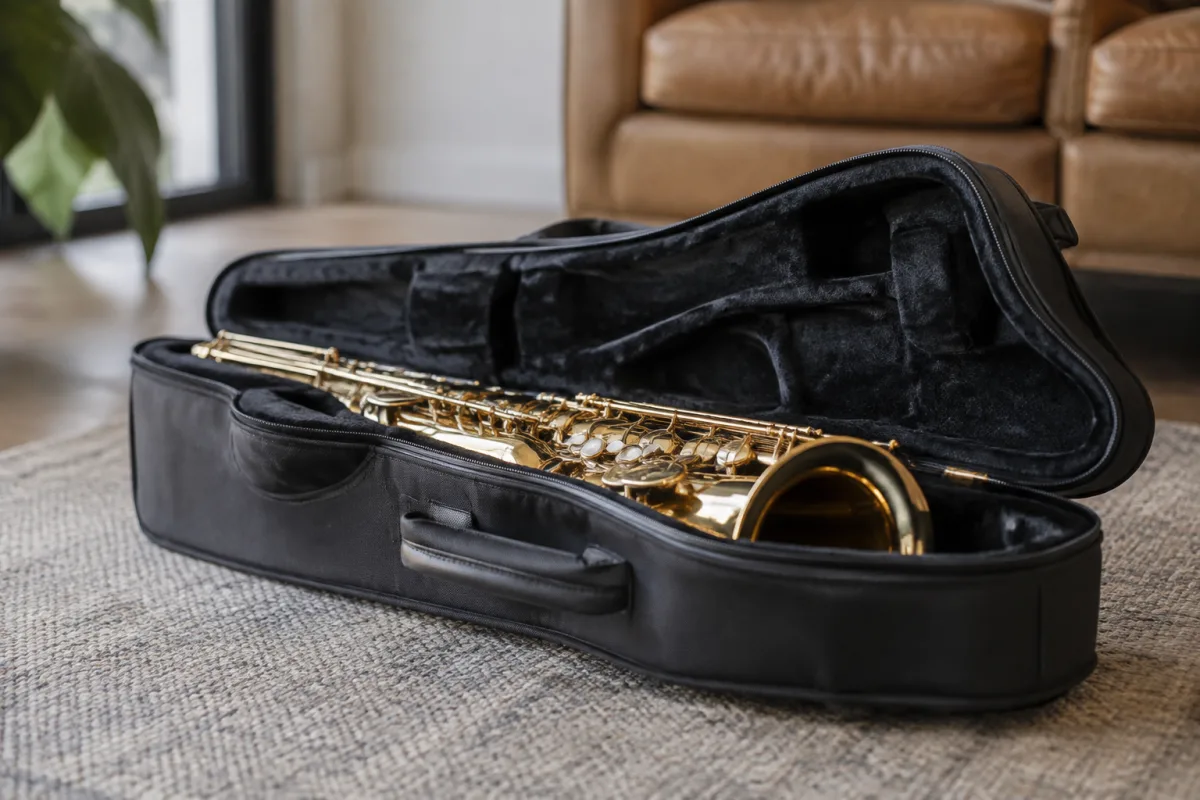
Soft Cases for Saxophones: Canvas or synthetic fabric exterior with foam padding inside. Lighter and more portable than hard cases, soft saxophone cases suit practice, lessons, and occasional gigging. Protection is adequate for normal handling but insufficient for aggressive travel or storage in vehicles. Soft cases weigh 2-4kg for tenor models.
Flight Cases (Road Cases) for Saxophones: Professional-grade hard cases with shock-mounted interiors, TSA locks, and reinforced edges. These prioritise maximum protection at maximum cost (£300-£600+). Flight cases suit touring musicians and recording studios but are overkill for most players.
Your decision should reflect usage frequency and travel intensity. Daily classroom musicians benefit from soft cases. Gigging musicians absolutely need hard cases. Occasional players splitting difference might choose mid-range hard cases.
Material Quality and Durability Across Price Points
Budget Hard Cases (£60-£120): Thin plastic shells with basic foam padding. These offer acceptable short-term protection but develop cracks, splits, and warping over 3-5 years of regular use. Clasps sometimes fail; padding deteriorates. Budget saxophone cases suit beginners auditioning the instrument or students with school-provided backup options.
Mid-Range Hard Cases (£120-£250): Reinforced ABS plastic or lightweight fibreglass with better shock absorption. These saxophone cases hold up to 10+ years of regular gigging, tolerate drops and vehicle storage, and develop minimal cosmetic wear beyond expected use. This tier represents excellent value for serious students and gigging amateurs.
Premium Hard Cases (£250-£400): High-quality fibreglass construction with precision-moulded interiors, professional-grade hardware, and superior shock absorption. Premium saxophone cases are genuinely protective, aesthetic, and rarely require replacement. Professionals and touring musicians prioritise this tier.
Flight Cases (£400+): Professional road cases with shock mounts, reinforced frames, and premium hardware. These are investments only for recording studios, touring orchestras, or full-time professional musicians.
Interior Design: Protecting Your Specific Saxophone
Saxophone cases vary in interior moulding depending on the intended instrument. Critical considerations:
Tenor vs. Alto vs. Soprano Cases: Interior moulding shapes differ for each saxophone type. A tenor case won't securely hold an alto; they'll shift during transport, risking damage. Confirm your case is designed for your specific saxophone size. Similarly, some high-F# soprano cases require different dimensions than standard sopranos. Verify exact fit before committing.
Accessory Storage: Quality saxophone cases provide pockets or compartments for reeds, ligatures, mouthpiece patches, and cleaning cloths. Budget cases sometimes have minimal storage, forcing you to place accessories loosely inside where they rattle or damage the instrument. Storage quality reflects overall case thoughtfulness.
Mouthpiece Holder Retention: The mouthpiece is the instrument's most fragile component. Quality cases feature dedicated mouthpiece holders with secure retention (clips, elastic, or moulded pockets). Budget cases sometimes expect you to store the mouthpiece inside the bell, risking damage to both. Evaluate mouthpiece storage before purchasing.
Adjustable Interior Padding: Premium cases feature removable or adjustable padding, accommodating additional accessories or different neck attachments. Budget cases have fixed padding offering no flexibility.
Weight and Portability Considerations
A heavy saxophone case becomes a burden during band practice, gigging, or commuting. Tenor saxophone hard cases typically weigh 8-12kg; altos weigh 5-8kg. Over time, carrying a heavy case takes a physical toll.
Soft cases offer significant weight advantages (2-4kg lighter) suitable for students or non-touring players. However, don't sacrifice protection for marginal weight savings unless you're genuinely transporting your saxophone on foot daily. Gigging musicians accept case weight as necessity; students can choose lighter options.
For frequent travellers, backpack-style saxophone cases with shoulder straps are worth evaluating. These convert a heavy case into distributed-load carrying, reducing fatigue over distance. Backpack-style cases cost slightly more (£150-£350) but dramatically improve portable musician experience.
Latches, Clasps, and Closure Reliability
A failed latch at a critical moment—during transport, after a performance, or on stage—can be catastrophic. When examining saxophone cases:
- Check all clasps/latches for smooth, positive engagement
- Test latch closure multiple times—they should feel solid, never loose
- Inspect for bent or cracked closure hardware (common on budget cases)
- Verify latches don't require excessive force to close (sign of poor alignment)
- Look for backup closure systems (some premium cases feature dual clasps)
Budget saxophone cases sometimes have cheaply made latches that fail or crack within months. This single component failure can eliminate case functionality. Premium cases feature reinforced, reliable latches rarely needing replacement.
Aesthetic Considerations: Does Looks Matter?
Saxophone cases range from basic black plastic to custom finishes, leather accents, and branded designs. Your music doesn't sound better in a fancy case, but aesthetics affect motivation and professional appearance. Consider:
- Will you want to display this case at rehearsals or performances?
- Does appearance affect your confidence or professionalism perception?
- Will custom finishes add cost without proportional benefit?
- Are leather accents functional improvements or purely aesthetic?
The balance: prioritise protection and functionality first, aesthetics second. A beautiful case offering poor protection is a false economy. Conversely, a perfectly functional case in your preferred colour or style might justify modest cost premium if the protection is equivalent.
Common Purchasing Mistakes to Avoid
Saxophone case buyers frequently make predictable errors:
- Buying the School's Recommended Brand Without Comparison: Schools sometimes recommend specific brands for familiarity rather than value. Compare mid-range options from multiple makers before defaulting to school suggestion.
- Assuming All Tenor Cases Are Identical: They're not. Internal dimensions vary. A "tenor" case from Brand A might not fit a tenor from Brand B perfectly. Confirm compatibility if purchasing a replacement case.
- Neglecting Weather Seal Quality: Saxophone cases near heat, moisture, or dust suffer deterioration. Quality saxophone cases feature weather-sealed interiors and external protection. Budget cases sometimes have minimal sealing, allowing dust and moisture ingress.
- Choosing Soft Cases for Gigging: Professional gigging demands hard case protection. Soft cases in touring vehicles suffer crushing, punctures, and moisture damage. If gigging is your primary use, commit to hard cases.
- Ignoring Humidity Control Features: Premium cases sometimes include humidity-resistant interiors or ventilation systems. In humid climates (UK included), these features justify cost premium, preventing mould and material degradation.
Price Versus Performance: Where Value Hides
The most expensive saxophone case isn't necessarily the best for your needs. Value emerges when:
- Mid-range hard cases (£150-£200) offer protection/weight/cost balance unmatched at budget prices
- Branded premium cases (£250-£350) reflect reputation and craftsmanship but not always superior protection
- Soft cases (£50-£120) deliver excellent value for students or low-travel players
- Used saxophone cases (£80-£150 for mid-range options) offer 5-10 years remaining life at half price
Avoid the false economy of ultra-budget cases (under £60) if you're transporting an instrument worth £300+. The initial savings vanish if the case fails, damaging your saxophone. Similarly, flight cases justify expense only for professional touring—most musicians overpay by choosing them unnecessarily.
Brand Reputation and After-Sales Support
Established case manufacturers (Yamaha, Buffet, Selmer, SKB) offer reliability and warranty support. Budget or unknown brands sometimes offer no warranty or poor customer support. Consider:
- Warranty period and coverage—does it include accidental damage?
- Manufacturer support—can you contact them for repairs or replacement parts?
- Availability of replacement hardware—if a latch fails, can you source a replacement?
- Resale value—better-branded cases hold value longer if you upgrade
New vs. Used Saxophone Cases
The secondhand saxophone case market offers excellent value if you inspect carefully. A three-year-old mid-range hard case might cost £90-£130, offering 10-15 years remaining utility. Evaluate used saxophone cases for:
- Exterior cracks or major damage (structural integrity concern)
- Interior padding condition (deteriorating padding loses protective value)
- Latch functionality (can be repaired, typically £25-£75)
- Mildew or moisture damage (irreversible)
- Overall cleanliness (indicates care history)
Unless the case is visibly damaged or smells of mildew, used mid-range cases are safe purchases, saving 30-50% versus new equivalents.
Climate and Storage Considerations
Saxophone cases endure variable climates. UK humidity presents particular challenges—mould, moisture accumulation, and material degradation. For humid environments:
- Prioritise cases with ventilation or moisture-resistant interiors
- Store saxophone cases in climate-controlled spaces (not damp basements or hot attics)
- Consider investing in silica gel packets to control interior humidity
- Opt for cases with removable, cleanable interiors if prone to moisture
Lifestyle Matching: Student, Hobbyist, or Professional
Students: Soft cases or budget hard cases (£50-£120) suffice if you're commuting to lessons. If gigging in school performances, mid-range hard cases are prudent. Budget £80-£150.
Hobbyists: Mid-range hard cases (£120-£200) balance protection and cost. You'll use your case regularly but not professionally, so durability across 5-10 years matters. Soft cases are acceptable if you rarely travel.
Professionals/Touring Musicians: Premium hard cases (£250+) or flight cases (£400+) are essential. Protection against roadwear justifies investment. Budget £300-£500+ minimum.
For detailed model comparisons and specific brand reviews, see our complete guide to saxophone cases. That resource covers individual case models, brand comparisons, and specific saxophone-case compatibility. For your purchasing decision now, focus on hard vs. soft, your usage intensity, and ensuring proper fit for your instrument type.
Your Saxophone Case Purchase Checklist
Before finalising your choice, confirm:
- Case type (hard/soft/flight) matches your usage intensity
- Case is designed for your specific saxophone type (tenor, alto, soprano)
- Latches test smoothly and feel secure
- Interior moulding fits your instrument properly
- Mouthpiece storage is secure and dedicated
- Accessory storage meets your needs
- Material quality suggests 5-10 year durability
- Weight is manageable for your transport method
- Warranty or support infrastructure is available
Your saxophone case is your instrument's guardian. Choose with care, test thoroughly, and invest at a tier matching your commitment. Done right, a quality saxophone case serves reliably for years, protecting your investment and enabling confident playing wherever your music takes you.



Comments