


Rack Mount Audio Mixer article
The Complete Guide to Rack Mount Audio Mixer
A rack mount audio mixer is the central signal processor in professional studios and live sound operations, offering professional connectivity and space-efficient integration into equipment racks.
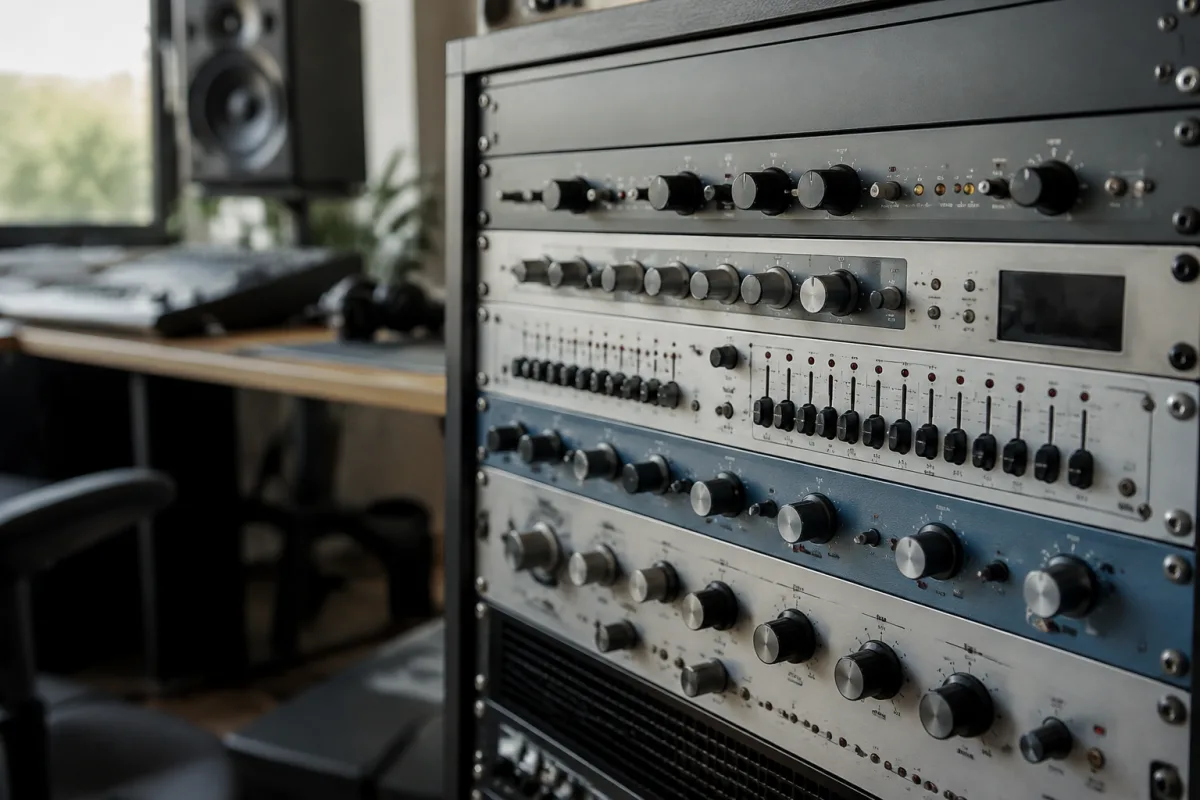
A rack mount audio mixer is the central nervous system of any professional studio, live sound operation or broadcast facility. Unlike small mixing boards that clutter a desk, a rack mount audio mixer slides into standardised 19-inch equipment racks, keeping your setup clean, organised and ready for serious work. If you're mixing multiple instruments, managing complex monitor systems, or handling live sound for bands and events, understanding rack mount audio mixers is essential to getting professional results without chaos.
What Is a Rack Mount Audio Mixer?
A rack mount audio mixer is a compact audio mixing console designed to fit into a standard 19-inch rack alongside other studio equipment. It accepts audio signals from microphones, instruments, and other sources, allows you to adjust levels, EQ, and effects on each input, combines them into a mixed output, and sends that final mix to speakers, recordings, or broadcast. Rack mount designs save physical space compared to traditional desktop mixers whilst delivering professional connectivity and routing options that desktop units simply don't provide.
Rack mount audio mixers range from compact 2U rackmount units (2 rack spaces tall, fitting 21 channels of mixing into minimal vertical space) to larger format mixers with 32 or more input channels. They're built to studio standards: balanced XLR connectors, phantom power for condenser microphones, high-quality preamps, and metering that shows exactly what's happening to your audio at every stage.
Why Choose Rack Mount Over Desktop Mixing?
Space efficiency is the most obvious advantage. A desktop mixer can take up enormous amounts of real estate on a studio desk or live sound table. A rack mount audio mixer does the same work in a fraction of the space, and because it's vertical, it leaves your desk or cart surface free for monitors, keyboards or other gear. Professional studios and touring bands almost exclusively use rack mount audio mixers because they integrate seamlessly into larger equipment chains.
Build quality is another factor. Rack mount audio mixers are engineered for constant, heavy use in demanding environments. They're designed to be patched in and left running for days without overheating or degrading. Professional preamps, robust connectors, and redundant power supplies (on high-end models) are standard features you'll rarely find in budget desktop mixers.
Types of Rack Mount Audio Mixers
Rack mount audio mixers come in several formats, each suited to different applications:
- Compact format (2-4U): Typically 8-16 input channels, perfect for small studios or touring musicians. Minimal footprint with all essential routing and EQ features. Ideal for those who need powerful mixing in tight spaces.
- Standard format (4-6U): 16-32 input channels with more extensive I/O, routing options and processing. This is the workhouse of mid-size studios and small live sound rigs.
- Large format (6U and up): 32+ channels with extensive matrix routing, multiple output busses, built-in effects and monitoring systems. Used in large studios, arenas and broadcast facilities where complex mixing demands are standard.
- Digital rack mount audio mixers: Allow you to recall settings, automate mixing changes, and process audio with digital effects. Essential in broadcast and theatrical applications where consistency and repeatability matter.
Key Features to Evaluate
When choosing a rack mount audio mixer, start with channel count. How many instruments or microphones will you simultaneously mix? Plan for more than you think you'll need; it's always easier to have unused channels than to be short. Then consider I/O connectivity: do you need AES/EBU digital I/O, ADAT optical, or just analog? Professional studios increasingly use digital I/O for cleaner signal paths and easier integration with software.
Preamp quality matters tremendously. The preamp is the first stage of amplification and the most critical stage for audio quality. A quiet, transparent preamp sounds better than one that adds noise or coloration. Check signal-to-noise ratio (SNR) specifications; anything below 100dB is a compromise in professional applications. Look also for sufficient gain range: most preamps need at least 60dB of gain to handle quiet sources like acoustc guitar whilst not clipping hot microphone signals.
EQ and processing options shape how you'll use the mixer. Three-band EQ (low, mid, high) is adequate for basic work; four or five-band parametric EQ gives you surgical control over problem frequencies. Some rack mount audio mixers include built-in dynamics processing (compression, gating) on each channel, which streamlines your setup by eliminating the need for outboard gear.
Routing and Bus Architecture
Professional rack mount audio mixers offer flexible routing that desktop units can't match. Beyond left/right main outputs, most include submix busses (allowing you to group related instruments), matrix outputs (which mix different combinations of busses), and monitor sends (feeding headphone mixes to performers). Understanding how a specific mixer's routing architecture works is crucial before purchase, since complex routing is often where the real power lies.
Look for at least four auxiliary sends (for sending different mixes to headphones, effects processors or monitors) and multiple busses beyond the main stereo output. A typical working setup might use subgroups for drums, vocals and instruments, with separate matrix outputs for front-of-house and monitor mixes. The flexibility to do this without external splitting or patching is what separates professional mixers from entry-level gear.
Metering and Signal Flow
Professional metering is non-negotiable in a rack mount audio mixer. You need to see exactly what's happening to your signal at every point: input level before EQ, output level after compression, bus levels, and final output. Digital LED or LCD meters are fine; analog VU meters look impressive but provide less precise information. Some high-end mixers include spectrum analysers that show the frequency content of your mix in real time, invaluable for catching problems before they become disasters.
Clear signal flow is equally important. You should instantly understand where audio enters, how it's processed, where it goes, and how to route it to where you need it. A well-designed rack mount audio mixer makes this flow intuitive; a confusing one wastes hours of your time debugging signal paths.
Phantom Power and Microphone Preamplification
If you use condenser microphones (and serious recording engineers do), your rack mount audio mixer must provide phantom power on every microphone input. Phantom power is a low-level DC voltage (usually +48V) that condenser microphones require to operate. Make sure your mixer supplies it independently per channel, not globally—you'll sometimes need to mix condenser mics (which require phantom power) with dynamic mics (which don't benefit from it but won't be damaged by it).
Preamp noise is critical. Quiet preamps let you record whisper-soft sources without needing excessive gain and introducing hiss. Professional preamps are usually -128dBu or quieter; anything above -120dBu audibly limits dynamic range on quiet sources.
Rack Mount Audio Mixer Applications
Studio recording setups use rack mount audio mixers as the central signal processor for multitrack recording rigs. Multiple microphones feed the mixer's inputs, the mixer's outputs feed an audio interface or tape machine, and the mixer provides a convenient place to apply EQ, compression and monitoring sends before recording.
Live sound applications use rack mount audio mixers as the core of front-of-house (FOH) and monitor mixing systems. The FOH mixer handles the main audience mix; separate monitor mixers provide independent mixes to performers on stage. Touring bands rarely travel without professional rack mount audio mixers because portability, reliability and complex mixing demands make them essential.
Broadcast and post-production facilities use large-format rack mount audio mixers to manage dozens of audio sources simultaneously, recall complex mixes instantly, and maintain broadcast-standard signal quality through a large mixing chain.
Setup and Integration
Installing a rack mount audio mixer requires proper equipment racks (19-inch standard), appropriate power distribution, and careful attention to grounding and cable management. Professional installers use short, high-quality balanced audio cables (not the cheap thin ones), route cables away from power cables (which introduce hum), and use snake cables to run multiple audio signals in bundles from stage to mixing position. Proper setup prevents hum, noise and signal loss that plague careless installations.
Modern rack mount audio mixers often include digital control interfaces (Dante, AES67, or proprietary digital audio networking) that let you manage audio over Ethernet instead of running physical cables everywhere. This is increasingly standard in broadcast and large live sound operations because it simplifies cable runs and enables remote mixing from any connected computer.
Budget and Investment Considerations
Entry-level rack mount audio mixers (compact 8-16 channel units) cost £400–800 and suit small studios and touring musicians. Mid-range professional mixers (16-32 channels with good preamps and routing) range from £1200–3500. High-end format mixers (32+ channels with extensive processing and digital control) start at £5000 and go into six figures for truly massive installations. For most working studios and live sound operations, a solid mid-range mixer offers the best balance of features, reliability and cost.
Conclusion
A rack mount audio mixer is an investment in professional workflow, sound quality and spatial efficiency. Whether you're building a recording studio, touring live, or managing broadcast audio, a quality rack mount audio mixer centralises your mixing needs, simplifies signal routing and delivers the sound quality that separates amateur setups from professional work. Start with appropriate channel count and quality preamps, understand how its routing works, and integrate it thoughtfully into your full signal chain. The time you save and the sound quality you gain will justify the investment immediately.


Comments