


Neumann Studio Speakers article
Neumann Studio Speakers for Beginners: A Complete Guide
Discover whether Neumann studio speakers fit your beginner recording setup, how to place them correctly, and whether professional monitoring accelerates your learning.
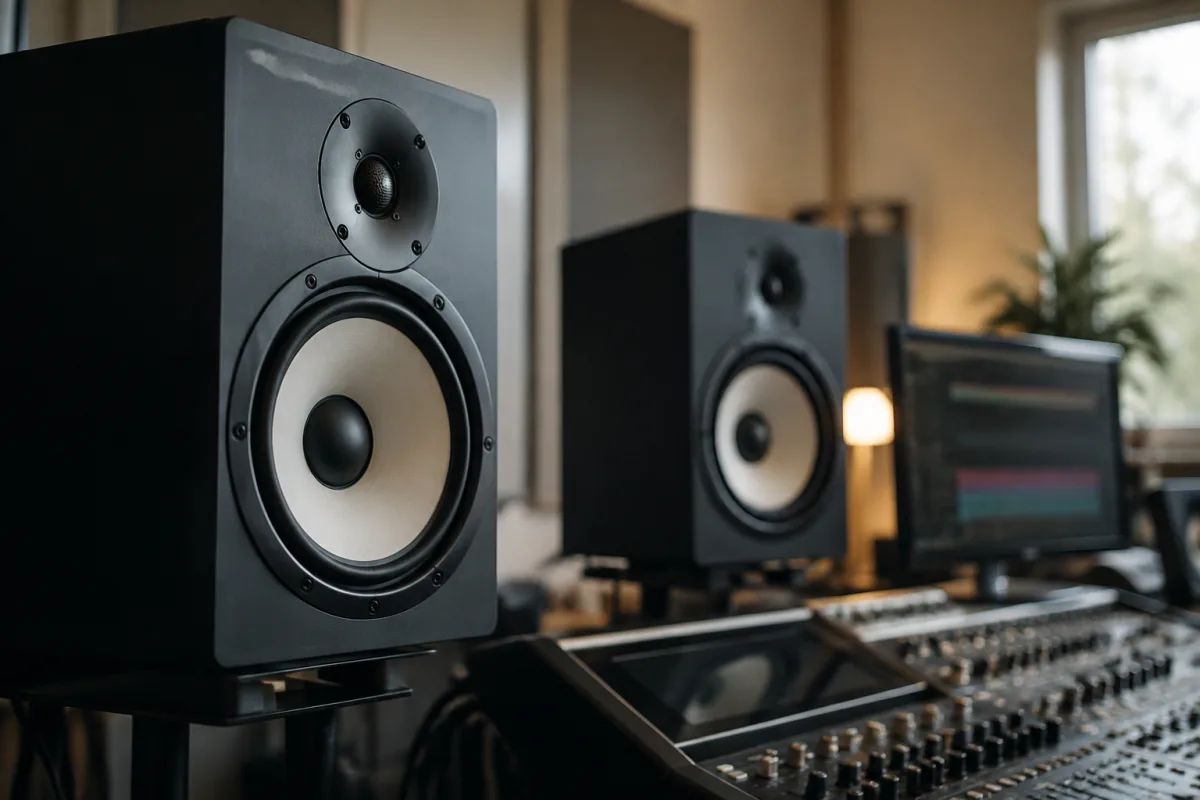
Neumann studio speakers intimidate beginners for a simple reason: they're professional-grade monitors used in world-class recording studios, and their price reflects that prestige. But understanding what Neumann speakers actually do, whether you need them, and how to use them confidently removes the mystique. This guide introduces you to Neumann monitors and helps you decide if they're right for your recording setup.
What Neumann Studio Speakers Actually Are
Neumann makes professional reference monitors—nearfield studio speakers designed to reveal what's actually in your recording with brutal honesty. "Reference" means accurate: Neumann monitors aren't meant to make your mixes sound good. They're meant to make them sound *true*, showing you every flaw, every phase issue, every frequency imbalance so you can fix it. This accuracy is why professional studios worldwide use Neumann monitors.
For beginners, this honesty is actually a gift. If you mix on speakers that flatter your recordings (making them sound better than they actually are), you'll learn slowly and painfully—your mixes will sound terrible elsewhere. Mixing on accurate speakers teaches you faster because you hear the truth immediately.
Why Would a Beginner Consider Neumann Monitors?
You might think professional-grade monitors are overkill for home recording. But there are legitimate reasons beginners choose Neumann:
- Building skill faster: Accurate monitoring lets you hear mistakes immediately, which accelerates learning. You develop proper mixing instincts sooner.
- Future-proofing your setup: If you're building a home studio and planning to mix professionally eventually, professional monitors make sense now. You won't need to replace them later.
- Long-term investment: Neumann monitors hold value and last decades. You're not throwing away money; you're making a smart investment.
- Serious commitment: Some beginners are genuinely serious about recording from day one. If you're investing time learning mixing, investing in proper monitors is logical.
That said, Neumann monitors are absolutely not necessary for beginners. If your budget is limited, starting with more affordable reference monitors is perfectly fine. Neumann is a premium choice, not a requirement.
Understanding Nearfield Monitors and Placement
Neumann monitors are "nearfield" speakers, meaning they're designed to be listened to from close distance—typically 3 to 6 feet away. This proximity means your room's acoustic properties matter less than they would with far-field speakers. Your room doesn't have to be acoustically perfect for Neumann monitors to work well.
Proper placement matters enormously:
- Distance from you: Sit about 3 to 6 feet from the speakers. Closer = more detail and less room reflection; farther = more of the room's character.
- Symmetrical positioning: Place both speakers equidistant from your listening position, forming an equilateral triangle (you and the two speakers).
- Height and angle: Speakers should be at ear level when you're sitting, angled slightly toward your ears. Many monitors have adjustable stands to help with this.
- Isolation: Sit monitors on isolation pads (usually included) to reduce vibration transfer to your desk and prevent low-frequency buildup.
Getting placement right transforms how accurate the monitors sound. Take time to position them properly before judging their sound.
Beginner Questions About Neumann Monitors
Do I need acoustic treatment if I use Neumann monitors? Not necessarily. Nearfield placement means the room's acoustics matter less than with far-field speakers. Basic treatment (absorptive panels behind and around the listening position) helps, but decent results are possible without it. Treat your space gradually as your budget allows.
How loud should I mix with Neumann monitors? Conventional wisdom suggests mixing at moderate levels—around 85dB, which is conversational volume. Loud monitoring fatigues your ears and creates mixing mistakes. Most Neumann monitors have volume controls—use them to keep levels reasonable. Loud doesn't equal better.
Will my mixes sound bad on Neumann monitors because they're too accurate? Accurate monitoring reveals flaws in your mix, which feels harsh at first. But once you fix those flaws on accurate monitors, your mix translates beautifully everywhere else. This is the whole point—accurate monitoring teaches you to make mixes that work universally.
Can I use just one Neumann monitor? Technically yes, but stereo mixing requires stereo monitoring. Using two matched monitors lets you hear your stereo field accurately. If budget is the constraint, consider more affordable monitors now and upgrade to Neumann later.
Setting Up Neumann Monitors: First Steps
When your Neumann monitors arrive, follow these practical steps:
- Unbox and inspect for damage.
- Place isolation pads under each monitor.
- Position speakers symmetrically at ear level, angled slightly toward your listening position.
- Connect the XLR cables from your audio interface to the monitor's inputs.
- Power on the monitors and set the volume control to a moderate level (around 9 o'clock position).
- Play a familiar song you know well and listen critically. How does it sound?
Let your ears adapt for a few days before making critical mixing decisions. Professional monitoring sounds different from consumer speakers initially—the flatness takes some getting used to. After a week, your ears adjust and accurate monitoring becomes your preference.
Common Beginner Mistakes with Professional Monitors
Mistake 1: Mixing too loud. Loud monitoring damages hearing and causes mixing mistakes. Keep volumes moderate—you should be able to have a conversation without shouting over your monitors.
Mistake 2: Blaming the monitors for your mix problems. If your mix sounds bad on Neumann monitors, the problem is your mix, not the speakers. Accurate monitors are showing you the truth. Fix the mix rather than blaming the equipment.
Mistake 3: Ignoring room acoustics entirely. Whilst nearfield monitoring reduces room impact, extreme acoustic problems still affect your sound. Basic treatment (absorptive panels in key positions) helps significantly and is inexpensive.
Mistake 4: Expecting instant mixing ability because of better monitors. Good monitors accelerate learning, but they don't replace the need to develop your ear and skills. Listen to professional mixes critically and learn from them.
Mistake 5: Using Neumann monitors for casual listening. These are precision tools, not entertainment speakers. Use them for mixing and critical listening, then use consumer speakers for casual music. This trains your ears to the monitors' character for mixing.
The Investment Decision
Neumann studio speakers typically cost £800–£2,500 per pair depending on the specific model. This is a significant investment, especially for beginners. Before committing, ask yourself honestly:
- Am I genuinely committed to mixing and recording seriously?
- Can I afford this investment without financial strain?
- Am I prepared to learn proper mixing technique to justify this investment?
- Would I regret this purchase if I decided mixing wasn't for me?
If all answers are yes, Neumann monitors are a sound investment. If any answer is no, consider starting with more affordable reference monitors (£200–£400) and upgrading later once you've proven your commitment to mixing seriously.
Building Confidence with Professional Monitoring
Using professional-grade Neumann monitors feels intimidating at first. You'll hear problems in your mixes you never noticed before. This isn't because the monitors are harsh—it's because they're honest. Embrace that honesty. Listen critically, fix problems, and watch your mixing improve dramatically. Over weeks and months, accurate monitoring becomes your preference, and mixing on consumer speakers will feel wrong.
For a comprehensive look at professional monitoring, studio acoustics, and how to set up a complete mixing environment, explore the complete guide to Neumann studio speakers. But the core lesson for beginners is simple: if you're serious about mixing and your budget allows, professional monitors like Neumann will teach you faster than anything else you can buy.
Your Next Steps
Before buying Neumann monitors, listen to a pair if possible. Visit a music shop or reach out to a local recording studio. Spend time with professional monitors and compare them to consumer speakers. You'll immediately hear the difference. If that accuracy appeals to you and you're committed to learning mixing seriously, Neumann monitors make sense. If it feels like overkill for now, start with more affordable options and revisit professional monitors later.


Comments