


Midfield Monitors Buying guide
Midfield Monitors: A Complete Buyer's Guide
Midfield monitors offer accurate mixing at 3-5 metre listening distances, but they demand space, treatment, and proper amplification. This guide covers what to evaluate, common pitfalls, and whether midfield monitors suit your studio.
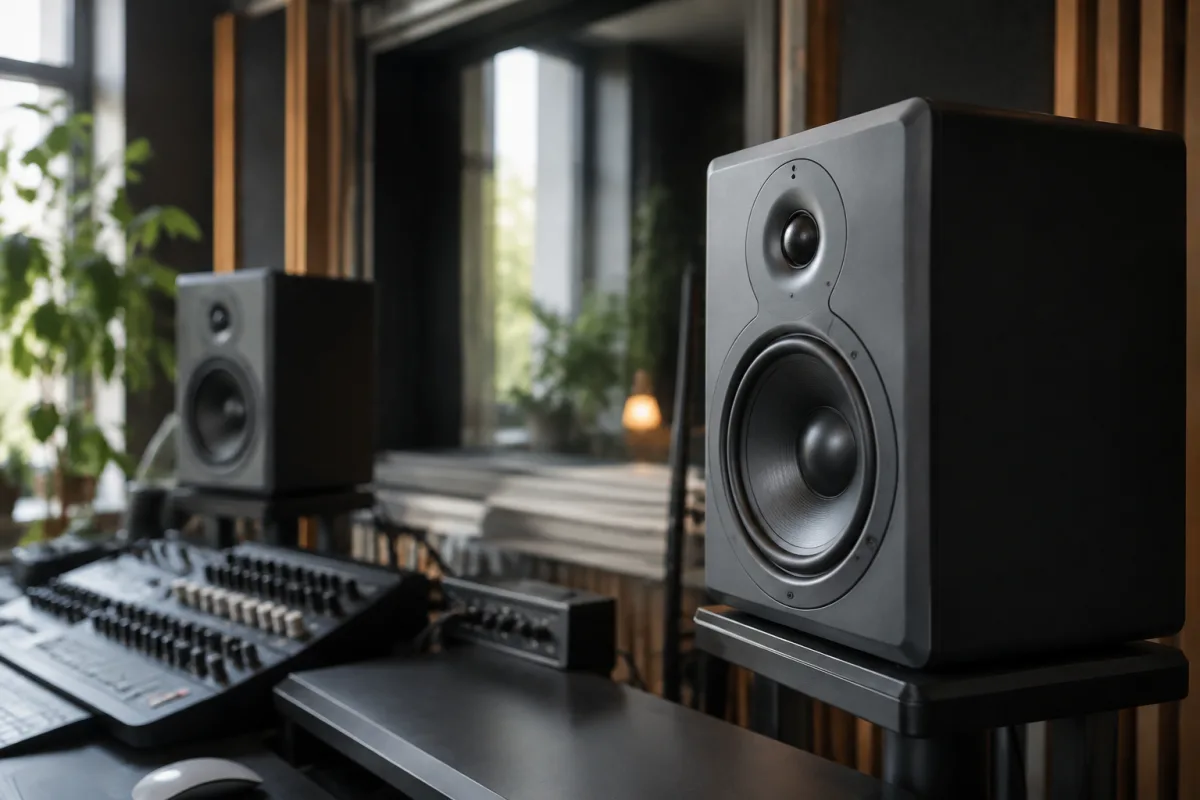
Midfield monitors are the professional mixing solution most people should have chosen but didn't. Whilst nearfield monitors dominate bedroom studios, midfield monitors offer something distinctly different: accurate monitoring at the listening distance most real studios actually use. If you're upgrading from nearfield monitors or building a proper mixing room rather than a bedroom studio, midfield monitors represent the next logical step. Understanding what makes them different—and whether they're right for your setup—requires more than just checking frequency response. This buying guide covers the practical decisions that matter, the spending tiers that deliver real improvements, and the pitfalls that waste money without improving your mixes. For a comprehensive technical overview, explore our complete guide to midfield monitors.
Understanding Listening Distance: The Fundamental Midfield Advantage
Nearfield monitors are designed for 1-2 metre listening distances. At that distance, direct sound from the monitor reaches your ears far more prominently than room reflections. Midfield monitors operate in the 3-5 metre range, which is where proper mixing rooms are actually laid out. At this distance, you hear more of the room's acoustic character alongside the direct monitor output. This means midfield monitors demand more careful room treatment, but they reward that effort with better perspective. You'll hear how your mix behaves in realistic listening environments rather than what the speakers alone produce. That's genuinely valuable information for mixes intended for playback in actual rooms (which is almost everything except headphone-centric releases). Buying midfield monitors without understanding this distance requirement leads to disappointment and wasted money.
Critical Specs to Evaluate Before Purchasing
- Designed listening distance: Check specifications for the intended listening distance. Most midfield monitors specify 3-5 metres as optimal. If you'll listen from 5+ metres, look for monitors specifically designed for that distance; wrong distance = wrong sound.
- Frequency response flatness: More important for midfield than nearfield, because room reflections become more prominent. Flatter response helps compensate for what the room will do. Verify flatness through independent measurements; frequency-response graphs in reviews are essential reading.
- Power and headroom: Midfield monitors typically need 100-300 watts per speaker to maintain headroom at proper monitoring levels over the wider listening area. Underpowered midfield monitors sound thin and forced. Verify that your amplifier and monitor cable gauge can handle sustained SPL demands.
- Woofer size range: Midfield monitors typically use 6.5 to 10-inch woofers. Larger woofers mean better bass extension but require more power and room treatment. Understand your room's ability to handle bass frequencies before committing to a specific woofer size.
- Directivity characteristics: Midfield monitors have more focused directional patterns than nearfield models. This means off-axis sound (to the sides of the monitors) changes more dramatically. You need reliable seating positions; wandering around the room reveals mixing problems that don't actually exist.
Common Purchasing Mistakes with Midfield Monitors
Mistake 1: Skipping room treatment because you're upgrading. Inexperienced buyers assume that moving to midfield monitors solves acoustic problems nearfield monitors couldn't handle. Wrong. Midfield monitors expose room problems more clearly. You'll hear flutter echo, standing waves, and modal resonances that nearfield monitors masked. Budget seriously for bass traps and reflective treatment. The monitors expose the problem; they don't solve it.
Mistake 2: Placing midfield monitors in a small room. Midfield monitors need space to work properly. In a room under 25 square metres, they never integrate well with the space. The bass response becomes problematic, and you end up fighting the room rather than using the monitors' advantages. Start with midfield monitors only if you have realistic space.
Mistake 3: Ignoring the seating distance requirement. Midfield monitors sound radically different at 2 metres versus 5 metres. If you position them for 5-metre listening but then sit 2 metres away, you're defeating their purpose and wasting the investment. Commit to the proper listening distance before buying.
Mistake 4: Upgrading only one speaker or buying mismatched pairs. This mistake is critical at the midfield level. Stereo imaging becomes more fragile as listening distance increases. Mismatched monitors provide contradictory information about left-right balance. Always buy a matched pair and upgrade both together.
Mistake 5: Underestimating amplifier requirements. Midfield monitors need proper power. Cheap amplifiers or inadequate cable gauge cause distortion at reference levels. Poor amplification makes expensive monitors sound thin and unconvincing. Budget for a proper amplifier if buying monitors without built-in amps.
Price Tiers and What They Deliver
| Price Range | Woofer Size | Typical Features | Best Scenario |
|---|---|---|---|
| £600–1,200 | 6.5 inch | Entry-level midfield, acceptable flatness, basic room matching controls, small woofer | Larger bedrooms, small professional rooms, upgrading from nearfield |
| £1,200–2,500 | 7–8 inch | Mid-range midfield, improved flatness, better bass control, enhanced monitors | Medium professional studios, serious project studios, properly treated rooms |
| £2,500–5,000 | 8–10 inch | Professional-grade midfield, excellent flatness, sophisticated controls, superior integration | Professional mixing studios, mastering rooms, large treated facilities |
| £5,000+ | 10 inch+ | Specialist equipment, exceptional build quality, custom configurations available | Commercial mastering facilities, high-end professional studios, broadcast facilities |
Questions to Answer Before You Buy
How much space can you legitimately dedicate to listening distance? Measure your room and identify where 3-5 metres of clear space actually exists. If you can't guarantee this distance, midfield monitors won't work as designed. Stay with nearfield or consider a larger room first.
Can you treat your room adequately? Midfield monitors demand proper bass traps and flutter echo treatment. This means dedicating a real budget to acoustic panels. If room treatment isn't realistic, accept nearfield monitor limitations instead.
Can you commit to fixed seating positions? Mixing on midfield monitors means staying in the sweet spot. If you move around freely, you lose the monitoring advantage. Professional studios have fixed console positions; midfield monitors work best in that context.
What amplification do you have or need to buy? Many midfield monitors require external amplification (they're passive, not powered). Budget for a decent amplifier alongside the monitors. Active (powered) midfield monitors are simpler but more expensive.
Where to Buy Midfield Monitors
Midfield monitors are more specialized than nearfield models. Buy from:
- Professional audio retailers who specialise in studio equipment
- Retailers offering substantial return windows (30+ days minimum)
- Established manufacturers with long track records
- Retailers who can advise on room treatment and amplifier matching
Avoid online-only retailers with no support, suspiciously low prices, or unclear specifications. Midfield monitors are significant investments; support and expertise matter.
The Practical Decision
Midfield monitors are genuinely worthwhile if you have the space, budget for treatment, and commitment to fixed listening positions. They're not automatically better than high-quality nearfield monitors in small rooms; they're differently suited to larger, treated environments. Assess your actual situation honestly. If you have a proper mixing room, midfield monitors reward that space with superior perspective. If you have a bedroom studio, excellent nearfield monitors with good room treatment outperform midfield monitors every time.


Comments