


JBL Studio Monitors Buying guide
Jbl Studio Monitors: A Complete Buyer's Guide
A practical buying guide to help you select the right JBL studio monitors for your room and budget. Understand size considerations, key specifications, and how to position them correctly.
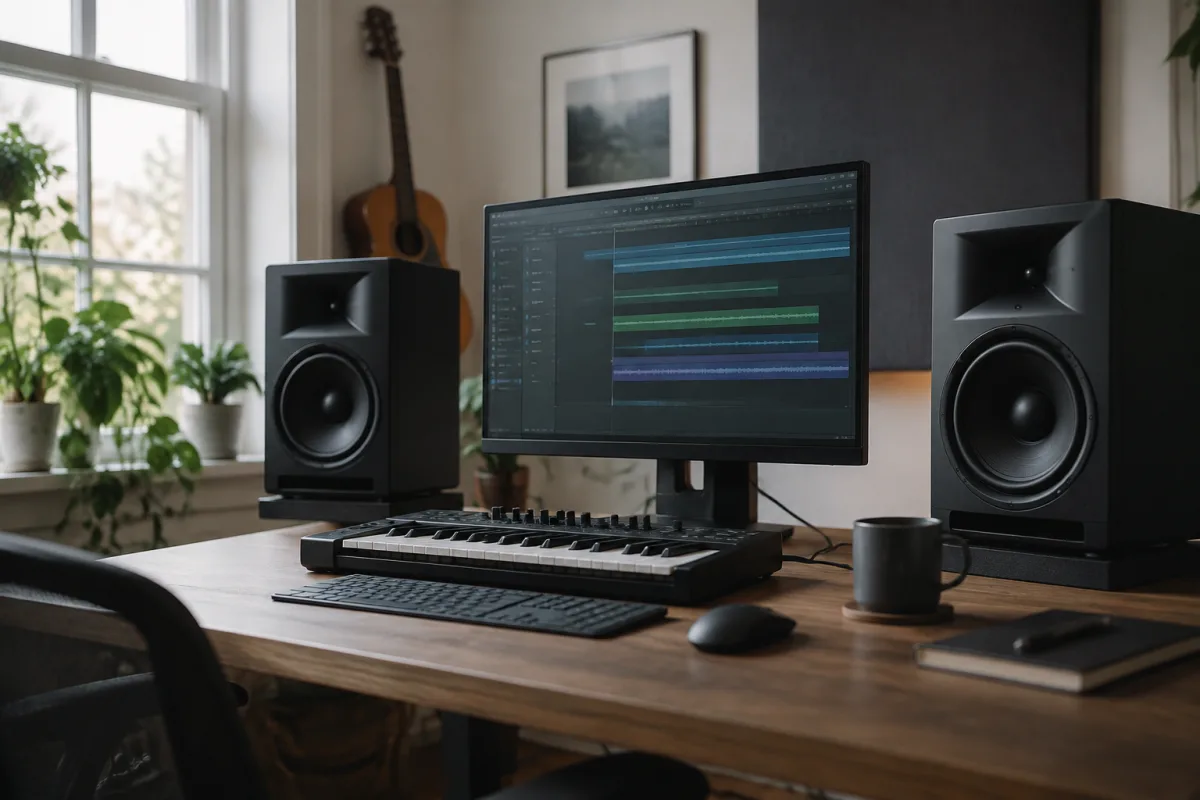
Selecting the right JBL studio monitors for your workspace is one of the most impactful decisions you'll make for your audio production. Your monitoring system directly shapes every mix you create, every master you produce, and every decision you make about levels and frequency balance. This guide helps you navigate JBL's range of studio monitor options, understand the specifications that matter, and avoid the common pitfalls that lead buyers to purchase incorrectly sized or specced monitors for their needs.
Understanding What JBL Studio Monitors Do
Studio monitors are not home stereos or hi-fi speakers. Their purpose isn't to make music sound impressive—it's to tell you the truth about what you're recording or mixing. A good pair of JBL studio monitors reproduces audio as flat and neutral as possible, revealing problems and details that consumer speakers hide. When shopping for JBL studio monitors, you're investing in accuracy and honesty, not entertainment. This distinction changes what specifications matter and how you should evaluate different models.
JBL Studio Monitor Size: The First Decision
JBL studio monitors come in three primary woofer sizes: 4-inch, 5-inch, and 8-inch. This is the most important decision you'll make when buying JBL studio monitors, as it largely determines which models will work in your space.
4-Inch JBL Studio Monitors: These compact models suit small rooms (under 12 square metres) and are ideal for desktop recording, podcasting, or content creation. They're affordable, take little space, and deliver adequate bass response for most applications. The trade-off: bass frequencies below 100 Hz become less accurate, so you may struggle with kick drum and bass guitar decisions. Consider these if your room is genuinely small and your mixes rarely feature heavy bass.
5-Inch JBL Studio Monitors: The most versatile choice for home studios and small professional rooms. A 5-inch woofer handles typical mixing tasks, reproduces bass adequately (down to around 50–60 Hz), and fits comfortably in rooms from 12 to 30 square metres. Most bedroom producers and independent recording artists find 5-inch JBL studio monitors ideal for their needs. They're the middle ground between affordability and capability.
8-Inch JBL Studio Monitors: Designed for larger rooms (25+ square metres) and serious professional environments. The larger woofer reproduces deep bass accurately and delivers higher SPL without distortion. If your room is spacious and you mix music with significant low-frequency content, 8-inch JBL studio monitors justify their higher cost. In small rooms, they're overkill and can cause bass accumulation problems due to room modes.
Measure your room and be honest about its size. Buyers frequently purchase oversized JBL studio monitors for small rooms and then struggle with muddy bass and room treatment challenges. Start smaller than you think you need.
Frequency Response and Room Acoustics
JBL studio monitor specifications list frequency response ranges, often from 43 Hz or lower. This number sounds impressive but means little without room context. Your actual bass response depends entirely on your room's acoustic treatment, not just the monitor's specification. In an untreated small room, expensive 8-inch JBL studio monitors with impressive specs sound worse than modest 5-inch monitors with proper acoustic treatment.
Before buying expensive JBL studio monitors, invest in acoustic treatment—bass traps, absorption panels, diffusors. Good room acoustics matter far more than monitor specifications. A budget pair of JBL studio monitors in a treated room delivers better mixes than premium models in a bare room.
Powered vs. Passive: Make the Right Choice
Nearly all JBL studio monitors sold today are powered (self-amplified), which means the amplifier is built into each monitor. This simplifies setup and is ideal for most buyers. You simply connect your audio interface and plug in power.
Passive JBL studio monitors (requiring external amplification) are rare and largely obsolete for new buyers. Unless you already have professional amplification equipment and a reason to integrate passive monitors, purchase powered JBL studio monitors. They're simpler, more affordable, and require less technical knowledge.
Key Specifications to Evaluate
Amplifier Power (Wattage): JBL studio monitors typically feature amplifiers between 50 and 300 watts. More power allows higher volume and better headroom, but within reason. For home studios, 50–100 watts per monitor is sufficient. Only buy higher-wattage JBL studio monitors if you know you need to mix at very high levels or have a large room. In most cases, extra wattage is unused money.
Maximum SPL (Sound Pressure Level): This measures how loud the monitor can go without distorting. Look for at least 100 dB SPL for comfortable mixing levels. Anything higher is unnecessary for typical studio work. Higher SPL isn't inherently better—it's just overkill if you're not using it.
Frequency Response Accuracy: Check whether JBL provides frequency response graphs (flatness plots) rather than just a range. A flat response curve matters far more than how low the frequency range extends. A monitor with a bumpy, colored response is useless for mixing, even if its specs look impressive.
Input Options: Ensure your JBL studio monitors have connectors matching your audio interface (typically XLR or RCA). Newer models offer USB or optical inputs—convenient for some setups but not essential. Verify connectivity before purchase to avoid compatibility problems.
Choosing JBL Studio Monitors for Your Application
For Music Production and Mixing: Choose 5-inch JBL studio monitors in a treated room. Look for models known for accurate midrange reproduction and minimal coloration. You need honesty more than bass extension—you'll add bass information through headphones and subwoofers if needed.
For Podcast and Voiceover Recording: Any JBL studio monitors work for monitoring dialogue—4-inch or 5-inch models are perfectly adequate. Your priority is comfortable listening volume and reliability, not bass reproduction. Budget-friendly JBL studio monitor options suit this application well.
For Music with Heavy Bass (Hip-Hop, Electronic, Trap): Consider 5-inch JBL studio monitors paired with a subwoofer. The monitors handle mids and highs accurately while the subwoofer provides low-frequency extension you can trust. This combination is more accurate than 8-inch monitors alone in typical rooms and costs less than large monitors.
For Large Professional Rooms: 8-inch JBL studio monitors make sense if your room is genuinely spacious (30+ square metres), treated professionally, and designed for serious mixing work. This is not the typical buyer's scenario.
Budget Considerations and Value
JBL studio monitor pricing spans wide ranges:
Entry-Level (£150–£400 per pair): Budget JBL studio monitors deliver reasonable accuracy for hobby producers, podcasters, and content creators. They sound significantly better than consumer speakers and handle most mixing tasks. Acceptable for learning but limiting for professional work.
Mid-Range (£400–£1,000 per pair): Professional-quality JBL studio monitors at this price offer accuracy and reliability suitable for serious production work. This is where most professional studios invest, finding the balance between quality and cost-effectiveness. Excellent value for practitioners and semi-professional producers.
Premium (£1,000+ per pair): High-end JBL studio monitors offer marginal improvements in accuracy and build quality. The sonic difference is subtle and often unnoticed compared to well-positioned mid-range monitors. Premium JBL studio monitors suit professional mastering facilities and commercial studios where accuracy is paramount.
Critical Buying Mistakes to Avoid
Buying Monitors Without Testing Your Room: Measure and photograph your room. Note its dimensions, materials, and current acoustic treatment (or lack thereof). This information determines whether you need 5-inch or 8-inch JBL studio monitors. Many buyers purchase the wrong size and blame the monitors.
Skipping Acoustic Treatment: Never buy expensive JBL studio monitors without addressing room acoustics first. An untreated room wastes monitor quality completely. Budget 20–30% of your monitor cost for acoustic panels and bass traps.
Choosing Based on Looks or Brand Reputation Alone: JBL's reputation is deserved, but specific models vary significantly in voicing and accuracy. Don't assume all JBL studio monitors are equally good. Read detailed reviews of the specific model you're considering, listen to audio samples, and verify frequency response graphs.
Underestimating Placement and Positioning: JBL studio monitors sound dramatically different based on room placement, distance from walls, and height. Even the best monitors positioned incorrectly sound mediocre. Budget time and possibly acoustic treatment for optimal positioning.
Pairing Mismatched Monitors: Use identical JBL studio monitors (left and right stereo pair). Mixing on different monitors creates problems that carry into your mixes. If you're adding monitors later, match exactly.
Testing and Comparison
Before committing to a purchase, listen to your potential JBL studio monitors in a proper demo environment, not a showroom with coloured lighting and promotional music. Request to hear them in a treated listening room with your own reference recordings. Listen with familiar music you know well—something you've heard on multiple speaker systems. Notice whether the midrange is clear, whether bass feels accurate (not boomy or thin), and whether fatigue sets in after extended listening.
For detailed technical information about different JBL studio monitor technologies and specifications, read our comprehensive guide on JBL studio monitors features and technology. That resource covers the technical foundations in depth—this guide focuses on helping you make the right purchasing decision for your specific situation.
Making Your Investment
JBL studio monitors represent a significant investment in your creative workspace. By understanding room requirements, specifications that actually matter, and common buying mistakes, you'll select monitors that serve you well for years. Start conservatively with monitor size, prioritize acoustic treatment alongside your monitor purchase, and listen carefully before committing. The best JBL studio monitors for your setup are the ones that work honestly in your room, helping you make accurate decisions every time you sit down to work.



Comments