


Genelec Studio Monitors article
Genelec Studio Monitors for Beginners: A Complete Guide
Genelec studio monitors are the sound of professional studios worldwide. Getting started with them is less intimidating than the premium price suggests.
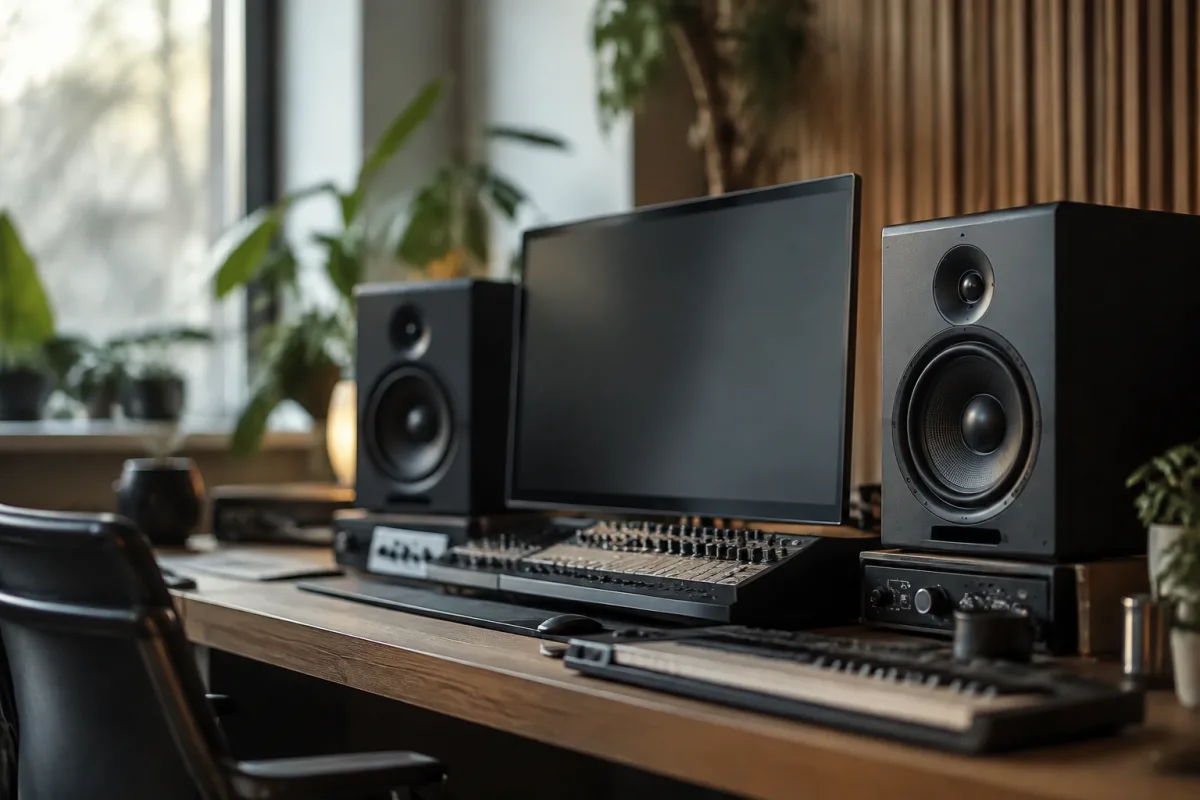
Genelec studio monitors are the sound of professional studios worldwide, and getting started with them is less intimidating than the premium price might suggest. This guide shows you how to set them up properly and what you'll actually gain from owning this calibre of equipment.
Why these speakers stand out for newcomers
Most home producers start with budget options and wish they'd invested more. Genelec studio monitors skip that regret. They're expensive, but they do something special: they tell you the truth. Your mixes translate instantly to other rooms, other systems, even cheap earbuds sound better when you've mixed on professional Genelec monitors.
The surprise for beginners is how simple they are to use. These speakers don't need complex setup rituals. Plug them in, place them right, and they work.
Choosing your first model
Genelec makes speakers in three size families. For a bedroom or small project studio, the 8-inch line (8040A, 8050A) is the standard entry point. The 8010A is smaller and works in genuinely tiny spaces or as a second pair. The 5-inch options are really for headphone-level mixing or as soffit mounts in control rooms.
Don't buy based on the number. Buy based on your room. If your studio is bigger than 20 square metres, the 8040A or 8050A range will fill it properly. Smaller than that, the 8010A or 8020D are enough.
The choice between models comes down to budget and bass extension. The 8050A goes deeper, which matters if you mix electronic music or hip-hop. The 8040A is fine for most genres and is substantially cheaper.
Room placement: the biggest impact
Genelec monitors arrive from the factory already accounting for room reflections. Put them in the wrong corner and that advantage vanishes. Get placement right and even a small pair sounds like a £20,000 system.
Create an equilateral triangle: you at the apex, each speaker at one of the base angles, roughly 1.2 to 1.5 metres away. Tweeters at ear height. Point them directly at your ears, not at a wall behind you. Most beginners angle their speakers wrong and blame them when they should blame the setup.
If your room is treated (you have absorption panels or bass traps), placement matters even more. If your room is untreated, these monitors will highlight every acoustic problem. That's actually good—it forces you to fix what's wrong.
The ISS calibration system
Many Genelec models include ISS (Intelligent Signal Sensing), which automatically powers down the speakers when they detect no sound for a few minutes. This is genuinely useful—it saves power and heat and your electricity bill.
Some people disable it because they dislike automatic shutdown. Don't. ISS exists because these units run hot and pro studios run them 24/7. Let it work. If you're doing a session and they drop to standby, you'll hear the relay click.
Tuning to your room
Professional Genelec studio monitors ship with a rear panel for adjusting bass response and high-frequency balance. This is not something you tweak casually—it's a tool for correcting the room, not colouring the sound.
Use your ears first. If they sound too boomy, you have a room bass issue, not a speaker issue. Before touching controls, add bass traps in corners. If they sound thin, the room is absorbing too much low end. If the highs sound harsh, get absorption panels before tweaking controls.
They ship with "-2" and "-4" dB switches for bass and treble. Most rooms benefit from leaving them flat. If you must adjust, move one step at a time and wait a week before deciding if you like the change.
In untreated rooms
Here's the truth: these monitors will sound harsh and boomy in an untreated bedroom. That's not the speaker failing. That's the room. Genelec equipment is so honest it exposes every acoustic problem.
If you can't treat your room immediately, don't despair. Even untreated, this equipment teaches you how to mix because it's so accurate. Your mixes will translate better than they would on cheaper speakers. Add treatment when you can afford it.
Getting the best in small spaces
Genelec makes the 8010A specifically for small rooms. It's not a compromise—it's the right tool. A single 8010A in a cupboard studio will teach you as much as an 8050A in a proper control room. The smaller pair doesn't get bass extension, but for drums, vocals, guitars, strings, it's completely sufficient.
If your bedroom is smaller than 12 square metres, one 8010A or a pair of 5040A in-wall monitors will serve you better than a pair of 8040As that boom and rattle.
The financial investment
This equipment costs £800 to £2000+ per pair. That's real money. But here's the reframe: a single bad mastering session that ruins your mix costs more. These speakers are insurance against that. They're also infrastructure—speakers you'll use for decades, not fashion items you upgrade annually.
Used Genelec models from 3-5 years ago are fine and cost 30-40% less. They've had their drivers broken in and the electronics have proved reliable. If budget is tight, buy used.
Your first week
Plan to spend the first week just listening. Listen to reference mixes you know well on your new speakers. Listen to music you love. Listen to your own old mixes. Notice what you didn't hear before. That clarity is the whole point.
Don't panic if your mixes sound awful. You're not hearing the speakers failing—you're hearing your mixing habits failing. That's good news because you can fix it.
Common beginner mistakes
Don't use these as near-fields in an untreated room and expect warmth. They won't deliver it. They'll sound like what the room is doing. Don't crank them to 100 dB to feel professional—loud listening damages your ears and will ruin your hearing before you're 40. Work at 80-85 dB.
Don't blame your speakers when mixes translate badly to car stereos or club systems. That's not them failing. That's you not understanding what you're hearing. The issue is always the person behind the console, never the accurate speakers.
Making the leap to professional
Once you understand these speakers and how they sound, mixing becomes a skill you can transfer anywhere. You'll mix better on cheap headphones because you understand frequency response. You'll spot problems in other studios because they taught you what honesty sounds like.
For deeper context on Genelec models and the options available, check out our detailed guide to Genelec studio monitors and the flagship 8010A model.
Conclusion
Genelec studio monitors are the choice of professionals because they work. For a beginner, they're a shortcut to honest mixing. The setup is straightforward, the learning curve is gentle, and the payoff is immediate—mixes that translate. Invest in good placement and a treated room, and these speakers will be the best thing you ever buy for your studio.


Comments