


Adam Speakers article
Adam Speakers for Beginners: A Complete Guide
Starting with Adam speakers doesn't require extensive technical knowledge. This beginner's guide explains what Adam speakers offer, how to set them up properly, and helps you avoid mistakes that undermine expensive equipment.
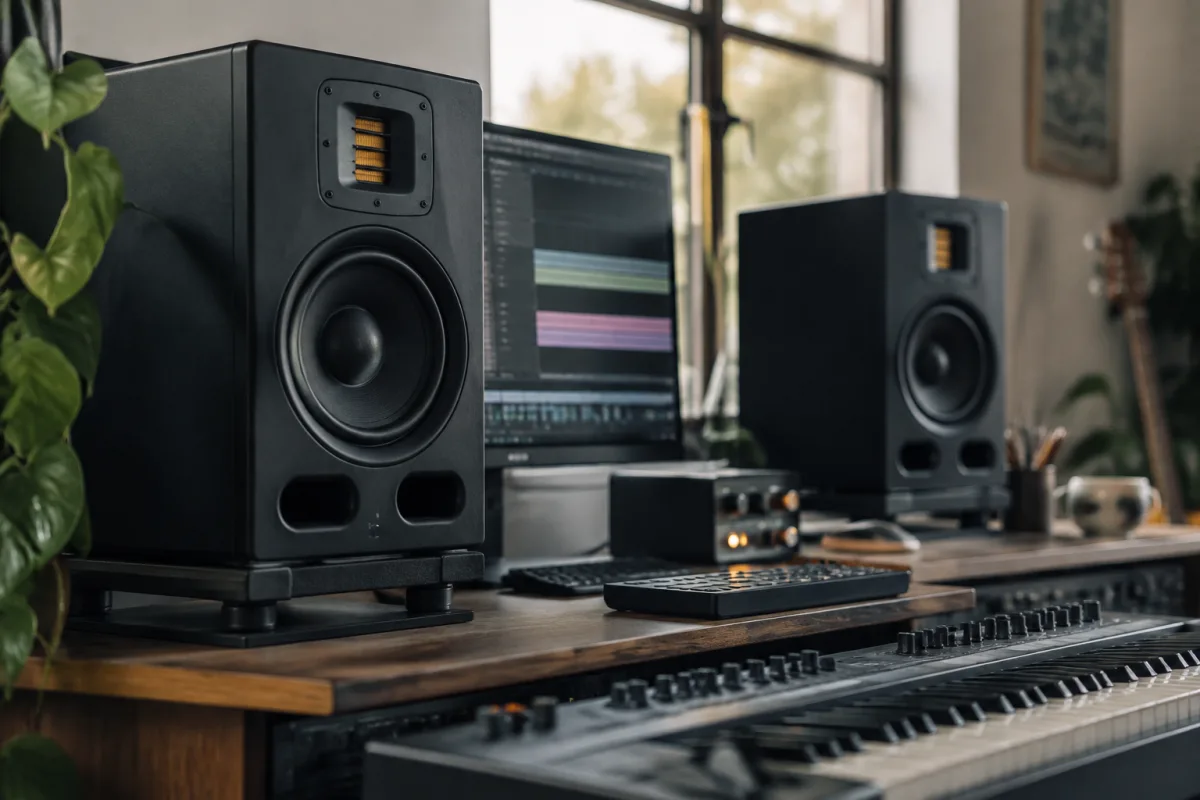
Stepping into home recording or music production often means confronting confusing decisions about monitoring—and Adam speakers represent one popular choice for beginners attempting their first studio setup. If you're new to recording, Adam speakers might sound intimidating or mysteriously professional, creating uncertainty about whether they suit your beginner situation. This beginner's guide demystifies Adam speakers, explains what makes them suitable (and sometimes unsuitable) for home recording beginners, and walks you through getting your first pair set up properly. You'll discover encouragement that professional monitoring doesn't require impossible budgets, learn the most comfortable setup approach, and avoid common beginner mistakes that undermine even expensive equipment.
Understanding What Adam Speakers Offer Beginners
Adam speakers represent professional studio monitors—speakers designed specifically for accurate audio reproduction rather than flattering, pleasant listening. This distinction proves crucial for beginners: Adam speakers don't make music sound "good" in the way consumer speakers or headphones do. Instead, they reveal exactly what your recordings contain, including problems you might prefer ignoring. This characteristic actually benefits beginners enormously, because accurate feedback from Adam speakers accelerates learning faster than misleading information from consumer audio gear.
Adam speakers employ Hexacone woofers—proprietary speaker cone technology—and soft dome tweeters, producing relatively neutral frequency response across their operating range. This neutrality means Adam speakers translate well across playback systems; mixes that sound balanced on your Adam speakers typically remain balanced on car stereos, headphones, and commercial systems. That reliability makes Adam speakers exceptionally valuable for beginner engineers learning to produce recordings people actually enjoy listening to.
Assessing Whether Adam Speakers Suit Your Beginner Situation
Adam speakers make sense for beginners genuinely committed to home recording or music production as more than casual hobby. If you're recording vocals, guitar, or drums at home, mixing podcasts or music, or producing electronic compositions, Adam speakers provide feedback essential for quality results. The investment becomes justified through regular use and genuine learning commitment.
Conversely, if you're experimenting casually or simply want pleasant-sounding speakers for listening to completed mixes, consumer speakers might better serve your needs and budget. Adam speakers demand proper room acoustics and careful setup to perform optimally; casual listening situations sometimes frustrate beginners expecting Adam speakers to solve every technical challenge independently.
Your space fundamentally affects Adam speaker suitability. Bedrooms, living rooms, or home offices can absolutely accommodate Adam speakers effectively, but they require thoughtful placement and sometimes basic acoustic treatment. Understand that buying Adam speakers initiates a learning journey—not an immediate ticket to professional-quality results.
Choosing Your First Adam Speakers: Model Considerations
Adam offers several monitor models at different price points and sizes. The A7X represents a popular entry-level choice for beginners, offering sufficient monitoring capability for most home recording applications. These seven-inch woofer monitors provide punchy low-end and clear mid-range without the expense and complexity larger Adam speakers demand.
Smaller A5X models appeal to beginners with limited space or tight budgets; they perform remarkably well in small rooms, though their reduced bass output limits deep-bass mixing confidence. Larger A8X or A11G monitors suit producers working consistently on professional projects who can afford additional expense and justify the bass extension larger drivers provide.
Begin with two Adam speakers—a stereo pair—rather than attempting mono monitoring or excessive channel count. Stereo listening from two identical monitors creates the reference environment essential for quality mixing decisions. Resist the temptation to add subwoofers initially; learning on full-range monitors first builds better instincts for frequency balance.
Essential Setup Fundamentals for Beginner Success
Placement dramatically affects how well Adam speakers perform. Position your monitors at ear level, roughly 4–6 feet apart, creating an equilateral triangle with your listening position. This geometry distributes sound evenly to both ears and reveals stereo imaging most clearly. Avoid placing Adam speakers in room corners, against walls directly, or under bass traps initially—beginners often make placement mistakes that undermine their expensive equipment's capabilities.
Acoustic treatment need not be extensive initially. Soft surfaces (curtains, blankets, carpeting) reduce hard reflections that confuse your perception. Identify your room's most obvious acoustic problems—large empty spaces, hard tile walls, excessive echo—and address those first. Beginners often overinvest in acoustic treatment; modest improvements frequently yield surprising monitoring benefits.
Connect your Adam speakers using quality XLR balanced cables from your audio interface or mixing console. Consumer RCA connections occasionally work, but XLR balanced cables reject interference and deliver cleaner signals. Don't skimp on cables—cheap XLR connectors introduce noise and instability frustrating beginners already struggling with technical challenges.
Critical Setup Details Beginners Often Overlook
Monitor level calibration profoundly affects your mixing decisions. Adam speakers should operate at approximately 85 dB SPL (sound pressure level) during mixing sessions—loud enough for clear detail perception but not so loud that prolonged listening causes fatigue. Use a sound meter app on your smartphone to measure levels initially, establishing a comfortable baseline you maintain consistently.
Most Adam speakers feature level controls on the rear panel; beginners frequently leave these at maximum, then turn down at their audio interface instead. This approach guarantees frustration and compromised audio quality. Instead, set your interface output at appropriate levels (typically -6 to -3 dB before clipping), then use Adam speaker level controls to establish your mixing volume. This workflow ensures clean signals and reliable monitoring.
Enable any calibration software included with your Adam speakers. Some models offer optional calibration processes accounting for room acoustics; beginners who skip this investment miss substantial optimization. Spend an hour following calibration procedures—the modest time investment pays dividends through improved monitoring accuracy.
Building Your First Monitoring Workflow
Establish consistent listening habits from your first session. Always monitor at the same consistent level—that 85 dB baseline. Take frequent listening breaks, stepping away from your monitors for 10–15 minutes every hour. Your ears adapt to frequencies and lose perspective without periodic rest; breaks refresh your perception and prevent dangerous decision-making from hearing fatigue.
Avoid mixing in your first sessions. Initially, use Adam speakers purely for listening—play back recordings, reference tracks, and completed mixes. This non-mixing listening builds your understanding of how Adam speakers translate audio without the pressure of making mixing decisions. After a week of casual listening, your ears adapt to the speakers' characteristics, making mixing more intuitive.
Create a small folder of reference tracks—professionally produced songs in your genre that you love. Compare your recordings against these references through your Adam speakers repeatedly. Quality reference tracks train your ears far more effectively than technical advice; let your favourite songs teach you what good sounds like on your monitoring system.
Common Beginner Mistakes with Adam Speakers and Avoiding Them
First common mistake: beginner engineers blame Adam speakers for poor results, assuming expensive monitors guarantee professional outcomes. Monitors are tools revealing problems, not solutions eliminating them. If your recordings sound thin through Adam speakers, that reflects actual recording issues—poor microphone placement, inadequate gain staging, or recording room problems—not monitor deficiency.
Second mistake: neglecting room acoustics and assuming Adam speakers alone deliver professional monitoring. A pair of Adam speakers in an untreated bedroom still receives acoustic interference from room reflections. Budget approximately 15–20% of your Adam speaker investment toward modest acoustic treatment—this ratio ensures effective monitoring without excessive acoustic engineering.
Third: attempting complex mixing immediately after purchasing Adam speakers. Give yourself 2–4 weeks of casual listening before tackling actual mixing projects. Your ears need adaptation time to interpret the speakers' accurate response; rushing this acclimatisation period guarantees frustration and poor mixing decisions.
Fourth: excessive level-setting adjustment during sessions. Beginners sometimes constantly tweak monitor volume, creating inconsistent reference conditions and training their ears incorrectly. Set your baseline level and maintain it throughout sessions unless genuinely uncomfortable.
Expansion Possibilities as You Develop
After several months of successful Adam speaker use, you might consider adding a subwoofer for extended bass monitoring. Many beginner engineers discover that full-range monitoring from Adam speakers alone leaves them uncertain about bass-heavy content. A quality subwoofer clarifies deep-bass frequencies, enabling confident decisions about kick drums, bass guitars, and electronic low-end.
Alternatively, some beginners invest in portable monitoring solutions (headphones with monitor-reference characteristics) supplementing their Adam speakers. Checking your mixes through multiple monitoring systems—speakers and headphones—reveals problems missed through single-system monitoring alone.
For comprehensive background on studio monitoring, acoustic treatment, and professional recording practices, explore our complete guide to Adam speakers.
Conclusion: Your Adam Speakers as Beginner Learning Tools
Adam speakers represent valuable investments for beginners genuinely committed to home recording and music production. They're not magic—they won't guarantee professional results independently—but they provide accurate feedback essential for learning quickly. Approach your Adam speakers as educational tools teaching you how professional audio actually sounds, not as status symbols or confidence shortcuts. With patient setup, thoughtful room consideration, and consistent practice, your first pair of Adam speakers becomes instrumental in developing production skills you'll use professionally for years to come.



Comments