


Adam Speakers Buying guide
Adam Speakers: A Complete Buyer's Guide
Looking at Adam speakers for your studio? Learn which models suit your space, what specs matter, and how to get the best sound.
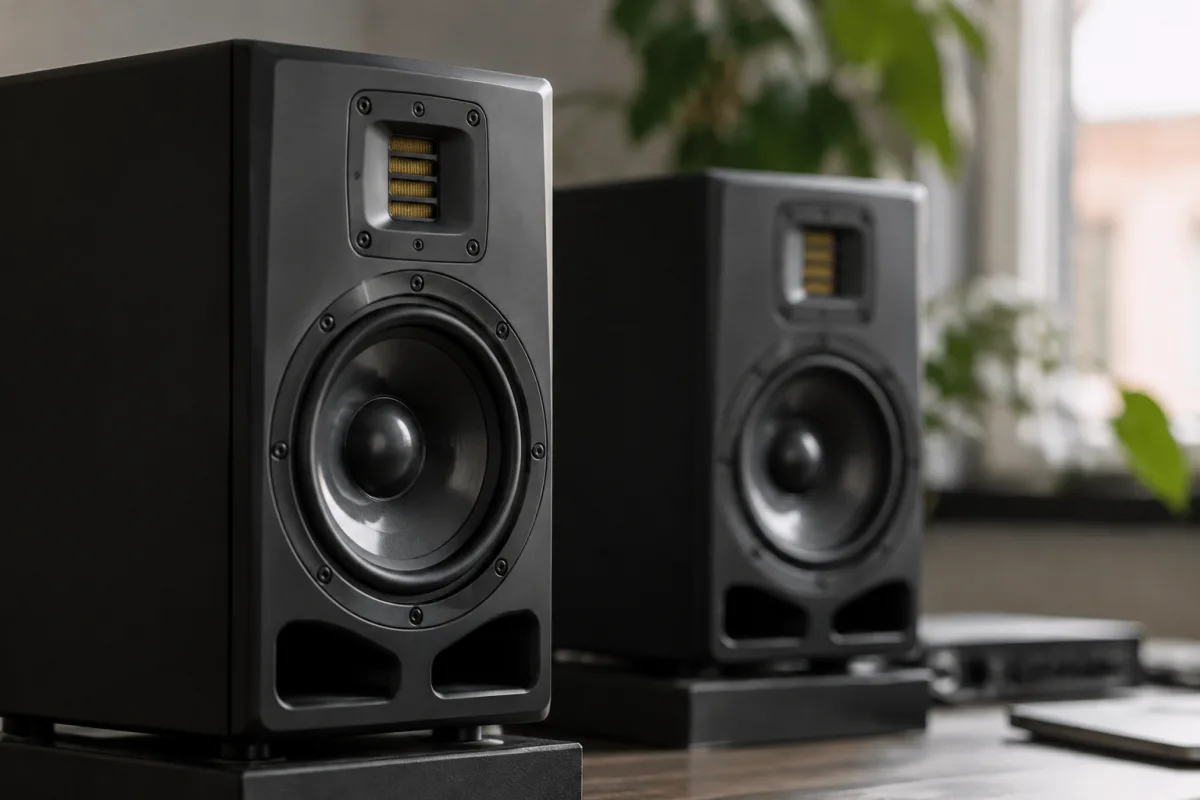
Adam speakers are a staple of professional recording studios worldwide, known for their precision, clarity and distinctive ribbon tweeters. If you're shopping for studio monitors and considering Adam speakers specifically, you need to understand what makes them stand apart, which models suit different room sizes and budgets, and whether they're the right choice for your mixing workflow. This guide covers the essential buying considerations for Adam studio monitors.
Why Adam Speakers Matter in Professional Studios
Adam speakers have earned their reputation through decades of innovation. The brand's signature ribbon tweeter technology (found in models from the A7X upwards) delivers exceptional clarity and detail retrieval—crucial for mixing accurate vocals, strings and other frequency-sensitive material. This transparency attracts mixing engineers, mastering studios and producers who demand monitors they can trust.
That said, Adam speakers are not the only choice. Neumann, Genelec and other brands offer comparable quality. The decision to buy Adam speakers should be based on your specific needs, room acoustics and listening preferences, not brand loyalty alone.
Understanding Adam's Product Range and Price Tiers
Adam manufactures several monitor lines. For most buyers, these matter:
A7X / A8X / A10X Series. The current mainstream line, ranging £600–£2,500 per pair depending on size. The A7X (7-inch woofer) suits small to medium rooms and typical home studios. The A8X handles larger spaces and deeper bass demands. The A10X (subwoofer-assisted) targets mastering rooms and critical listening environments.
Compact Series (S1X, S2A). Budget-conscious entry points (£400–£900 per pair) for nearfield monitoring in small spaces. Excellent if you mix in bedroom studios or confined offices.
Professional Series (V7/V8). Older, highly respected models (used, often £800–£2,000 per pair). Still sound excellent and hold value well—a sensible buy if budget is tight and you're willing to accept discontinued support.
Avoid impulse buying based on price alone. A £1,200 pair of Adam speakers will reveal more detail than a £300 budget monitor, but size matters too—if your room is tiny, even expensive Adam speakers won't perform well without acoustic treatment.
Key Specs to Understand When Buying Adam Speakers
Woofer Size. 5.5-inch, 7-inch, and 8-inch options exist. Larger woofers deliver more bass extension and volume capacity, but need more room to breathe. A 7-inch Adam speaker suits most home studios; 5.5-inch works for cramped spaces; 8-inch for larger control rooms.
Frequency Response. Adam's specs typically cite 43 Hz – 25 kHz or similar ranges. The lower number (frequency floor) matters more—40 Hz is adequate for most mixing, while 50 Hz means less bass detail. Check your room's size against the stated frequency response; a tiny room won't reproduce 40 Hz accurately regardless of the monitor's spec.
SPL (Sound Pressure Level) Rating. Spec'd as peak SPL at 1 meter. A 110 dB peak is comfortable for close-field monitoring in most studios; 115+ dB indicates more volume headroom. Less relevant than you might think—mixing doesn't require crushing volume, and excessive SPL fatigues your ears.
Power and Amplification. All modern Adam speakers include built-in amplifiers. Higher wattage (80–150W per speaker) supports larger rooms and higher SPL without distortion. For small rooms, 60–80W suffices.
The Ribbon Tweeter Advantage (And Why It Matters)
Adam's ribbon tweeters, found in mid-range and higher models, are a defining feature. They offer fast transient response, excellent coherence and precise detail—ideal for critical listening. Budget models (compact series, some competitor brands) use dome tweeters instead, which are perfectly competent but less transparent.
If your mixing involves acoustic vocals, classical instruments or audio post-production, Adam's ribbon tweeters justify their cost premium. For bedroom producers mixing electronic music or hip-hop, a dome tweeter monitor is often sufficient and less expensive.
Connectivity and Integration Considerations
Examine the input options on your intended Adam model. Standard features include:
- XLR (balanced) inputs—the professional standard and your first choice.
- RCA (unbalanced) inputs—less ideal but acceptable for shorter cable runs.
- Headphone monitoring output—convenient for switching between speakers and cans.
- Volume control—essential for matching input levels across multiple sources.
Newer Adam models sometimes include wireless connectivity (Bluetooth) or USB, which is convenient but not essential for studio monitoring. Confirm the model you're considering matches your existing interface or mixer output connectors; mismatched connectors require adapters and can introduce noise.
Room Acoustics Impact on Adam Speaker Performance
No monitor—Adam or otherwise—sounds good in an untreated room. Before buying Adam speakers, understand your space: is it a tiny bedroom, a mid-size control room, or a large dedicated studio? Adam speakers need proper placement (typically 1–2 meters away, at ear height on stands or carefully positioned on a mixing desk) and acoustic treatment (bass traps, absorption panels) to perform correctly.
If your room is highly reverberant with strong bass modes, even expensive Adam speakers will struggle to deliver accurate low-end. Budget some of your monitor budget toward acoustic panels and bass traps (typically £200–£1,000 depending on room size). Good speaker placement and room treatment matter more than upgrading speakers themselves.
New vs. Used Adam Speakers: Reliability and Warranty
Professional monitors are durable. A used pair of Adam speakers from 5–10 years ago will likely function flawlessly if they haven't been abused. Warranty is shorter on used gear, but Adam speakers rarely fail—they're built for heavy studio use.
New Adam speakers include full warranty (typically 2–3 years). Used models are fair value if purchased from a reputable dealer who can confirm function and offer a return window. Avoid private sales without testing, since amplifier and ribbon tweeter issues are hard to diagnose remotely.
Alternative Monitors at Similar Price Points
Before committing to Adam speakers, audition competitors: Neumann KH series, Genelec 8000 series, and IK Multimedia iLoud offer comparable sound at similar prices. Each has subtle sonic character—Adam's tend toward bright, detailed presence; Neumann toward warm neutrality; Genelec toward analytical precision. The "best" choice depends on your ear and your music style. A/B testing matters more than specs.
Conclusion: Choosing Adam Speakers That Fit Your Studio
Adam speakers deliver genuine quality and transparency that justifies their cost for serious mixing and mastering work. However, they're not magic—they require proper room treatment, careful placement and your discerning ear to sound their best. Buy the largest model your budget and room accommodate, ensure your room has basic acoustic treatment, and treat Adam speakers as an investment in mixing accuracy that will serve you for a decade or longer. Place your order from a dealer offering a return window so you can confirm they work well in your specific space before committing.


Comments