


Stereo Microphone article
Stereo Microphones: A Complete Guide
Recording in stereo captures width, depth and acoustic space. This guide covers the main stereo microphone techniques—X/Y, ORTF, NOS, M/S and spaced pair—and when to use each one.
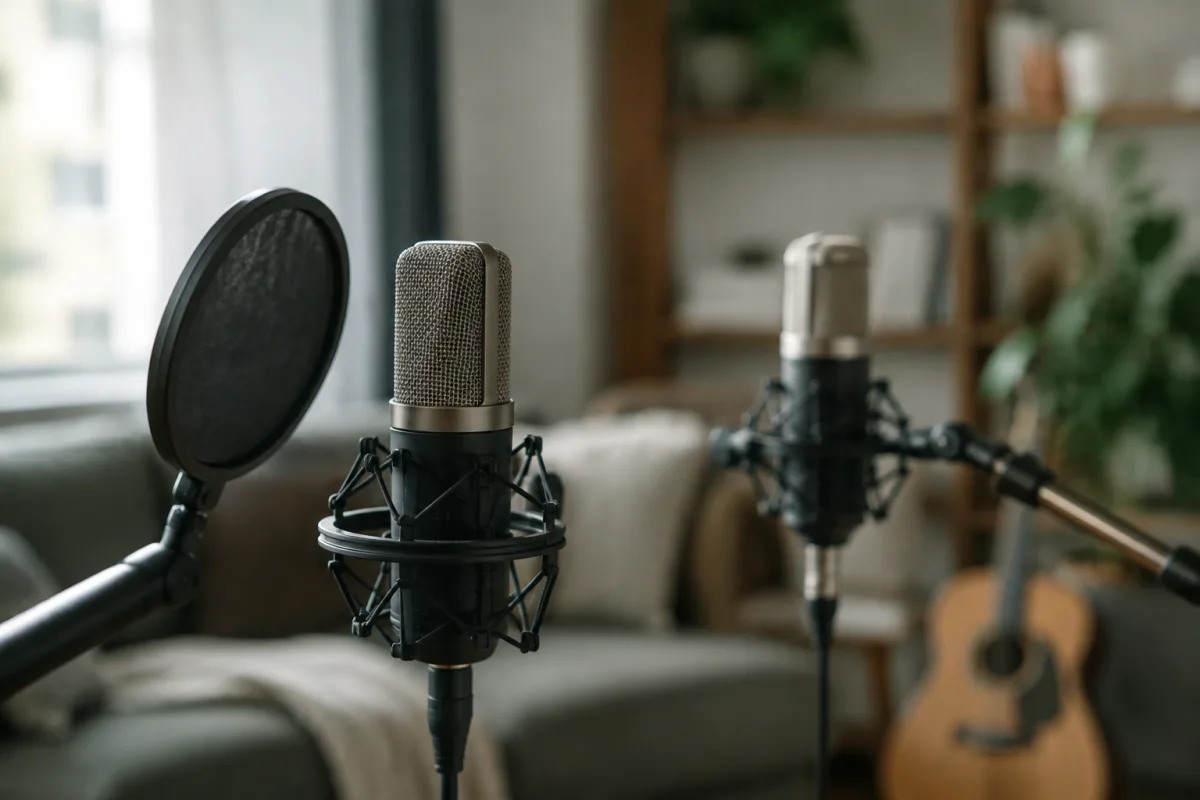
Capturing a soundscape in genuine stereo requires capturing width, depth and the sense of space. That means recording with more than one microphone, or using a stereo microphone designed to create two distinct left-and-right channels. Whether you're recording an orchestra, a guitar, drums, or a room's ambience, how you arrange your stereo microphones shapes everything: the width of the image, the stability of the center, how well it plays back in mono, and whether you hear a convincing sense of three-dimensional space. This guide walks through the main stereo miking techniques, what makes each one useful, and how to choose a method for your particular source.
What "Stereo" Microphone Means
Stereo recording captures different information in left and right channels. That difference can come from level differences (one microphone hears the source louder), timing differences (sound reaches one microphone slightly before the other), polar-pattern differences (directional microphones respond differently to parts of the sound field), or room information (reflected sound contributes depth and space).
A stereo microphone setup can be two separate microphones, a matched pair, an integrated dual-capsule stereo microphone, or a more complex array. The central trade-off is between phase coherence (how well the signals work together), mono compatibility (whether the recording still sounds good in mono), perceived width, and room capture. No single approach wins everywhere; the choice depends on your source and space.
Coincident Stereo Techniques: X/Y and Blumlein
Coincident stereo places both microphone capsules at essentially the same point in space. Because the sound reaches both capsules simultaneously, there are no timing discrepancies—excellent mono compatibility and a stable center image.
X/Y Stereo
X/Y uses two cardioid microphones with capsules as close together as possible, usually angled 90° apart. Both microphones aim toward the source, creating an array that sounds like a focused picture of what you're recording. X/Y is the most common professional stereo technique for classical music, acoustic ensembles, and any application where mono compatibility and center stability matter critically. The tonal character is relatively narrow and focused compared to wider techniques, but every detail translates cleanly to mono.
Blumlein
Blumlein uses two figure-eight microphones arranged at 90°, with capsules coincident. It captures not only the forward sound but also substantial front-and-rear room information, creating a natural sense of depth and acoustic space. The technique requires a good-sounding room; a poor room will be prominently captured. Blumlein is particularly useful when you want the ambience to be an integral part of the recording, rather than isolated instrument capture.
Near-Coincident Stereo: ORTF and NOS
Near-coincident techniques space the microphones slightly apart and angle them outward, balancing level and timing differences to create width without sacrificing too much mono compatibility.
ORTF Stereo
ORTF uses two cardioid microphones spaced approximately 17 centimetres apart and angled 110° apart. It's a practical all-purpose stereo technique that sounds more spacious than X/Y but retains reasonable mono compatibility. ORTF is commonly used for acoustic instruments, small ensembles, and general-purpose stereo recording because it provides a natural balance between width and localization. The microphones must be measured and positioned carefully for consistency.
NOS Stereo
NOS uses two cardioid microphones approximately 30 centimetres apart and angled 90° apart, creating a broader stereo image than ORTF. It combines level and timing differences effectively, producing convincing width for orchestras, ensembles and room recording. The wider spacing introduces more phase complexity; proper aiming and matching become more important than with ORTF.
Spaced Stereo: The A/B Technique
Spaced stereo, or A/B recording, places two microphones apart in front of the source, often with omnidirectional patterns. The distance can range from a few feet to considerably more, depending on the source and room. Larger spacing produces wider stereo and more prominent room sound, but increases the risk of phase cancellation and centre-image instability when the recording is summed to mono.
The 3:1 rule is a practical guideline: the distance between microphones should be at least three times the distance from each microphone to the source. This spacing generally reduces phase problems, though real-world results depend on the actual room, source size and microphone polar pattern. A/B recording excels when the acoustic environment is part of the desired sound; it's less suitable when isolation matters.
Mid-Side Stereo
Mid-side (M/S) uses a forward-facing cardioid or omnidirectional microphone (the Mid signal) combined with a sideways-facing figure-eight microphone (the Side signal). The Side signal is decoded into left and right channels through matrix processing: combining the Side signal in equal and opposite polarity with the Mid channel creates stereo width.
M/S is uniquely flexible because stereo width can be adjusted after recording by controlling the balance between Mid and Side signals. Increase the Side level and the image widens; reduce it and the recording narrows toward mono. This adjustability is invaluable in mixing and mastering, and M/S is also highly mono-compatible by design. For recordings intended for both stereo and mono playback, M/S is particularly useful.
Binaural and Immersive Stereo Systems
Binaural stereo recording simulates human hearing by placing microphone capsules on a dummy head or in ear-canal positions. The result is highly realistic when played back through headphones, but often sounds odd through speakers. Ambisonic microphones capture full 360-degree spherical information, enabling immersive spatial audio for virtual reality and advanced mixing workflows. These techniques are specialized; conventional two-channel stereo remains the standard for most music and speech recording.
Practical Considerations for Stereo Recording
Whichever technique you choose, these factors matter enormously:
- Microphone matching: Use identical microphone models with similar sensitivities for level matching and consistent off-axis response.
- Phantom power: Ensure your interface can supply phantom power to both channels if using condensers.
- Cable length: Keep cables equal length to avoid subtle timing discrepancies.
- Gain staging: Match input levels carefully; unequal gains create an unbalanced stereo image.
- Monitoring in stereo and mono: Always reference your recording in mono to check for phase issues, cancelled frequencies or center-image collapse.
- Room acoustics: A live room enhances spaced and Blumlein techniques; a dead room favours coincident methods.
- Source positioning: Small adjustments in microphone angle and distance change width, balance and centre stability significantly.
Choosing a Stereo Technique for Your Source
For orchestra and classical music: ORTF or NOS offer natural balance; X/Y is excellent for critical broadcast work. For close-miked acoustic instruments or drums: X/Y provides focus and stability. For a guitar amplifier or vocal: M/S gives flexibility in stereo width. For capturing a room or ensemble with full ambience: spaced pairs or Blumlein. For headphone-focused immersive work: binaural.
The best approach is to listen to recordings you admire, identify which stereo technique was likely used, and experiment with the methods that produced results you like. Stereo microphone choice matters less than thoughtful placement and careful gain matching.
Conclusion
Stereo recording is a conversation between technique, source and space. The stereo microphone methods available—X/Y, ORTF, NOS, spaced pair, M/S and binaural—each excel in different situations and carry different trade-offs. The technique you choose determines what your recording will feel like: focused and precise, naturally wide, spacious and immersive, or headphone-intimate. Learn the fundamentals, experiment with placement, monitor in both stereo and mono, and let your ears decide. That approach beats brand reputation or marketing claims every time.



Comments