


Austrian Audio Microphone article
The Ultimate Guide to Austrian Audio Microphone
Austrian Audio microphones deliver transparent, accurate recording for professional studios. Engineering precision meets affordable pricing—find the right model for vocals, drums, instruments and room recording.
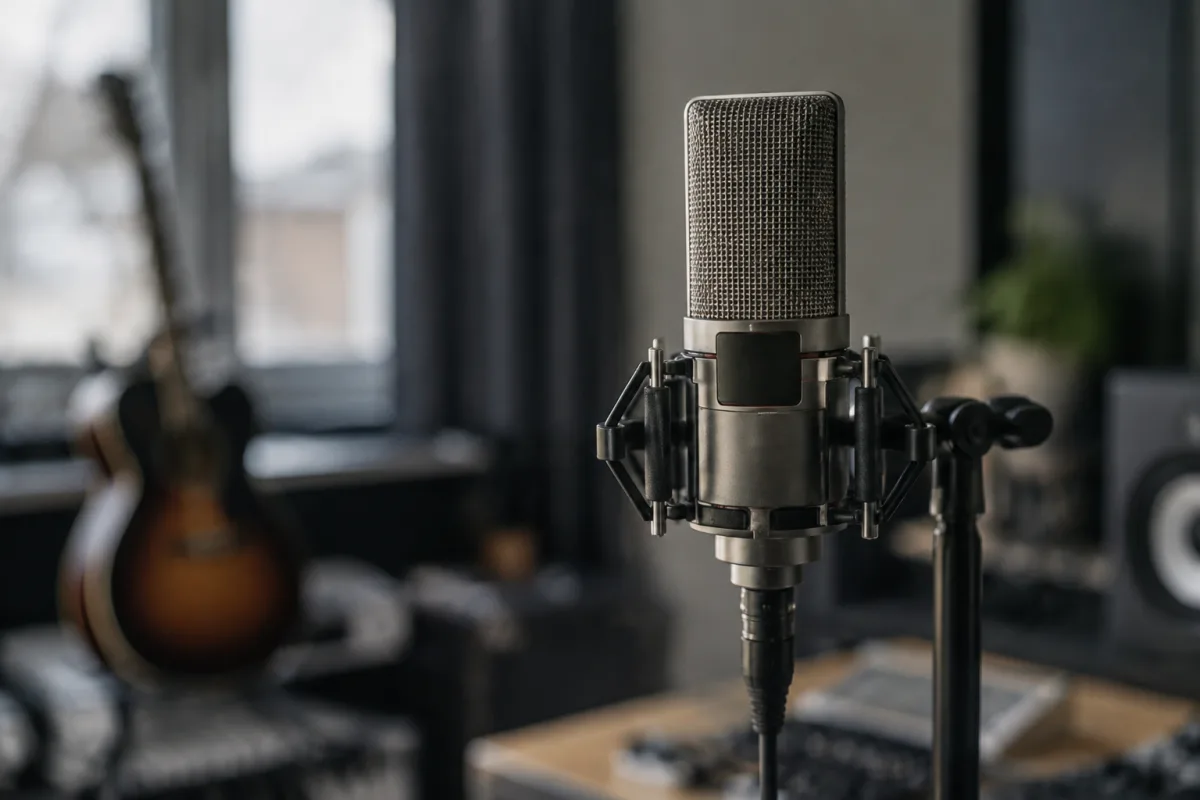
Austrian Audio arrived on the microphone scene quietly but with serious intentions. They make the kind of kit that seems to multiply in studios—one mic becomes three, then five, because they work exactly as they're supposed to work. The moment you plug an Austrian Audio microphone into a pre-amp and listen back, you understand where the company's philosophy lives: accurate, honest, technically precise. No mystique, no marketing fluff. Just transparent sound that lets you hear what's actually happening in front of the mic.
Who Is Austrian Audio?
Austrian Audio is the microphone division of AMS Neve, a company with literally decades of studio electronics pedigree. Founded specifically to design and manufacture condenser microphones, Austrian Audio concentrated on one thing: making mics that recording engineers actually need. They draw from deep technical roots in Austrian audio engineering, which means precision and reliability built into every product. The company focuses on mid-range professional equipment—neither budget entry-level nor the ultra-premium tier that costs more than a car.
That positioning matters. Austrian Audio microphones hit the sweetspot for serious studios: affordable enough that you can own several (because you *will* want several), robust enough to survive touring and daily professional use, and genuinely transparent enough that you're recording the source, not the microphone's character.
The Austrian Audio Range: Key Microphones
The OC818 Condenser Microphone
The OC818 is Austrian Audio's flagship. It's a cardioid condenser that captures vocal recordings, acoustic instruments, drum overheads—pretty much anything you want to hear clearly. The presence peak is gentle and musical rather than aggressive, which means vocals sit well in a mix without harsh sibilance. Percussion sounds articulate; acoustic guitars open up with natural shimmer. The off-axis rejection is solid, which matters in untreated rooms where you want to minimise reflections. It's the microphone countless producers grab when they want transparent sound fast.
The OC7 Large-Diaphragm Condenser
The OC7 takes everything the OC818 does well and adds presence in the low-midrange, making it particularly effective on vocals. Many tracking engineers favour it for singer-songwriters and acoustic performances where you want intimacy and warmth. It's directional enough that room noise stays minimal, yet coloured enough to flatter most voices without heavy processing.
The OC9 Pencil Condenser
Small-format condensers are studio workhorses—drum kits, horn sections, room mics, percussion. The OC9 is brutally competent in all those roles. It's accurate, durable, and compact enough that you can position it anywhere. Three mics on a drum kit open up clarity that dynamic mics struggle to deliver. An OC9 as a room mic captures the feeling of a space without collapsing detail.
The OC81 Omnidirectional Condenser
The OC81 captures sound from all directions equally, which is useful for instruments with sound radiating in multiple planes—pianos, vibraphones, orchestral sections. It's less useful in untreated rooms where you're picking up every reflection, but in proper studios with decent acoustics, the omni pattern delivers full, natural tone.
Why Studios Choose Austrian Audio Microphones
Accuracy Without Colouration
The defining feature of Austrian Audio microphones is transparency. They have presence peaks designed for clarity, not flattery or exaggeration. When you're tracking, you want to hear what's actually in front of the microphone. Subtle problems in tuning become obvious; brilliant playing shines. That clarity makes mixing easier: you're not fighting against a microphone that's imparting its own character.
Professional Build Quality
Austrian Audio microphones are engineered to survive. The capsules are precisely calibrated, the electronics robust. These aren't studio queens that need constant babying—they're professional instruments that handle the demands of working studios. Touring bands use them; broadcasters trust them. That reliability matters when your reputation depends on consistent sound.
Versatility Across Sources
A single Austrian Audio microphone works effectively on vocals, instruments, drum overheads, room mics, and more. This isn't unique to Austrian Audio, but it's worth emphasising: you don't need a dozen specialist mics. A handful of Austrian Audio models cover most tracking scenarios convincingly. That's genuine value for money.
Austrian Audio Microphones: Comparison with Alternatives
| Brand / Model | Price Range | Character | Best For |
|---|---|---|---|
| Austrian Audio OC818 | £1,200–£1,500 | Transparent, balanced, professional | Universal recording workhorse |
| Neumann U87 Ai | £2,500–£3,500 | Warm, famous, slightly coloured | Vocals, classic recordings |
| Shure KSM9 | £800–£1,000 | Bright, presence peak, live-friendly | Stage vocals, bright sources |
| Sennheiser MKE 600 | £300–£500 | Compact, field-friendly, coloured | Location recording, overhead mics |
Austrian Audio sits in professional territory without the Neumann price tag. You're not buying sonic legend; you're buying accuracy and value. For most tracking scenarios, that's exactly what you need.
The Practical Advantage: Transparent Recording
Consider a real-world scenario: a vocalist arriving for session work. On an Austrian Audio OC818, you hear their actual performance—the slightly sharp note on the second verse, the breath control, the emotional nuance. Nothing's hidden by microphone colouration. That transparency lets you make informed decisions. Do you re-track? Do you just nail that one verse? You know, because you heard it accurately.
The same applies to drums. An OC9 overhead microphone catches attack and space without muddying things. You hear whether the cymbals are actually in tune, whether the snare has enough crack. That clarity pays dividends when you're sitting at the mixing desk weeks later, trying to remember how a track was supposed to feel.
It's the opposite of the "expensive microphone romance" trap—where you fall in love with a mic's character and then struggle to record anything that actually works with it. Austrian Audio microphones say, "Here's your source. Do with it what you like." That's the engineer's perspective.
Practical Considerations
Phantom Power Requirements
All Austrian Audio condensers demand 48-volt phantom power, which every professional audio interface provides. If you're working with old analogue mixing consoles without phantom power, you'll need a phantom power supply. In modern studios, this is never an issue.
Polar Patterns and Room Treatment
The cardioid models (OC818, OC7) reject sound from the rear, which is essential in untreated rooms. In acoustically nice spaces, you might reach for an omni model. Pencil condensers (OC9) work beautifully as room mics if your recording space has decent natural sound.
Capsule Conditioning
Condenser microphones can accumulate moisture or dust on the capsule. Austrian Audio microphones are robust, but like all studio equipment, they benefit from basic maintenance: store them in protective cases, keep them away from humidity extremes, and gently clean capsules with appropriate tools (never touch them directly with fingers).
Budget Considerations: Are They Worth the Investment?
Austrian Audio microphones are not cheap, but they're not ultra-premium either. A single OC818 at £1,200–£1,500 costs less than a Neumann U87 and far more than a budget USB condenser. For professional studios, that investment pays back within months—the efficiency and quality gains translate directly to better-sounding recordings and faster sessions.
For home studios, the calculation is different. An OC818 makes sense if you're tracking seriously and planning to use it regularly. If you're experimenting with one track a month, it's overkill. Austrian Audio does sell more budget-conscious models through their value line, but their main range sits firmly in the semi-pro-to-professional zone.
The Honest Take
Austrian Audio microphones don't have a legend. They won't change your life because you own one. What they do is deliver transparent, accurate sound paired with professional build quality and reasonable pricing. In a studio context, that's everything. You're recording music, not collecting microphone romance.
The engineers who choose Austrian Audio know what they're doing. They want to hear sources clearly, make quick decisions about performance and tone, and move forward with sessions. Austrian Audio lets you do exactly that—no mystique required.
Conclusion
Austrian Audio microphones represent intelligent engineering applied to the problem of transparent recording. Whether you're tracking vocals, drums, instruments, or handling room ambience, Austrian Audio's range offers professional accuracy at prices that won't break small studios. They won't replace the legendary mics that capture generations of recording culture, but they're the microphone that working studios actually use daily. That's the real achievement: not being famous, but being genuinely indispensable to people who care about how their music sounds.



Comments