


Austrian Audio Microphone article
Austrian Audio Microphone for Beginners: A Complete Guide
Starting your recording journey with an Austrian Audio microphone? This beginner-friendly guide covers essential techniques, common pitfalls to avoid, and how to get professional results from day one.
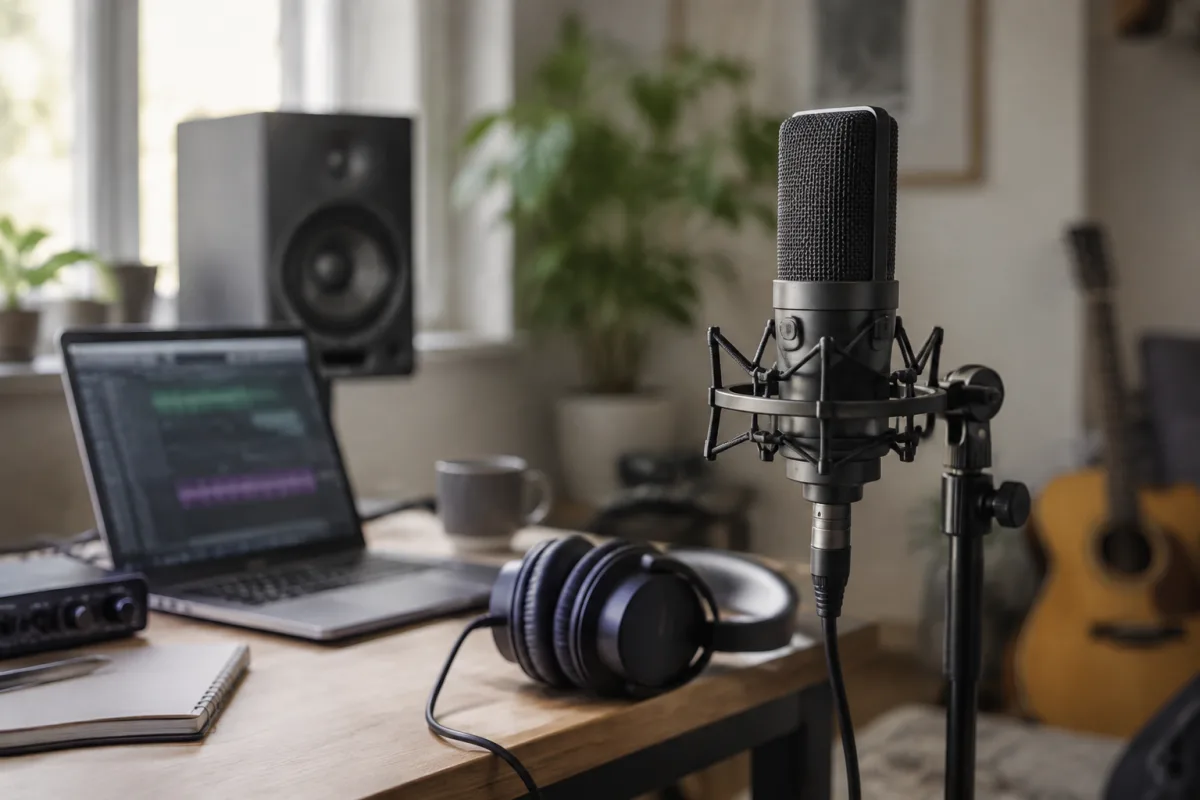
If you're a beginner looking at microphones for your first professional studio setup, Austrian Audio's range of options might feel daunting at first glance. But here's the good news: Austrian Audio builds their products with user-friendly reliability in mind, making them an excellent choice for someone just starting their recording journey. This beginner-focused guide walks you through getting started with an Austrian Audio microphone, helps you avoid common pitfalls, and shows you exactly what to expect as you begin your recording adventure.
Why Beginners Choose Austrian Audio Microphones
Austrian Audio microphones stand out for their approachable design philosophy. The company wasn't built from vintage prestige or legendary heritage—they emerged from a commitment to making professional microphones that work reliably for everyone, from bedroom producers to professional studios. That philosophy matters enormously when you're starting out.
Austrian Audio microphones come with clear, comprehensive documentation. You won't be left guessing about phantom power requirements or proper microphone placement. The build quality is immediately evident—these aren't fragile instruments that require specialist handling. They're built to endure years of regular use in learning environments, which makes them ideal for beginners who might not yet have perfect microphone technique.
Most importantly, Austrian Audio offers excellent value across their range. You don't need to spend £2,000+ to get a microphone that performs admirably. Their entry-level models deliver professional-quality sound at prices that won't bankrupt a beginner's first studio investment.
Starting Your First Session with an Austrian Audio Microphone
When you first unbox your Austrian Audio microphone, take a moment to familiarise yourself with the basics. Every model comes with a shock mount—use it. Placing the microphone directly on a boom arm or stand introduces vibration and handling noise that degrades quality. The shock mount is part of the system, not an optional extra.
Next, verify that phantom power is available. Austrian Audio condenser microphones require 48V phantom power from your audio interface or mixer. Most modern interfaces provide this via a button or menu option. Check that it's enabled before you record—a silent microphone usually means phantom power isn't switched on. You'll feel slightly silly when you discover this, but every beginner has this moment. It's a rite of passage.
Position your microphone at mouth level for vocals, roughly 15-20 centimetres away. This distance prevents plosive sounds (hard 'p' and 'b' sounds) from being overly pronounced, but you can still vary it depending on your voice and preferences. Don't position the microphone too close—beginners often do this, thinking closer means louder and better. It doesn't. Proper gain staging at your interface matters far more than microphone distance.
Essential Techniques to Master Early
Learning proper microphone technique will make every recording sound dramatically better. These fundamentals apply whether you're using an Austrian Audio microphone or any other professional condenser.
- Gain Staging: Set your interface input level so peaks are hitting around -12dB to -6dB on your meter. This gives you headroom for unexpected loud moments and prevents clipping. Beginners often record too hot (too loud) which introduces distortion that can't be fixed in mixing.
- Pop Filters: Use a pop filter even if you're recording instruments. They're inexpensive, effective, and reduce plosive problems significantly. Position it 5-10 centimetres in front of the microphone.
- Microphone Angle: Point the microphone slightly off-axis from your mouth when singing, rather than directly into it. This reduces plosives further and often captures more natural tone.
- Room Reflections: Even a treated space has reflections. Stand a couple of metres from walls to reduce early reflections. Hang a blanket behind you to absorb sound bouncing back to the microphone.
- Consistent Distance: Try to maintain consistent microphone distance throughout your session. Beginners often drift closer or further away unconsciously, creating inconsistent recorded levels.
Common Beginner Mistakes with Austrian Audio Microphones
Blaming the microphone for poor room acoustics. An Austrian Audio microphone will faithfully capture everything in your room—including echoes, reflections, and ambient noise. A £500 microphone can't fix a poor recording environment. Invest some time and money (even modest amounts) in basic acoustic treatment before deciding the microphone isn't working well.
Not testing your complete signal chain. Before your first serious recording session, do a test recording. Plug in the microphone, enable phantom power, set levels, and record a short vocal take. Play it back through your headphones. Does it sound good? If not, the problem might be your audio interface, cables, or gain staging—not the Austrian Audio microphone.
Using cheap XLR cables. Your Austrian Audio microphone deserves quality cables. Poor cables introduce noise and intermittent connection problems that are maddening to troubleshoot. Budget £15-25 for a decent microphone cable from a reputable manufacturer.
Expecting perfection from the first take. Recording is a learned skill. Your first vocal recordings won't sound like professional albums—that's normal. Every professional engineer spent hundreds of hours learning. Use your Austrian Audio microphone as your learning tool, not your judge.
Ignoring the microphone's polar pattern. Most Austrian Audio microphones are cardioid—they reject sound from the sides and rear. Position unwanted noise sources (computer fans, traffic noise, other people) behind or to the side of the microphone, not in front.
Which Austrian Audio Microphone Is Right for Beginners?
| Model Type | Best For | Key Advantage |
|---|---|---|
| Entry-level condensers (OC18, etc.) | Vocals, acoustic instruments, podcasting | Affordable, reliable, forgiving of beginner mistakes |
| Mid-range models (OC1, OC5) | Professional vocals, recording multiple sources, general studio use | Superior build quality, excellent presence, versatile |
| Ribbon microphones (R420, etc.) | Experienced beginners with acoustic sources | Smooth, warm character, lower plosive issues |
Budget Planning for Your First Austrian Audio Setup
Don't assume the microphone price is your total investment. Factor in these additional costs:
- XLR microphone cable: £15-25
- Pop filter: £10-20
- XLR to 3.5mm adapter (if needed): £5-10
- Shock mount (often included): £0-30
- Basic acoustic treatment (blankets, foam panels): £30-100
Most beginners need to budget an additional £60-150 beyond the microphone itself to get a functioning, decent-sounding setup. This isn't excessive—it's realistic.
Progressing Beyond Your First Recordings
As you grow more comfortable with your Austrian Audio microphone, experiment with placement, distance, and angle. Try recording in different rooms. Test how the microphone responds to loud vocals versus quiet, intimate singing. This experimentation is how you learn what your microphone truly does.
Keep your early recordings. You'll be amazed at your improvement within three months of regular recording. That improvement comes from practice and familiarity, not from needing a better microphone.
For deeper technical exploration of Austrian Audio microphones and their capabilities, see the ultimate guide to Austrian Audio microphones.
Your Next Step
Choose an Austrian Audio model suited to your primary application—vocals, instruments, or general recording. Start with the entry-level option if you're truly unsure. Unbox it, enable phantom power, and record your first take. Yes, you'll probably make mistakes. That's the entire point. Every professional engineer has been exactly where you are. Your Austrian Audio microphone is your partner in learning, and it's an excellent one.



Comments