


Antenna Distribution Buying guide
Antenna Distribution: A Complete Buyer's Guide
A complete buying guide for antenna distribution systems. Learn about passive vs active amplification, frequency compatibility, and how to eliminate wireless dropouts.
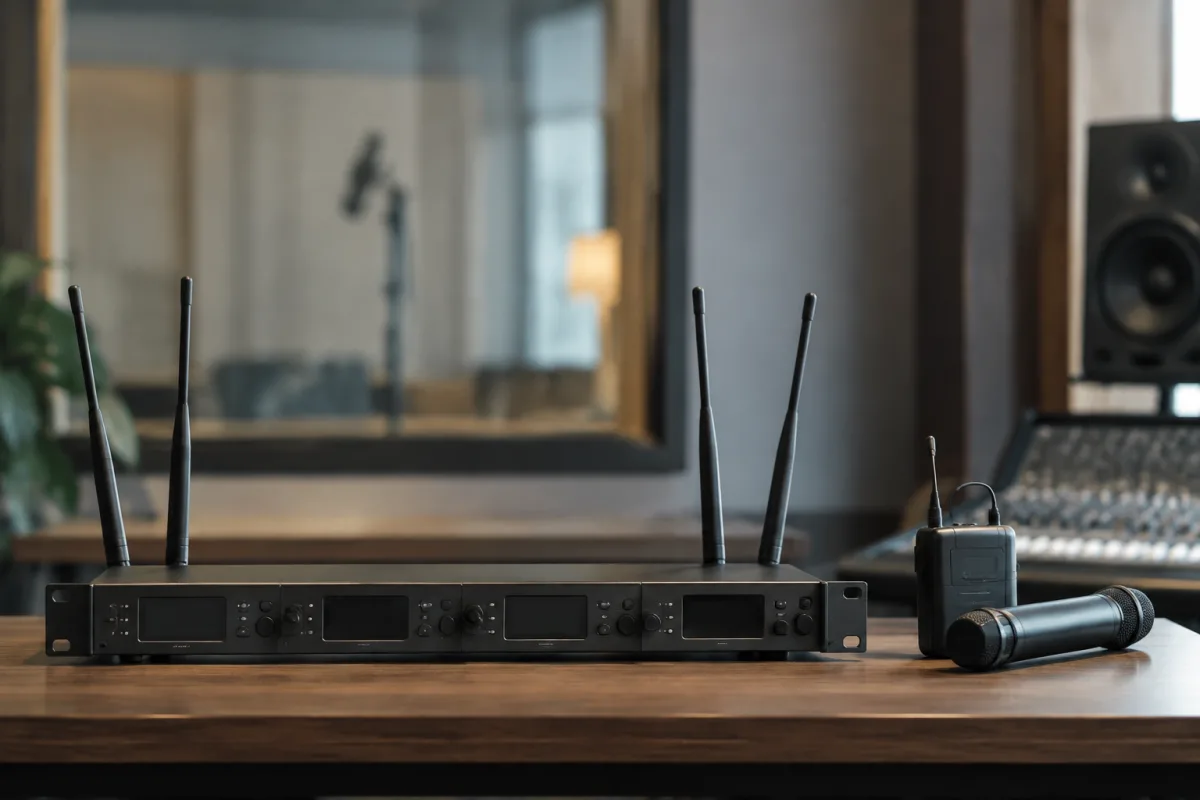
Setting up a reliable wireless microphone system requires more than just quality transmitters and receivers—antenna distribution plays a critical role in signal strength and performance. Whether you're building a portable rig for touring bands or a permanent installation in a recording studio, understanding antenna distribution will help you avoid dead zones, dropouts, and the frustration of inconsistent wireless signal. This buying guide covers the specs that matter, system architectures, common mistakes, and how to choose antenna distribution solutions that match your venue and budget.
Understanding Why Antenna Distribution Matters
Wireless microphone systems transmit RF (radio frequency) signals through the air. A single pair of antennas often fails to cover the entire performance area consistently, creating dead zones where signal drops. Antenna distribution systems solve this by splitting incoming RF signals to multiple locations or combining antenna inputs for better coverage. In studios, antenna distribution lets you position antennas optimally rather than centralising them in one corner. The antenna distribution you choose determines whether your wireless system works reliably across your entire space or only in certain positions—it's not glamorous, but it's essential.
Passive vs. Active Antenna Distribution Systems
Antenna distribution comes in two main flavours: passive and active. Passive antenna distribution uses simple splitters and combiners with no electronics—they're affordable, reliable, and require no power. However, passive antenna distribution introduces signal loss (typically 3-6 dB), meaning you get fewer usable receivers without amplification. Active antenna distribution includes built-in amplifiers to compensate for signal loss, maintaining full strength across your system. Active antenna distribution costs more, requires power, and adds slight complexity, but it's essential for larger installations or when you're using many receivers simultaneously. For bedroom studios, passive antenna distribution suffices; for professional touring or multi-channel recording studios, active antenna distribution becomes necessary.
System Architecture: Combining vs. Splitting Signals
Your antenna distribution needs differ based on whether you're receiving from one RF source with multiple physical antenna positions (splitting) or combining inputs from multiple receivers into one antenna distribution system (combining). Splitting antenna distribution lets you place antennas in strategic positions around your space—left side, right side, front—and combine their signals back to a single receiver. Combining antenna distribution does the opposite: multiple receivers feed into a single RF output that feeds antenna distribution to your mixer or recording interface. Some antenna distribution systems do both (hybrid configuration). Understanding your signal flow determines which antenna distribution architecture you need.
Frequency Range and Wireless Band Compatibility
Different regions use different frequency bands for wireless microphones. The UK typically uses UHF frequencies around 606–960 MHz (varying by application). Your antenna distribution must support the exact frequency band of your wireless system; using antenna distribution outside your system's operating range results in severe signal loss. Check your wireless transmitter and receiver frequency band, then confirm any antenna distribution components explicitly support that range. Broadband antenna distribution units that claim to cover a wide frequency range often introduce insertion loss at the edges of that range—read user reviews rather than relying on marketing specs for real-world antenna distribution performance across your specific frequencies.
Insertion Loss and Gain Specifications
Insertion loss is how much signal strength your antenna distribution system consumes. Passive antenna distribution splitters typically lose 3 dB per split (half the power), so a 4-way passive splitter loses roughly 6 dB. This loss adds up quickly in complex antenna distribution setups. Active antenna distribution amplifiers compensate by adding 10–20 dB of gain, but even then, antenna distribution loss matters. Aim for minimal insertion loss in your antenna distribution components; look for combiner/splitter units spec'd below 2 dB insertion loss if possible. For active antenna distribution, verify the gain is appropriate for your system's power budget; too much gain introduces noise, and too little still leaves you with dropouts.
Impedance and Connector Quality
RF antenna distribution systems must maintain 50-ohm impedance throughout your signal chain, or signal reflections cause loss and degradation. All professional antenna distribution components are 50-ohm rated. Don't mix antenna distribution components from different manufacturers without verifying impedance compatibility. Connector quality matters: professional N-type connectors are the standard for antenna distribution, and BNC connectors work for shorter runs in smaller antenna distribution systems. Cheap antenna distribution components use flimsy connectors that corrode and develop contact resistance, degrading performance over time. Budget properly for quality antenna distribution connectors; they seem expensive until your wireless system works flawlessly for years.
Number of Channels and Antenna Distribution Scalability
Small antenna distribution systems handle 2–4 receiver channels, whilst larger installations need 8–16 channels. Plan for future expansion when choosing antenna distribution architecture; it's easier to install oversized antenna distribution infrastructure now than to retrofit later. Daisy-chaining multiple antenna distribution components works but introduces insertion loss; a single integrated antenna distribution unit is cleaner if your channel count fits. Consider whether your antenna distribution needs accommodate your current setup or your foreseeable future needs.
Antenna Distribution Cabinet and Mounting Considerations
Professional antenna distribution systems mount in 19-inch racks, whilst smaller antenna distribution units sit on shelves or monitor stands. Check whether your antenna distribution components include mounting hardware or require separate brackets. Ventilation matters if your antenna distribution uses active amplification; poor airflow causes heat buildup and premature failure. Quality antenna distribution systems include cooling provisions. Ensure your antenna distribution mounting doesn't introduce vibration or mechanical stress that degrades connectors over time.
Cable Quality and Antenna Distribution Infrastructure
The cables connecting your antenna distribution system matter as much as the distribution components themselves. Use low-loss coaxial cables (LMR-400 or better) for runs longer than a few metres; cheaper RG-58 cable introduces significant loss in antenna distribution setups. Properly shielded antenna distribution cabling prevents interference from smartphones, WiFi, and other RF sources. Budget an additional 30% of your antenna distribution component cost for quality cables and connectors; this infrastructure investment pays dividends in reliability and performance.
Price Tiers for Antenna Distribution Systems
Budget antenna distribution (£200–500): Passive splitters/combiners, limited channels, suitable for small studios or portable single-band systems. Mid-range antenna distribution (£500–1,500): Active amplification, better build quality, multiple channels, professional-grade antenna distribution for touring bands or recording facilities. Premium antenna distribution (£1,500+): Advanced antenna distribution switching, redundancy options, multi-band support, broadcast-quality antenna distribution infrastructure. Most professional studios invest in mid-range antenna distribution; the jump from budget to mid-range is dramatic, whilst upgrading beyond that offers refinement rather than fundamental improvement.
Active vs. Passive: When to Choose Each Type of Antenna Distribution
Choose passive antenna distribution if you're running a single receiver with 2–4 antennas in a small space, or if simplicity and cost are paramount. Passive antenna distribution has no active components to fail and requires no power. Choose active antenna distribution if you're using multiple receivers simultaneously, covering large areas, or if signal strength matters for dropouts. For professional touring antenna distribution setups, active is mandatory. For bedroom studios, passive often suffices—test your coverage with a passive antenna distribution system first, then upgrade to active if you encounter dead zones.
Common Antenna Distribution Mistakes to Avoid
The biggest antenna distribution mistake is undersizing your system then wondering why you get dropouts—invest in antenna distribution with headroom. Don't mix antenna distribution components from incompatible manufacturers or impedances without consulting specs. Avoid cheap antenna distribution cabling; the savings are illusory when your wireless mic cuts out during a performance. Don't position antenna distribution receiving antennas in the same location; spread them across your space for the benefits antenna distribution distribution should provide. Finally, don't neglect antenna distribution gain structure; too much gain introduces noise, and too little defeats the purpose of antenna distribution amplification.
Installation and Testing Your Antenna Distribution Setup
After installing antenna distribution, perform a site survey with your wireless transmitter. Walk the performance area with the transmitter on, listening for dropouts or weak signal—your antenna distribution is working if you get consistent coverage. Adjust antenna distribution placement until coverage is even throughout your space. Many antenna distribution problems reveal themselves during rehearsal, not installation; budget time for antenna distribution troubleshooting and adjustment before the first performance.
Quality antenna distribution transforms wireless microphone systems from finicky and unreliable to rock-solid and forgotten. Choose appropriate antenna distribution architecture for your space, invest in active amplification if you're running multiple channels, and spec quality cables and connectors throughout your antenna distribution infrastructure. For context on how antenna distribution integrates into broader wireless microphone systems, explore our complete guide to antenna distribution systems.



Comments