


Focusrite One Buying guide
Focusrite One: A Complete Buyer's Guide
The Focusrite One is portable and simple, but you need to understand its real limitations before buying. Our guide covers what to check, common mistakes, and alternatives.
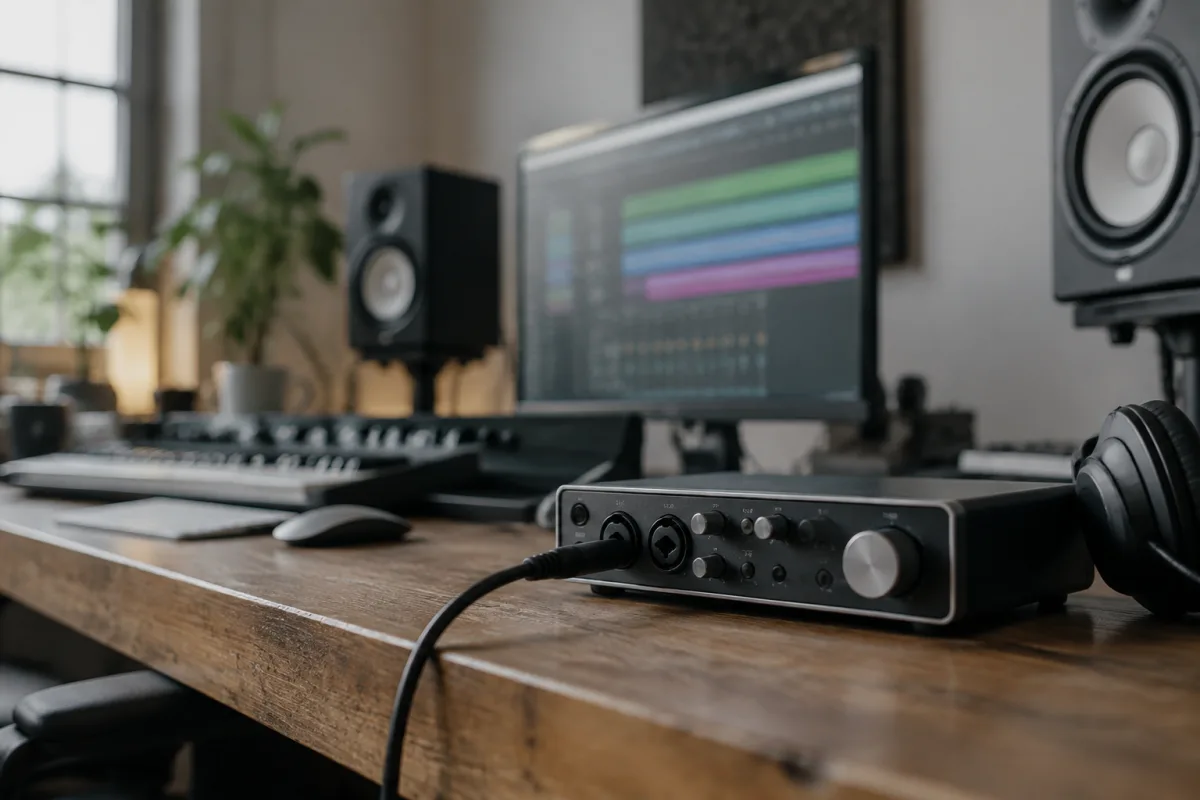
Buying the Focusrite One: What to Check Before You Buy
The Focusrite One has generated genuine interest as a portable audio interface, and with good reason. But before you tap "buy now," you need to know what you're actually getting, what matters in practice, and whether it genuinely fits your setup. This guide cuts through the marketing and gives you the practical considerations that'll determine whether this purchase is right for you.
Who Should Actually Consider the Focusrite One?
The Focusrite One is built for a specific use case: creators and musicians who prioritise portability and simplicity over maximum flexibility. If you're recording podcasts, streaming, creating content on the move, or working with a laptop-based setup where you need the absolute minimum of fuss, it's worth considering.
If you're building a fixed home studio, need multiple mic inputs, or want maximum I/O flexibility, look elsewhere first. The Focusrite One's strength is its simplicity and portability — which also means compromises on expandability.
The Core Specs: What Matters and What Doesn't
Marketing often throws specs at you that sound impressive but don't matter in real use. Here's what actually counts:
| Spec | What It Means for You | Reality Check |
|---|---|---|
| 2-in / 2-out | One mic input, one line input, stereo output | Perfect for a single mic. Not expandable. That's the limitation you need to accept. |
| 24-bit / 192kHz | High audio resolution | Excellent specs. In practice, 24-bit/48kHz is fine for most work. 192kHz needs more CPU and won't change your results for music or voiceover. |
| Phantom Power | Powers condenser microphones | Essential if you're using a condenser mic. Check that it switches on/off cleanly. |
| USB-C Connection | Connects to Mac, PC, iPad | Good for portability. Confirm your devices support USB audio class 2.0 or you may face driver headaches. |
| Latency (claimed <4ms) | Delay between input and output | Nice in theory. In practice, total latency depends on your DAW, buffer settings, and drivers. Test it yourself before buying. |
Critical Questions to Answer Before Buying
Do you actually need only one mic input? This is the non-negotiable constraint. If you ever want to record two mics simultaneously (guitar and vocals, two instruments, band setup), the Focusrite One won't do it. Think hard about your actual use case — not hypothetical future use, but what you'll actually do in the next 12 months.
Is USB-C connectivity native on your system? Check your laptop, iPad, or whatever you'll connect it to. Adapters add bulk and potential points of failure. Confirm native USB-C audio works on your specific OS and DAW.
What microphone are you using? The Focusrite One works great with dynamic mics (Shure SM7B, Audio-Technica AT2020, etc.) and condensers that don't demand excessive phantom power. Test compatibility if you already own a mic.
What's your actual recording workflow? Mobile recording, fixed desk, or both? Battery life matters for portability; power consumption matters if you're working tethered to a laptop. Be honest about your workflow.
Have you tested low-latency monitoring? The Focusrite One promises low latency, but real-world performance depends on your DAW settings and buffer size. Don't assume it works until you've tested it yourself.
Common Pitfalls and How to Avoid Them
Overlooking the single-input constraint. This is the biggest mistake. Buyers assume they'll never need a second input, then realise three months in that they do. There's no expansion option. If you're unsure, wait or choose something more flexible.
Assuming the preamp is "professional grade." The preamp is decent, but it's not Neve or API. It's fine for most purposes, but don't assume it'll transform your recordings into studio-quality instantly. Mic choice, technique, and room matter far more than the preamp.
Expecting bulletproof driver support on every OS. Focusrite's support is generally good, but issues occasionally arise with major OS updates. Keep your drivers current and test before a critical session.
Using the onboard monitoring without latency awareness. Direct monitoring works, but if you want to monitor with your DAW's effects or processing, latency becomes an issue. Know the difference and configure it properly.
Buying without testing first. USB audio interfaces are finicky — compatibility issues sometimes don't show up until you're in the middle of recording. If possible, borrow one or test one at a shop before committing.
Price Tiers and Alternatives
The Focusrite One sits in the £120–160 range. Before buying, check these alternatives at similar prices:
- Behringer U-Phoria UMC202HD (£70–90): Older design, but genuinely solid and cheaper. Two inputs/outputs, similar preamp quality. Best budget option if you need flexibility.
- Roland Rubix22 (£140–180): More portable, excellent for mobile creators. Similar limitations (2-in/2-out) but arguably better sound character for music production.
- Audient EVO 4 (£120–150): Compact, good preamp, class-leading design. Four inputs (though only one simultaneously recordable). Better for flexibility without much size penalty.
- Universal Audio Volt 1 (£150–170): Stylish, very portable, decent preamp. Single mic input like the Focusrite One. Slightly better audio quality, but more expensive and less software bundled.
What you choose depends on whether you prioritise: design aesthetics, software bundled, preamp character, or flexibility. The Focusrite One wins on balance and brand reputation, but isn't the clear winner for every use case.
What's Actually in the Box?
Know exactly what you're getting before you buy. The Focusrite One typically includes:
- The interface itself
- USB-C cable
- Software (usually a DAW like Ableton Live Lite and plugins)
- Quick-start guide
Check the bundle for your region — sometimes it varies. The software bundle can add significant value if you need a DAW, or it's useless if you already own Cubase or Logic. Factor this into your purchase decision.
Real-World Reliability and Support
Focusrite generally has good long-term support and a community behind them. That said, no interface is perfect. Before buying, check user forums for known issues with your specific OS version and DAW. Reddit's audio forums and Gearslutz often have real-world reliability reports.
Also confirm: Is there a local distributor with warranty support? Mail-in repairs from overseas can be a nightmare. Knowing your support options before you need them matters.
The Bottom Line
The Focusrite One is a genuinely decent interface for creators who need portability, simplicity, and a single mic input. Before buying, know what you're compromising: expandability, flexibility, and future-proofing. If that trade-off fits your actual workflow, it's a solid choice. If you're unsure about that single-input constraint or think you might need more flexibility later, save your money and choose something more expandable. A wrong interface choice costs money and frustration — take the time to get it right.
For a detailed technical deep-dive into how the Focusrite One works and how it compares to other interfaces on the market, check out the complete guide to Focusrite One.


Comments