


Focusrite Control Buying guide
Focusrite Control: A Complete Buyer's Guide
Focusrite Control is powerful but not essential for everyone. This buying guide covers when it's worth the extra cost, specs to check, and what interfaces include it.
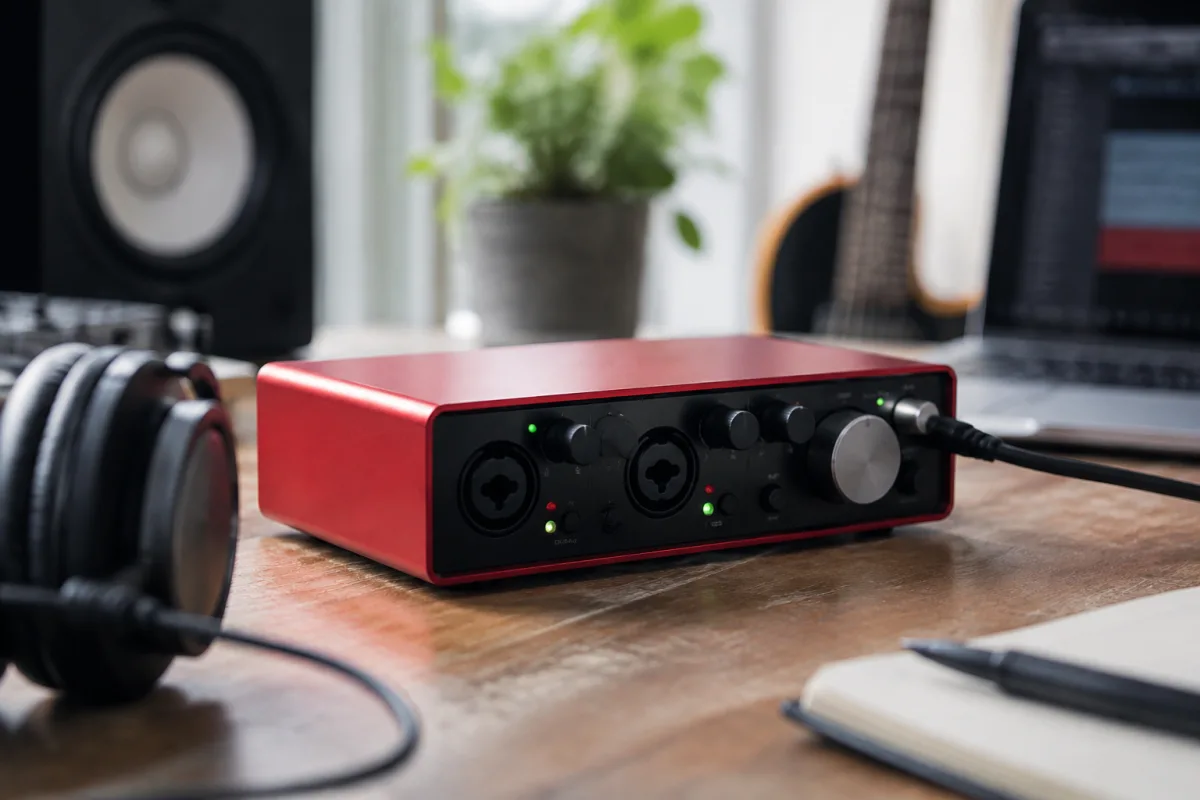
Focusrite Control is software that powers many Focusrite audio interfaces, giving you hands-on control over your recording setup. If you're shopping for a Focusrite interface that includes Control software, or you're comparing different Focusrite models, this guide cuts through the confusion. It focuses on what Control actually does, which interfaces include it, and whether paying extra for Control-equipped models is worth it.
What Is Focusrite Control?
Focusrite Control is the control panel software bundled with certain Focusrite audio interfaces. It replaces the basic hardware knobs and buttons with a detailed digital interface—on your computer screen—that gives you precise control over routing, preamp gain, monitoring, effects, and more. Think of it as upgrading from a few knobs to a full mixing desk.
Control is not a standalone product—it only works with compatible Focusrite interfaces (primarily the iTrack models and higher-tier Scarlett interfaces). You can't buy it separately.
Price Tiers: What You Get at Each Level
Budget (£100–£300): Scarlett 2i2 or 4i4 (Without Control)
Basic audio interfaces with simple hardware controls. No Focusrite Control software—just direct hardware knobs for gain, monitoring, and routing. These interfaces work perfectly for home studios and gigging musicians on a budget. You're trading digital control for simplicity and lower cost.
Pros: Cheap, simple, reliable.
Cons: Limited control options, no automation, fewer routing possibilities.
Mid-Range (£300–£600): Scarlett 18i8 or iTrack Solo (With Control)
Interfaces that include Focusrite Control software. You get physical hardware controls *and* the digital interface for deeper control. These are the sweet spot for most home studios—enough I/O for multitrack recording, and Control software makes complex routing effortless. The iTrack models are specifically designed around Control and include more I/O than Scarlett equivalents.
Pros: Excellent for home studios, deep control, good I/O count, relatively affordable.
Cons: More complex to set up, requires a computer, more expensive than entry-level.
Professional (£600+): iTrack Dock or High-End Scarlett (With Full Control)
Professional-grade interfaces with full Focusrite Control integration, often including tablet docking (the iTrack Dock lets you control everything via an iPad). These are for serious studios, mastering facilities, and broadcast. Control becomes essential at this level—the complexity justifies the software's power.
Pros: Professional build quality, full Control feature set, flexible I/O options.
Cons: Expensive, overkill for casual home recording, steep learning curve.
Key Specs to Check: Does Your Interface Get Control?
Hardware Compatibility
Not all Focusrite interfaces include Control. Check the product page—it clearly states "Includes Focusrite Control" or doesn't. Common Control-compatible models:
- iTrack Solo/Duo: Yes, full Control.
- iTrack Dock: Yes, full Control + iPad app.
- Scarlett Solo/2i2: No Control (basic models).
- Scarlett 4i4 Gen 3 and above: Some have Control, check the listing.
- Scarlett 18i8: Yes, typically includes Control.
If it's not listed in the product description, assume it doesn't include Control.
Operating System Compatibility
Focusrite Control runs on Mac (10.9+) and Windows (7+). Check that your computer meets the minimum specs. Older Macs or Linux users won't be able to use it—you'll be stuck with hardware controls only.
I/O Count
More inputs and outputs aren't always better, but if you're buying specifically for Control, you probably want deeper I/O (18i8, Dock, or iTrack models). Entry-level interfaces (2i2, Solo) don't benefit much from Control because they have so few controls to manage.
When Control Is Worth the Extra Cost
Focusrite Control justifies paying more if you:
- Record multiple tracks at once (mixing workflows, band recordings). Control makes routing and monitoring simple.
- Use complex monitoring setups (separate headphone mixes for different musicians). Control automates this.
- Need automation and recall. Control saves all your settings as presets—great for clients with specific setups or different projects.
- Want tablet control. The iTrack Dock with iPad control is brilliant for larger setups or live sessions.
Control is *not* essential if you:
- Record solo (single mic, single headphone mix).
- Keep your setup simple (never change routing).
- Don't mind using hardware knobs.
- Have a tight budget.
Pitfalls to Avoid When Buying
- Assuming all Focusrite interfaces have Control: They don't. Check the product description before buying.
- Buying a low-I/O interface (2i2) specifically for Control: It's overkill. A basic 2i2 without Control is cheaper and simpler.
- Not checking OS compatibility: Control requires modern Mac or Windows. Old computers or Linux won't run it.
- Buying used without verifying Control still works: Focusrite Control is tied to a license key. Check that activation works before buying used.
- Forgetting to factor in drivers and setup time: Control isn't plug-and-play for everyone. Budget time for driver installation and initial config.
- Overestimating how much you'll use Control: Many home studios use the hardware knobs 90% of the time and ignore Control. Buy Control only if you genuinely need it.
Your Buying Checklist
- Decide if you need Control (multitrack recording, complex routing, or automation).
- Check which Focusrite models at your price point include Control.
- Verify your Mac or Windows system meets the minimum OS requirements.
- Check the I/O count—does it match your recording needs?
- If buying used, confirm the Control license activates on your computer.
- Compare prices: sometimes a Control-equipped model is only slightly more expensive than a basic interface.
- Read reviews about the Control interface—is it intuitive for your workflow?
The Bottom Line
Focusrite Control is a genuine tool, not just marketing fluff. If you're recording multiple tracks, managing complex headphone mixes, or want automation and recall, it's worth paying extra for a Control-equipped model. If you're recording solo or keeping things simple, a basic Focusrite interface without Control is cheaper and simpler. Either way, make sure you're paying for Control only if you'll actually use it.
For a deeper technical overview of Focusrite Control and its features, read our guide: The Complete Guide to Focusrite Control.


Comments