


Rhythm Training article
The Ultimate Guide to Rhythm Training
Rhythm training strengthens your internal sense of time and beat subdivision — the foundation of confident playing, tight ensemble work, and musical expression.
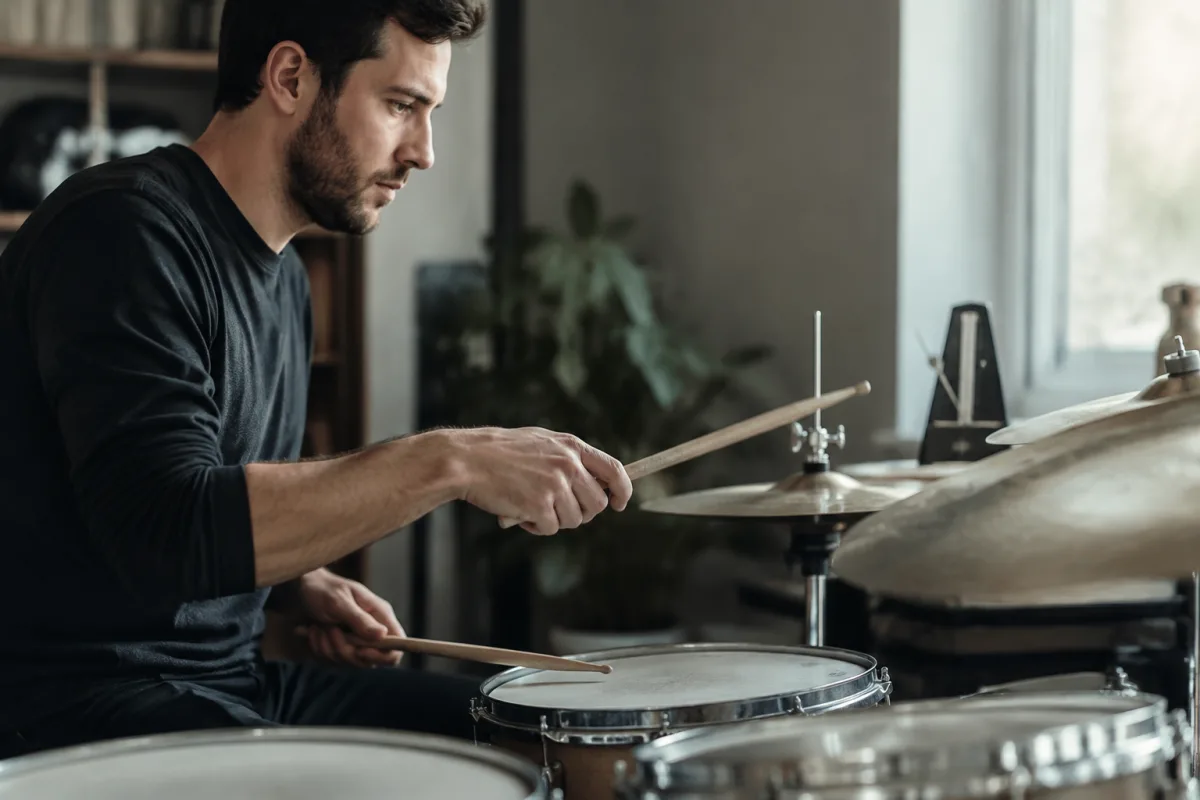
Rhythm training is the deliberate, systematic practice of developing your internal sense of time, pulse, and beat subdivision. Whether you play an instrument or sing, rhythm training strengthens the connection between your mind and body — allowing you to play with confidence, lock into ensembles, and express musical ideas with precision and feel.
Why Rhythm Training Matters for Every Musician
A musician without solid rhythm is like a driver without clear vision: technically capable, but prone to accidents and perpetually anxious. Rhythm is the foundation of ensemble playing, the backbone of recording, and the framework that lets listeners connect emotionally with your music.
Poor rhythm skills show up as:
- Rushing or dragging during a performance — your tempo wanders unpredictably.
- Struggling to lock with a drummer or backing track — you can't feel the groove.
- Difficulty with syncopation or complex time signatures — you're always hunting for the beat.
- Playing ahead of or behind the beat intentionally requires feeling the beat first — lack rhythm awareness, and your "behind" sounds careless rather than intentional.
Rhythm training fixes these problems. With consistent practice, your internal pulse becomes rock solid, ensemble playing becomes effortless, and complex rhythmic feels become natural.
Core Components of Rhythm Training
Solid rhythm training covers four interconnected areas:
1. Pulse and Subdivision
The pulse is the steady heartbeat of a piece — usually felt on the quarter note in 4/4 time. Subdivision means breaking that pulse into smaller units: eighth notes, sixteenth notes, triplets. Your brain needs to internalise multiple subdivision levels simultaneously. A drummer needs to play sixteenth-note hi-hat patterns whilst feeling the half-note pulse of the kick drum — two different rhythmic layers at once. Rhythm training drills develop this multi-layered awareness.
2. Tempo Stability
Playing at a consistent tempo without speeding up (rushing) or slowing down (dragging) is surprisingly difficult, especially during intense passages where adrenaline can accelerate your playing. A metronome is essential here: practice syncopated rhythms against a steady click, then gradually remove the metronome once your internal clock stabilises. Many musicians think a metronome constrains creativity; in reality, it frees you to focus on phrasing and feel, because the pulse is already locked.
3. Syncopation and Swing
Syncopation means emphasising off-beat notes rather than on-beat notes. Swing means a rhythmic feel where the pulse "breathes" rather than ticks metronomically — a fundamental element of jazz, funk, and blues. Both require independent thinking: your body feels the straight pulse, but your melodic line dances around it. Syncopation and swing feel can't be learned intellectually; they require hours of listening and imitating recordings.
4. Polyrhythms and Cross-Rhythms
Playing three notes in the space of two, or five notes in the space of four, requires your brain to separate from the main pulse. This is advanced territory, but it's essential for jazz, contemporary classical music, and complex pop arrangements. Polyrhythm training is where rhythm study becomes genuinely challenging and rewarding.
Practical Rhythm Training Methods
Rhythm training is most effective when structured and deliberate:
Metronome Practice
Start with simple quarter-note clicks. Play scales or simple melodies in time. Once solid, shift the click to off-beat positions (eighth notes, triplets, syncopated patterns). The shifted click forces your brain to feel the pulse independently. Gradually remove the metronome: play several bars in silence, then play with the click again to verify you haven't drifted. Many musicians neglect metronome work, viewing it as boring; it's actually the fastest way to build rock-solid time.
Ear Training and Clapping
Sit with a recording and clap along with the hi-hat, the kick drum, the snare backbeat, and the bass line — different layers on different days. Can't quite feel the pocket? That's data. Transcribe the rhythm: write down which beats are emphasised, where the syncopation sits. This develops your ear whilst building conscious rhythmic understanding.
Backing Tracks and Groove Playing
A good backing track (available from apps like iReal Pro, or YouTube channels with drum loops) forces you to lock into an ensemble pocket. Play a melody or solo over the track, and listen closely: are you sitting on top of the beat, behind it, or in the centre? Small timing adjustments compound into a solid groove. Spend 15 minutes a day with backing tracks; your timing will transform in weeks.
Singing and Beatboxing
Your voice is the most honest instrument. Sing rhythms without an instrument in your hands. Beatbox polyrhythms. Conduct whilst playing — your body's physical gesture reinforces rhythm internally. All of these methods activate different neural pathways and reinforce your rhythmic sense.
Transcription and Imitation
Transcribe recordings of great rhythmists: drummers (Tony Williams, Steve Gadd), bass players (James Jamerson, Victor Wooten), guitarists (Cory Wong), or vocalists (Ella Fitzgerald). Write down the exact rhythmic placement of notes. Do they rush on syncopation? Play slightly behind the beat for pocket? This teaches your ear what intentional, skilled rhythm sounds like.
Common Rhythm Training Mistakes
Many musicians practise rhythm ineffectively. Avoid these traps:
- Practising too fast: You can't develop precision at a tempo you can't handle. Always practise slowly. Once solid at slow tempo, increase speed in 5–10 bpm increments.
- Never removing the metronome: The metronome is a crutch; your goal is an internalised pulse. Practise sections without the click to verify your stability.
- Ignoring groove and feel: Rhythm is not just about hitting the correct pulse; it's about nuance. A perfectly on-beat note can sound stiff; a note slightly behind the beat can sound human and soulful. Listen to the pocket and learn to sit in it.
- Only practising your instrument: Clap, sing, and beatbox rhythms to engage your whole body. Musicians with strong rhythm are often excellent singers and dancers — rhythm is a full-body skill.
- Practising without a goal: Vague "rhythm work" is ineffective. Set specific targets: "Today I'm locking to a swing groove," or "I'm mastering sixteenth-note syncopation in triplet feel." Clear goals accelerate progress.
Rhythm Training for Different Instruments and Styles
Rhythmic priorities vary by instrument and genre. Drummers and bass players live and breathe rhythm — their primary job is the pocket. Guitarists and keyboardists need solid rhythm but often prioritise melody and harmony. Singers rarely focus on rhythm unless they're in a rhythmically complex genre like jazz or contemporary R&B.
Adjust your training to your needs: a jazz musician benefits most from swing feel and syncopation drills; a metal musician needs polyrhythm awareness and blast-beat precision; a classical musician needs to feel rubato (flexible timing) and complex time signatures.
Apps and Tools for Rhythm Training
Digital tools make rhythm training accessible:
- Metronome apps: Simple, free tools like Tempo, BPM and Beat (iOS/Android). Modern metronomes offer subdivisions, visual click, and practice modes.
- iReal Pro: Thousands of backing tracks across jazz, pop, funk, and world genres. Jam along with realistic grooves and adjust tempos or keys.
- Moises and Mixed In Key: Analyse existing songs, isolate drum tracks, and slow down difficult sections without changing pitch. Invaluable for transcription.
- Rhythmz and Soundbrenner: Specialised rhythm training apps with guided exercises and visual feedback.
- YouTube drum loops: Free, infinite backing tracks. Search "jazz swing drums" or "funk groove" to find grooves to practise over.
How Much Rhythm Training Is Enough?
Aim for 15–30 minutes of focused rhythm work per day — more if you're preparing for performances or recording. Most musicians see noticeable improvement within 3–4 weeks of consistent practice. Rhythm training is cumulative: a professional musician never stops; their daily practice includes rhythm maintenance.
Conclusion
Rhythm training is not optional — it's the foundation of musical competence. Whether you're a beginner learning to keep time or an advanced musician refining your groove, systematic rhythm practice transforms your playing. Start with a metronome, move to backing tracks, and regularly remove the safety net to test your internal pulse. Spend just 15 minutes a day, and within weeks you'll notice tighter ensemble playing, more confident performances, and deeper musical satisfaction. Your rhythm is your pocket, your pocket is your voice, and your voice is what makes you a musician.




Comments