


Practical Music Exams article
The Ultimate Guide to Practical Music Exams
Practical music exams are standardised assessments that prove you can play an instrument competently, understand music theory, and perform under pressure. They provide structure, accountability and verifiable achievement in a way casual practice cannot match.
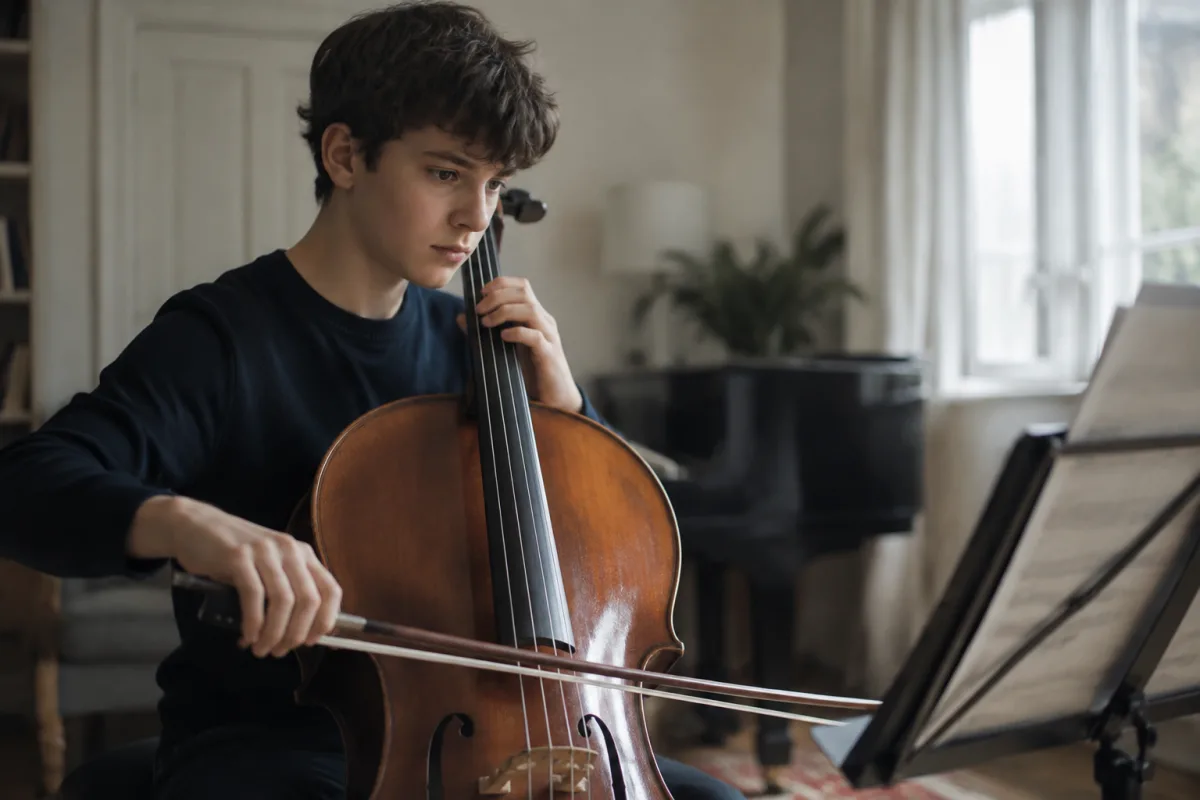
Practical music exams represent a fundamental milestone in any musician's development. Whether you're a teenager taking your first ABRSM grade exam or an adult returning to music after decades away, practical exams provide structure, accountability and measurable progress. But here's the thing—practical exams aren't just about passing a test. They're about proving to yourself and the world that you can perform music competently, understand music theory at a genuine level, and handle the mental and physical demands of live playing. That matters far more than the certificate itself.
What Are Practical Music Exams?
Practical music exams are standardised assessments where you demonstrate your ability to play an instrument or sing at a specific level of proficiency. You perform prepared pieces, sight-read unprepared material, and complete theory and aural components—all assessed by an independent examiner. The result is a graded pass (Distinction, Merit, Pass, or similar, depending on the exam board) that verifies your technical ability and musical understanding.
The key word is "practical." You're not writing about music; you're playing it. You're not discussing theory abstractly; you're applying it in real-time. Practical music exams demand that your technical skills, theoretical knowledge and performance temperament all work together under pressure. That's why they carry genuine weight in the musical world.
Major Exam Bodies and Frameworks
ABRSM (Associated Board of the Royal Schools of Music) is the UK's largest and most recognised exam board, offering qualifications across all standard instruments and voice. Their graded structure—Grades 1–8, plus Advanced Diplomas—provides a clear progression pathway from beginner to professional level. ABRSM exams are widely respected by universities, conservatoires and employers.
Trinity Guildhall is another prominent UK-based exam provider, with a similarly comprehensive framework and a slightly different emphasis on musicianship and performance interpretation. Rockschool specialises in contemporary and popular music exams, ideal if you're a guitarist, bassist or drummer working in modern genres rather than classical music.
The London College of Music (LCM) offers practical exams across classical and popular instruments, and the Royal College of Music (RCM) provides highly respected diplomas. In other countries, equivalents include AMEB in Australia, NZQA in New Zealand, and RCM in Canada. Most of these frameworks are internationally recognised, so an ABRSM Grade 5 piano qualification is understood worldwide.
The Structure of a Practical Music Exam
A typical practical music exam lasts 20–45 minutes depending on the level and instrument. You'll perform three or four prepared pieces chosen from a published syllabus—usually a mix of styles: classical, folk, popular or contemporary, depending on your instrument. The examiner is listening for technical accuracy, musical expression, control and confidence. This is where your hours of practice prove themselves.
Sight-reading comes next. You're given a short, unprepared piece and asked to play it at first sight. This component tests your ability to read music fluently and react to unfamiliar material—essential skills for any working musician. Most candidates find sight-reading the most nerve-wracking component because there's nowhere to hide; you either can read the material or you can't.
Aural tests involve listening to musical examples and describing what you hear—identifying intervals, melodic dictation, harmonic progressions, rhythm patterns and stylistic features. This component verifies that you listen actively and understand music at a deeper level than simply following written notation.
Scales and arpeggios (or equivalent technical work) demonstrate your fundamental technical control. You play required scales at a specified tempo, proving that your fingers, breath control or technique is solid and efficient. It's unglamorous but crucial—sloppy scales signal lack of practice or understanding.
Why Practical Music Exams Matter
Structure and progression are the obvious benefits. A graded exam syllabus gives you a clear target: learn these pieces, master this standard of technique, understand this theory. You're not wandering aimlessly; you're following a proven pathway used by hundreds of thousands of musicians before you. That sense of direction is invaluable, especially for students who might otherwise lose motivation.
Accountability is another factor. When you've paid exam fees and booked a date three months in advance, you actually prepare properly. There's genuine incentive to practice consistently, work through difficulties rather than avoid them, and push yourself to a higher standard than casual practice would demand.
Verifiable achievement matters too. A practical music exam result is objective proof that you've reached a specific standard. Employers, universities and conservatoires recognise these qualifications worldwide. If you want to study music at university or pursue music professionally, practical exam credentials open doors that casual musicianship cannot.
Performance confidence is a hidden benefit. Performing for an examiner under pressure teaches you mental resilience and how to handle performance anxiety. Every musician will perform in front of others at some point—whether in a recital, a session, an audition or a job interview. Practical exams provide a low-stakes first experience with structured, high-pressure performance. You learn that you can do it.
Preparing for Practical Music Exams
Start preparation at least three to six months before your exam date. Download the current syllabus immediately and choose your pieces carefully—they need to challenge you slightly but remain achievable. Many candidates choose pieces that are too easy and score poorly because the examiner hears no musical ambition; others choose pieces beyond their realistic reach and stumble visibly. Aim for the sweet spot: technically and musically engaging, but within your demonstrated capabilities.
Work with a qualified teacher if possible. A good music teacher is invaluable because they understand exam expectations, they can identify technical weaknesses you might miss, and they provide motivation and structure. You can prepare alone, but having expert feedback accelerates your learning dramatically.
Practice sight-reading regularly from week one. Sight-reading is a skill that improves with consistent practice but deteriorates quickly with neglect. Dedicate 10–15 minutes of every practice session to reading unfamiliar material. Sight-read from multiple genres and difficulty levels, not just your chosen pieces.
Record yourself playing your pieces. Listen critically for intonation (especially string and wind players), timing accuracy, dynamic control and overall musicality. Hearing your own playing is uncomfortable initially, but it's one of the fastest ways to identify what needs improvement.
Manage performance anxiety through familiar routines. Know your pieces so thoroughly that you could play them in your sleep. Warm up consistently before every practice session and exam day. Develop mental techniques—breathing exercises, visualisation, positive self-talk—that help you stay calm under pressure. Performance anxiety never disappears entirely, but practice management strategies make it manageable.
Common Practical Exam Pitfalls
Choosing pieces purely because they sound impressive is a classic mistake. An ambitious piece that you struggle to play will expose your weaknesses mercilessly. Choosing a piece you can already play well is equally limiting—the examiner hears no growth or challenge. Choose pieces that stretch you appropriately.
Neglecting sight-reading preparation is surprisingly common. Candidates spend 90% of practice time on prepared pieces and 10% on sight-reading, then panic when the sight-reading component arrives. Allocate time proportional to the exam weighting: if sight-reading is worth 15% of marks, dedicate 15% of practice time to it.
Underestimating aural components is another trap. Aural skills aren't innate; they're learned through consistent listening and practice. Work through aural training materials, listen to music actively (asking what you hear rather than just passively consuming), and develop your ear systematically.
After You Pass: What Next?
Practical exams are milestones, not destinations. A Grade 5 pass means you've achieved a genuine standard, but it's not the endpoint of your musicianship. Many musicians continue through Grade 6, 7 and 8, eventually pursuing diplomas if they're serious about music professionally. Others use their exam qualification as a solid foundation for ensemble playing, jazz improvisation or contemporary music genres that sit outside the traditional exam framework.
The real value of practical music exams isn't the certificate or the grade. It's the discipline, technical foundation and performance confidence you've developed in pursuing them. That foundation serves you for life, regardless of whether you ever take another exam.
Practical music exams have shaped musicians for over a century, and they continue to provide genuine value. They're not perfect—no assessment system is—but they offer structure, accountability and measurable progress in a way that casual practice cannot match. If you're serious about developing as a musician, practical exams provide a proven pathway to real, verifiable competence.




Comments