


Cello Lessons article
Cello Lessons for Beginners: A Complete Guide
Every cellist started as a beginner. This guide eases beginner anxieties, sets realistic expectations, and shows why your concerns are normal and manageable.
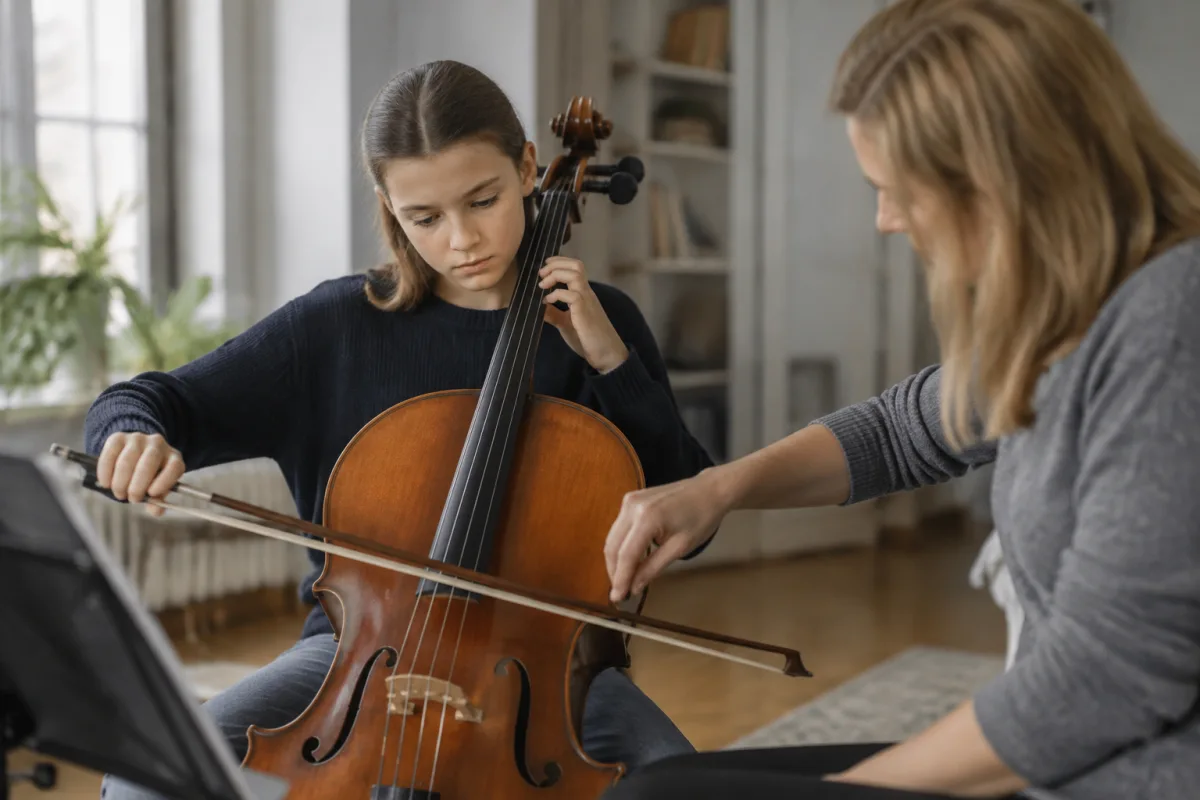
The cello is beautiful, powerful, and deeply rewarding. It's also intimidating if you're just starting out. You might be worried about whether you're too old, whether your posture is wrong, or whether you'll have any talent for it. This guide is for you. It's written for someone nervous about taking cello lessons, and it's here to tell you that every concern you have is normal, manageable, and absolutely no reason to skip this musical journey.
You're Not Too Old, and Talent Is Overrated
Let's address the elephant first: many adults think they're starting the cello too late. You're not. Adults learn cello all the time, often faster than children because you can understand feedback, adjust your technique consciously, and practice with intention. A beginner cello student at 15, 45, or 75 will sound rough at first. Then, with consistent lessons, they'll get better. This is guaranteed.
Talent helps, but it's not required. Every cellist you admire started exactly where you are—unable to produce a recognizable note. Consistent practice, good teaching, and patience transform complete beginners into capable musicians. You don't have to be gifted to be excellent.
Physical Concerns: Posture, Strength, Reach
Many beginners worry their body isn't suited for cello. "My arms are too short," "I have bad posture," "I'm not strong enough." These concerns are understandable but largely unfounded.
Cello posture is something you learn. A good teacher will help you find a comfortable position that protects your back and neck. Yes, it looks formal when professionals perform, but you're not performing on day one. You're learning. Your posture will improve as your body adapts and your teacher guides you.
Physical strength required is minimal. The cello rests on your chest and legs; you're not holding it up. A beginning student doesn't need to be athletic or particularly strong. Children as young as five learn cello successfully. If a five-year-old can manage it, you can too.
Reach and hand size matter slightly—very tall or very short people might need to consider cello size—but standard cellos work for most people. On your first lesson, your teacher will assess whether a full-size cello suits you or whether a smaller size makes more sense. This is routine; you're not the first student with this question.
What to Expect in Your First Lesson
Your first cello lesson will probably not involve playing recognizable music. Instead, your teacher will:
- Help you hold the cello properly and adjust the endpin to the right height.
- Teach you how to hold the bow and introduce the concept of drawing the bow straight.
- Demonstrate what good contact between bow and string feels and sounds like.
- Guide you through producing your first tones—rough, scratchy, but real.
- Introduce basic finger placement on the fingerboard.
You'll leave that lesson with the honest knowledge that you've just begun. You won't sound like a cellist. You'll sound like someone who's never played before. That's completely normal. In six months of consistent practice, you'll sound like someone who's learning. In a year, you might be playing simple melodies. The transformation happens gradually, and it's remarkable.
Common Beginner Worries (All Manageable)
"What if I don't make progress?" Progress with an instrument is measurable and consistent if you practice. You might not notice week-to-week, but month-to-month differences are obvious. Trust the process.
"What if it hurts?" The cello shouldn't hurt. Discomfort, soreness, and adjustment pains are normal—your fingers will build calluses, your neck might feel strained initially—but sharp pain isn't. Tell your teacher if something hurts. They'll adjust your technique or position. Cello is a lifelong instrument; playing through pain is counterproductive.
"What if I practice and still sound bad?" You will. For months. Every cellist does. The goal isn't to sound good immediately; it's to improve consistently. Comparing yourself to professionals is meaningless at this stage. Compare yourself to you last month. That's the only meaningful measure.
"Will my teacher judge me for being a beginner?" No. Good teachers spend their careers teaching beginners. They've heard every worry, every rough note, every frustration. They chose this work because they believe beginners can become capable musicians. You're not an oddity; you're their job.
Finding the Right Teacher
The most important decision isn't the cello; it's the teacher. A good cello teacher has formal training, experience teaching beginners, patience, and the ability to explain technique clearly. Look for teachers who:
- Have credentials (conservatory training, performance experience, qualifications).
- Teach beginners regularly and don't dismiss your lack of experience.
- Adjust their teaching style to your learning pace.
- Explain why you're doing something, not just that you should.
- Are accessible (reasonable lesson times, responsive to scheduling questions).
Interview a few teachers. Most offer trial lessons or will discuss their approach. If a teacher seems dismissive of beginners or rigidly inflexible, keep looking. You'll invest significant time with this person; make sure you're comfortable.
Practice Expectations: How Much Is Enough?
Most beginner cello students practice 20-30 minutes daily. That's it. Not hours. Just consistency. Twenty minutes every single day beats three hours on Saturday. Establish a routine: practice at the same time, in the same place, without distractions. Quality practice matters more than duration.
Your teacher will give you assignments—specific techniques, pieces, or exercises to focus on. That's your practice framework. Follow it. Practice what your teacher assigned, not what you think you should be doing. That's the accelerated path to improvement.
Equipment: What You Actually Need to Start
You need a cello and a bow. A decent beginner cello costs £200-500. You don't need an expensive instrument to start—expensive instruments sound marginally better but won't help your technique. Rental is an option if you're unsure about commitment. Many music shops rent cellos at £15-30 monthly, with rental costs creditable toward purchase.
Beyond cello and bow: you'll need a music stand (£15-30), maybe a shoulder rest (£20-50), and a clip-on tuner (£10-20). That's it. Don't overbuy. Accumulate equipment as you progress.
The Beginner's Mindset: Permission to Be New
The biggest hurdle isn't physical or musical—it's mental. You have to accept that you will sound bad before you sound good. You have to be okay with beginner mistakes. You have to trust that every cellist who matters started exactly here.
Give yourself permission. You're learning. That's not a weakness; it's the whole point. In a year, you'll be a very different musician. In five years, if you've practiced consistently, you'll be capable of real music-making. Everyone gets to start somewhere.
Exploring Deeper: Your Full Learning Path
For a comprehensive overview of cello learning, methods, finding teachers, and what different levels of study entail, see our complete guide to cello lessons.
Your First Lesson Is Waiting
The hardest step is booking the first lesson. Everything after that is practice, feedback, and gradual improvement. You're not too old. You're not without talent. You're not in the wrong place. You're a beginner, which means you're at the exact right place to start. Make the call. Book the lesson. A year from now, you'll be grateful you did.


Comments