


Rack Mount Synthesizer Buying guide
Rack Mount Synthesizer: A Complete Buyer's Guide
Shopping for a rack mount synth? This guide covers price tiers, critical specs, connectivity requirements, what to inspect, and common mistakes to avoid.
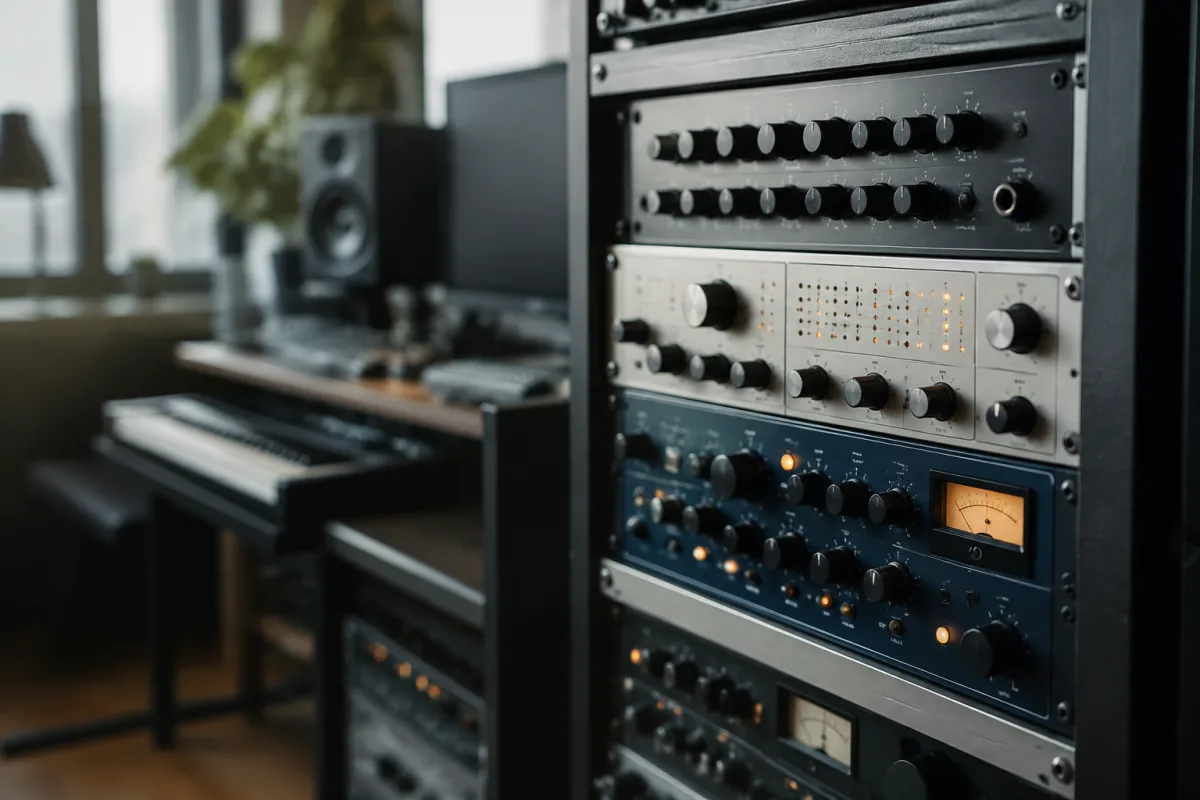
Rack mount synthesizers deliver studio-quality sound in a compact format designed for installations and studio setups. Unlike keyboard synthesizers, rack units sit in 19-inch equipment racks, saving desk space and integrating neatly into professional environments. But buying your first rack mount synth requires understanding form factors, connectivity, integration considerations, and what to inspect so you choose a unit that genuinely fits your workflow instead of becoming expensive studio clutter. This guide walks you through the essentials.
Understanding Rack Mount Synth Price Tiers
Budget (£400–£800)
Budget rack synths are single-voice or limited-polyphony units, often designed as sound modules rather than full synthesisers. They feature basic sound design (few knobs, menu-driven editing) and limited connectivity. Suitable for specific use cases (adding bass texture, layering pads) but limited for primary sound generation. Good as secondary modules, not primary instruments.
Mid-Range (£800–£1500)
Mid-range rack synths offer full polyphony, comprehensive sound design controls, and multiple audio/MIDI inputs. These work as primary sound generators in studio or live setups. Most feature 16–64 voices of polyphony, broad audio outputs, and integration-friendly design. This tier represents the best value for producers wanting a dedicated hardware synth.
Premium (£1500+)
Premium rack synths like flagship models from Moog, Roland, or Yamaha offer exceptional sound, deep parameter control, and professional-grade construction. They're studio staples for experienced producers and provide years of reliable service. Cost reflects superior components, engineering, and sonic character.
Essential Specs to Understand
Polyphony
Polyphony is the number of simultaneous notes the synth can play. Budget units might offer 4–8 voices. Mid-range and premium offer 16, 32, or 64 voices. For orchestral work or complex arrangements, higher polyphony matters. For bass and pad textures, lower polyphony suffices. Check your typical use: does your music require full chords playing simultaneously, or mostly bass and lead lines?
Sound Synthesis Method
Subtractive synthesis (oscillators → filters → envelopes) is traditional and immediate—what most producers expect. FM synthesis (frequency modulation) creates complex, metallic tones but has a steep learning curve. Wavetable synthesis offers modern flexibility and dynamic textures. Granular synthesis specialises in textural, evolving sounds. Choose based on your musical goals. Test demo patches to hear how each method sounds to your ears.
Control Interface
Budget units are menu-driven (on-screen editing with arrow buttons and a small display). Mid-range and premium units feature knobs, sliders, and buttons for hands-on editing. If you prioritise immediacy and tactile control, favour units with physical knobs. Menu-diving slows workflow, especially in live situations.
Audio I/O and Connectivity
Check how many audio outputs (mono pairs? individual outs?), MIDI inputs (5-pin DIN, USB, or both?), audio inputs (for effects processing?), and whether CV/gate connectivity exists (for modular integration). Modern setups increasingly favour USB MIDI; if you're integrating with a DAW, USB is essential. Older setups prefer 5-pin DIN MIDI. Verify compatibility with your existing gear.
Sequencer and Arpeggiator
Many rack synths include built-in sequencers or arpeggiators. If your workflow involves generating melodic or rhythmic ideas internally, a good sequencer matters. If you're triggering the synth from a DAW or external sequencer, this matters less. Test the sequencer workflow—is it fast and intuitive, or clunky and frustrating?
What to Inspect When Buying
Audio Quality
Patch a simple sine wave oscillator through a filter and listen to the raw sound. Does it sound warm, detailed, and precise? Cheap synths often sound harsh, cold, or thin. Quality synthesisers have a pleasing, musical character even at low settings. Spend time listening before committing.
Physical Controls
If knobs and sliders are present, test them all. Knobs should turn smoothly without grinding or crackling (which indicates worn potentiometers). Sliders should move freely. Test every button and switch. Sticky or unresponsive controls are a red flag—replacement potentiometers are expensive and repair time-consuming.
Display and Interface
If menu-driven, test navigation. Can you access parameters quickly? Is the display bright and readable? Dim, hard-to-read displays are frustrating. Test loading and saving patches—these should be reliable and fast. If any menu option is broken or unresponsive, the unit may have firmware issues.
MIDI Response
Connect a MIDI keyboard or controller and test note triggering. Playing MIDI should feel responsive and natural—no lag between you playing and the synth responding. Test modulation wheels or continuous controllers if present—they should respond smoothly to MIDI CC (continuous controller) messages from your controller.
Audio Output Quality
Monitor the audio outputs through an amplifier or headphones. Sound should be clean, free of crackling, digital artifacts, or noise. Plug headphones into any headphone output and check for clean, hum-free audio. Humming (AC mains hum, typically 50Hz) suggests grounding issues or power supply problems.
Cooling and Ventilation
Rack synths generate heat. Check that ventilation slots aren't clogged with dust. Dust buildup forces fans to work harder and eventually causes failures. A clean unit with clear ventilation runs cooler and lasts longer.
Common Pitfalls to Avoid
Buying for Size Alone
Compact rack synths look impressive on studio photos, but if they don't inspire your sound, they'll collect dust. Size is secondary to sonic character and workflow. A bulkier unit that sounds better and feels good to use is a better investment.
Ignoring Connectivity Requirements
Before buying, verify that the synth connects to your existing setup. Do you need USB MIDI or 5-pin DIN? Are audio inputs necessary? Can you route outputs where you need them? Incompatible connectivity is a showstopper—you end up with an isolated unit that's hard to integrate.
Neglecting the Rack Case
Most rack synths are sold as units only, not in cases. You'll need to supply or build a rack case. A basic 2–4 space rack case costs £80–£200. Factor this into your budget. A unit without a case is impractical for any setup.
Assuming Older = Cheaper = Better Value
Vintage rack synths can be reliable, but they also have repair risks. Capacitors age; power supplies wear out. A well-maintained vintage unit can be excellent value, but a neglected one becomes an expensive paperweight. Ask about maintenance history and test thoroughly before committing.
Not Testing Connectivity Before Purchase
If buying online, ask the seller to provide a demonstration video with real-time MIDI triggering and audio output. Ask about the unit's condition, age, and whether it's been serviced. Don't assume "works fine"—make sellers prove it functionally.
Rack Mount Synth Buying Checklist
- Audio quality sounds warm and musical, not harsh or thin
- All knobs, sliders, and switches operate smoothly
- Display (if present) is bright and menu navigation is fast
- MIDI response is responsive and natural
- Audio outputs are clean and hum-free
- Connectivity matches your setup needs (USB, 5-pin MIDI, audio ins/outs)
- Polyphony meets your typical use case
- Ventilation is clear with no dust clogging
- Sound synthesis method inspires your musical ideas
- Used units include maintenance history if pre-owned
Conclusion: Finding Your Rack Mount Synth
A rack mount synthesizer can become a creative cornerstone in your studio when you choose wisely. Prioritise sound quality and playability over price or compact size. Test the unit thoroughly, verify connectivity, and ask questions about maintenance and age. For detailed technical specifications and comparisons across rack mount synth models, read the complete guide to rack mount synthesizers. With proper inspection and realistic expectations, you'll invest in gear that inspires for years.



Comments