


Portable Synthesizer article
Portable Synthesizer for Beginners: A Complete Guide
A portable synthesizer is your entry into electronic music and sound design. This guide gets you past the nervousness and straight to making sounds you'll love.
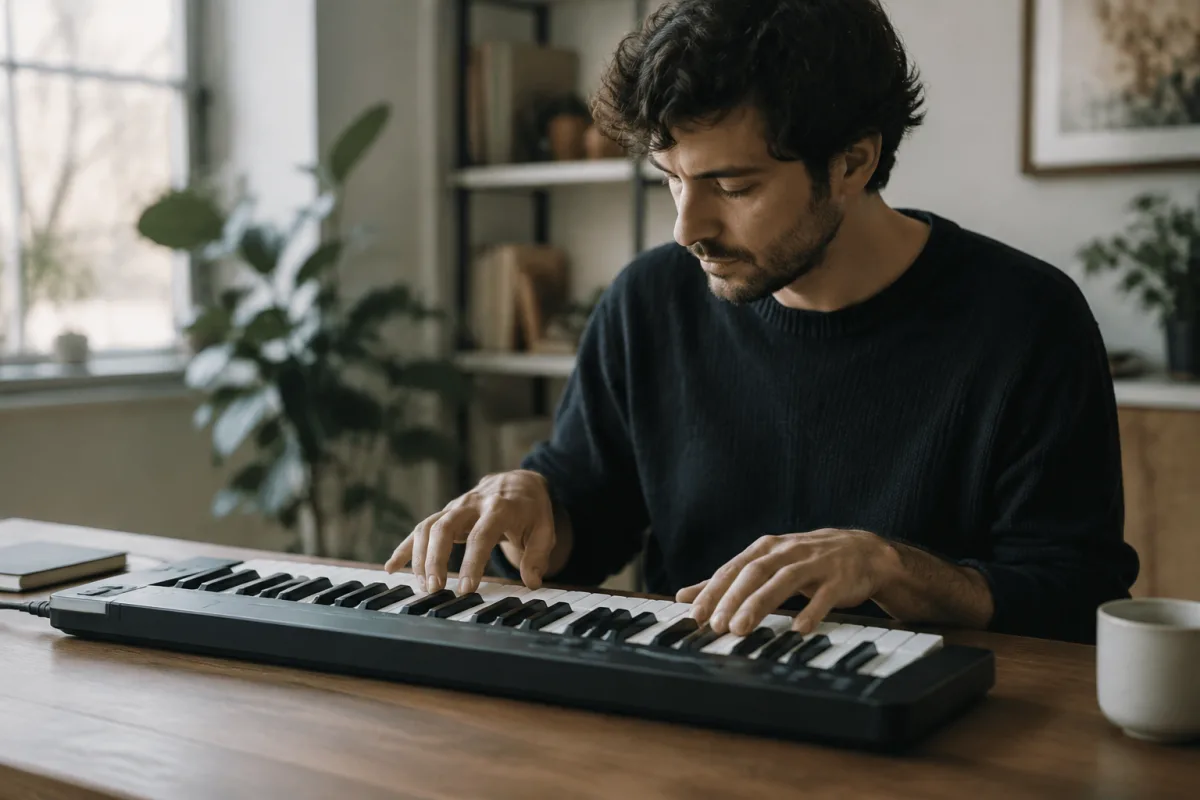
A portable synthesizer is an exciting entry point into electronic music and sound design, but the idea of all those knobs and buttons can feel overwhelming if you're just starting out. The good news is that you don't need to understand synthesis theory to make music on a portable synth. This beginner's guide gets you past the nervousness and straight to making sounds you'll love, with practical first steps and honest encouragement.
Why a Portable Synthesizer Is Perfect for Beginners
Portable synthesizers are designed to be playable immediately. Unlike a plugin on your computer buried in menus, a portable synth is tactile and immediate: press a key, turn a knob, and hear the change instantly. This real-time feedback is incredibly motivating for beginners. You're not staring at a screen; you're playing an actual instrument in your hands.
Portable synths are also forgiving. You can't accidentally break anything by turning the wrong knob—the worst that happens is you make a funny sound, which is often how you discover something cool. This freedom to experiment is essential for learning and having fun at the same time.
The Three Big Fears (And Why They're Unfounded)
Fear One: "I don't understand synthesis, so I'll sound terrible." Truth: You don't need to. Most portable synths come with hundreds of pre-programmed sounds (called "patches") that sound great immediately. You can play these sounds as-is and make complete music. Learning synthesis happens naturally over months and years; you don't need to know it on day one.
Fear Two: "It's too complicated." Truth: Portable synths use the same piano-like keyboard as a regular keyboard. The extra knobs control things intuitively: turn the filter knob and the sound gets brighter or darker, turn the resonance and it gets more dramatic. You'll understand these changes immediately even if you don't know the technical names.
Fear Three: "I'll waste money on something I don't use." Truth: If you enjoy making sounds (and most people do), you'll use it. Start with a beginner-friendly model in the £200–£500 range—affordable enough that it's not a huge financial risk, but solid enough that you'll genuinely enjoy playing it for years. Many players never outgrow their first synth; they just keep exploring it deeper.
Getting Started: The Essentials You Actually Need
Choose a Beginner-Friendly Model
Look for synths with intuitive interfaces: clear knobs and buttons, not tiny menus. Brands like Korg, Moog and Elektron make beginner-friendly portable synths that feel like proper instruments. Budget models (£200–£350) offer fewer synthesis options but teach you the fundamentals. Mid-range models (£350–£800) add complexity without overwhelming you.
Key features to look for: 25–37 keys (enough to play melodies and chords), battery power (so you can play anywhere), headphone output (for quiet practice), USB connectivity (for future recording options).
Set It Up and Play
Unbox, load batteries (or charge the USB port), and plug in headphones. Select a preset sound. Press keys and play. That's your first session. You're not meant to understand how the sound works yet; you're meant to discover what sounds good to you.
Explore the Presets
Spend your first week browsing the built-in sounds. Every knob and button is discoverable by turning it and listening. Twist the cutoff knob slowly and hear the sound get brighter and darker. Adjust the resonance and feel it come alive. This hands-on exploration teaches you far more than reading a manual.
First Mistakes to Avoid
Don't dive straight into sound design. Synthesis is powerful, but learning it first is like learning how to mix paint before learning to paint. Use the presets, make music, and synthesis knowledge will come naturally as you want to customise sounds.
Don't assume portability means low quality. Modern portable synths punch above their weight in sound quality. A Korg or Elektron portable synth under £500 sounds genuinely professional.
Don't ignore the manual completely, but don't read it cover-to-cover first either. Read just the basics (how to power on, select sounds, adjust volume), then learn by doing. Refer to the manual when you get curious about specific features.
Don't connect everything at once. Start with headphones only. Once you're comfortable, explore MIDI connectivity and recording if you want. Building complexity gradually keeps things manageable.
What You Can Do on Day One
Play a simple melody on a preset sound. Enjoy how it sounds. That's it. Success. You're a synthesizer player.
Then explore: turn a knob, hear what changes, turn it back. Play with the filter, the resonance, the delay. Try different preset sounds. Combine two sounds if you can. Most portable synths let you layer sounds, and stumbling through this yourself is half the fun.
By end of day one, you'll have had dozens of moments of "that's cool" and several moments of "wow, that sounds great." These small wins are what keep you motivated.
Your First Month of Play
Week one: Explore presets and tweak knobs without fear. Play whatever sounds fun. Record a voice memo on your phone of your favourite moments.
Week two: Start combining sounds deliberately. Notice which preset sounds work well together. Experiment with timing and rhythm.
Week three: Watch one or two YouTube tutorials on your specific synth model. See how experienced players use it, but don't try to copy them—use it as inspiration.
Week four: Have a play session where you're trying to make a complete piece—beginning, middle, end. It doesn't need to be good; it needs to be yours. Finish it and save it if your synth supports recording.
Building Confidence
Portable synthesizers are genuinely empowering. Within your first month, you'll be making sounds that sound professional. You'll surprise yourself. This early success builds genuine confidence, not false confidence—you're actually making music.
For comprehensive information about portable synthesizers, including detailed model comparisons, synthesis basics and advanced techniques, explore our complete guide to portable synthesizers. This beginner focus gets you making music today; the comprehensive guide covers everything you'll want to explore later.
Welcome to synthesis. You're going to have a brilliant time.



Comments