


Portable Drum Set article
The Complete Guide to Portable Drum Set
A portable drum set delivers playable drums in compact form, perfect for apartment living, practice and small venue performances without noise or space constraints.
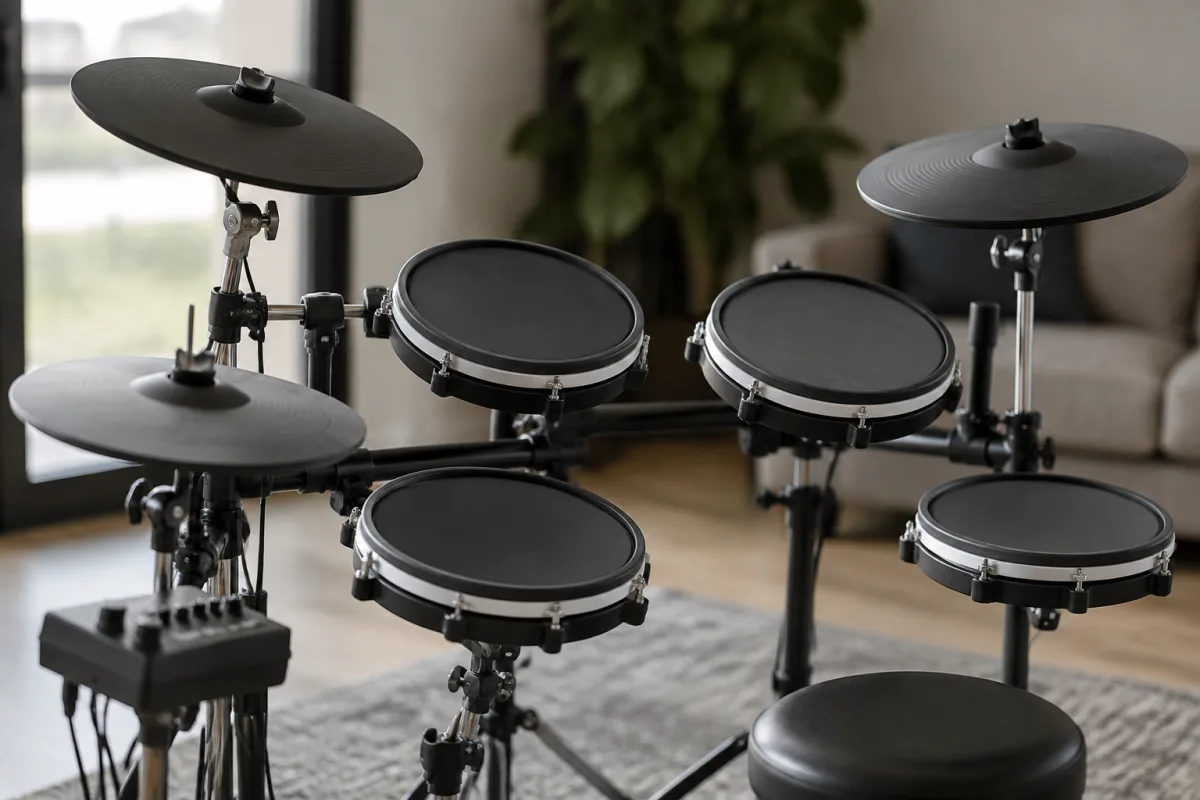
A portable drum set lets you make real drum sounds without the space, expense or volume of an acoustic kit, and without needing to be a programmer to play rhythms like a drum machine. Whether you're a drummer learning in a flat, a producer sketching ideas at home, or a performer bringing drums to smaller venues, a portable drum set delivers practicality and playability that neither acoustic kits nor drum machines can match alone. Understanding the different types, what separates quality portable sets from toys, and how to choose one suited to your needs helps you find an instrument that'll keep you practising and creating.
What Is a Portable Drum Set?
A portable drum set is an electronic or hybrid percussion instrument with drum pads (instead of acoustic heads), built-in or external sounds, and compact enough to transport easily. Unlike a full acoustic kit that requires a drum room, a portable set typically weighs 5–15 kg, folds or breaks down into manageable pieces, and can be set up in minutes. Most portable drum sets include basic drum sounds (kick, snare, hi-hat, tom) and often include percussion loops, samples or sequencing capabilities depending on the model.
Portable drum sets exist on a spectrum from basic practice pads (with minimal sounds and no sequencing) to sophisticated portable workstations (with hundreds of sounds, sequencing, MIDI connectivity and professional recording capabilities). Your budget, intended use and technical comfort level determine which end of the spectrum suits you.
Portable Acoustic Drums vs. Electronic Portable Sets
A portable acoustic kit (typically a 3-piece or 4-piece setup with smaller dimensions than a standard kit) sounds like real drums but is still loud, still requires neighbours' patience, and still requires tuning and maintenance. A portable electronic or hybrid set uses drum pads that trigger digital sounds, producing any drumkit sound from acoustic to electronic without volume (headphones work), maintenance or tuning.
For apartment living or bedroom practice, electronic portable sets win decisively. For outdoor festivals or small venues where acoustic tone matters, a portable acoustic kit might be appropriate—though even there, electronic pads have become standard because they're quieter and infinitely more versatile.
Key Features of Quality Portable Drum Sets
Pad sensitivity matters tremendously. Quality pads respond to soft touches and distinguish between hard and light hits, allowing dynamic, expressive playing. Cheap pads feel unresponsive and demand constant heavy hitting, which is tiring and frustrating. Look for velocity sensitivity—the ability to vary sound volume based on how hard you strike the pad.
Sound quality is equally important. A portable set with thin, tinny digital drums discourages practice. Quality sets use multi-sampled sounds (multiple recordings of real drums) that sound warm and articulate. Premium sets include drum kits recorded from real acoustic and electronic kits, offering genuinely playable tones.
Stability is crucial. Flimsy stands or weak legs make a portable set frustrating to play—every hit jostles the kit. Solid stands with proper bracing, non-slip feet and thoughtful weight distribution let you play with confidence without worrying about the kit collapsing mid-performance.
Portable Drum Set Types
Several categories serve different needs:
- Practice pads: Rubber pads with basic metronome, typically 8–12 pads. Best for learning technique and rhythm without creating sound. Excellent for silent practice but limited musically.
- Beginner portable kits: 5–8 pads with basic drum sounds, simple menus, USB power or batteries. £80–200. Good for learning basics; sounds are adequate but not inspiring.
- Intermediate portable sets: 8–12 pads with hundreds of sounds, effects, basic sequencing and MIDI connectivity. £200–500. Capable of full songs and gigging; sounds are professional quality.
- Professional portable workstations: 12–16 pads or more with extensive sound libraries, advanced sequencing, recording, sampling and performance features. £500–2000+. Full-featured instruments for professionals and serious amateurs.
Sound Quality and Realism
Entry-level portable sets use synthetic drum sounds that can sound digital and cheap. Mid-range and professional sets use multi-sampled sounds recorded from real drum kits, acoustic and electronic, offering genuine playability and tone. The difference is immediately obvious: sampled sounds feel musical and responsive; synthetic sounds feel plastic.
Look for sets offering multiple drum kits (acoustic, electronic, jazz, Latin) to expand your creative possibilities. Professional portable sets include thousands of sounds beyond drums—percussion, synths, samples—turning the instrument into a mobile production workstation rather than just a drum machine.
MIDI Connectivity and Recording
Quality portable sets include MIDI output, letting you connect to your computer or smartphone and use the pads to trigger samples, software drums or other sounds. This transforms a standalone drum set into a universal input device for music production. Professional portable sets include audio recording capabilities, USB connectivity and often built-in effects processing.
For bedroom producers, MIDI connectivity is essential. For gigging drummers who want a portable acoustic alternative, it matters less. Consider your primary use before prioritising MIDI features.
Size and Portability
A truly portable set should fit in a car backseat, travel case or backpack without major disassembly. Most portable kits fold down or have removable stands, reducing their footprint. Weight typically ranges from 5 kg (lightweight practice sets) to 15 kg (full-featured portable workstations). If you'll regularly transport your kit, lighter is better—15 kg with a stand is manageable but exhausting on long walks.
Power and Batteries
Portable sets use either battery power (AA or rechargeable packs) or USB power. Battery-powered sets offer true portability but can be expensive to power continuously. USB-powered sets require a power source (computer, power bank or wall outlet), but rechargeable batteries or mains power are cheaper than constantly buying AAs. Many professional sets offer both options.
Budget Considerations
Basic practice pads cost £30–80, fine for learning rhythm. Entry-level portable sets with basic sounds cost £80–200. Intermediate sets with professional sounds and MIDI connectivity range £200–600. Professional portable workstations cost £600–2000+. Match your budget to your commitment: a beginner trying drums shouldn't spend £600, but someone serious about music production benefits from professional-quality tools.
Conclusion
A quality portable drum set gives you the playability of acoustic drums with the silence and versatility of electronics, making it ideal for learning, practising and performing in small spaces. Choose based on your needs—practice requires less features than gigging or production work—and prioritise pad sensitivity and sound quality over flashy features. A solid mid-range portable set (£200–400) offers the best balance for most players, delivering genuine musicality without unnecessary complexity or expense. Find one that feels comfortable and sounds inspiring, and you'll keep practising far longer than with a cheap, frustrating alternative.


Comments