


Portable Drum Set article
Portable Drum Set for Beginners: A Complete Guide
Discover how to begin your drumming journey with a portable drum set. This beginner's guide covers setup, grip, proper posture, avoiding common mistakes, and structured practice routines to build confidence quickly.
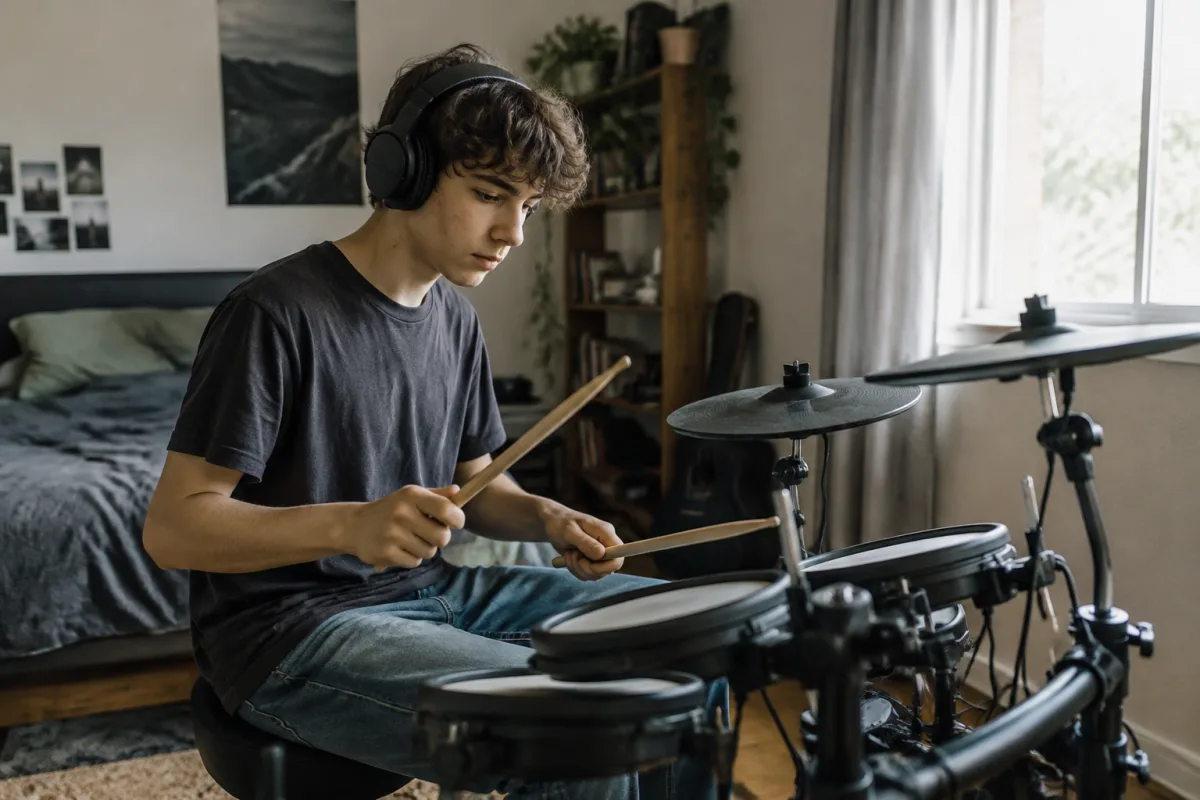
Learning to play drums appeals to many musicians, yet the prospect of installing a full acoustic kit seems impractical for flat dwellers, students, or beginners unsure about commitment. A portable drum set removes these barriers—offering genuine drumming experience without requiring dedicated studio space, soundproofing, or massive financial investment. If you've wondered whether you could learn drums in a confined space, the answer is unequivocally yes. This guide walks you through your first portable drum set, explaining what you'll encounter, how to set up properly, common mistakes to sidestep, and how to maintain confidence when the inevitable frustration arrives.
Why Portable Drum Sets Make Sense for Beginners
Acoustic drum kits intimidate beginners for good reason—they're expensive, require serious installation, demand soundproofing, and take up considerable space. Portable drum sets eliminate nearly every barrier to entry. They fit into bedrooms, practice studios, or even cupboards between sessions. They produce far less volume than acoustic kits, respecting neighbours and flatmates. They cost a fraction of what acoustic alternatives demand. Most importantly, they offer genuine drumming experience with real drum sounds, proper hand positioning, and authentic technique development.
Electronic portable sets range from basic to sophisticated. Budget options deliver fundamental functionality ideal for learning. Mid-range kits offer superior sound quality and feature richness without premium pricing. The barrier to entry remains low enough that you can commit to learning without gambling on expensive equipment you might abandon.
Choosing Your First Portable Drum Set
Your first decision involves selecting between fully-contained portable systems and pad-based controller kits. Contained systems (sometimes called "box kits") integrate all components into one portable unit—drums, cymbals, pads, and electronics in a self-contained package. These suit absolute beginners, offering everything you need in a compact footprint. They sound authentic enough for practice and learning but lack the customisation and advanced features of modular systems.
Pad-based controllers offer modular flexibility but require connecting to a device or external brain—adding complexity and cost. Start with a contained portable set. You'll learn proper technique, determine whether drumming genuinely interests you, and later graduate to modular systems if your skills and ambitions justify the investment.
Avoid the temptation to purchase the absolute cheapest option available. Severely budget kits frustrate learning with poor pad responsiveness, inconsistent sound, and flimsy construction. Spend enough that the kit responds to your playing reliably and sounds pleasant enough to encourage practice. The £300-£600 range offers excellent value for genuine beginner kits.
Setting Up Your Portable Drum Set Correctly
Once your kit arrives, resist the urge to immediately begin playing. Spend time reading the manual thoroughly—particularly sections covering pad sensitivity settings, sound selection, and power requirements. Arrange your kit at a comfortable height and playing distance. Your seated position should feel relaxed, not cramped or stretched.
Invest in a proper drum throne—a simple stool designed for drummers. Budget thrones cost £30-£60 and dramatically improve posture and playing comfort. Playing from a regular chair invites poor technique and physical strain. A proper throne feels like a minor investment that pays ongoing dividends.
Position your portable kit so that all drums and pads are easily accessible. Your hi-hat should sit slightly above and to your left, snare drum directly in front, tom drums positioned for natural reach, and kick drum below for easy foot engagement. Spend time adjusting positions until everything feels natural. Proper positioning prevents awkward reaches that create fatigue and encourage poor technique.
First Steps: Basic Grip and Posture
Before playing patterns or rhythms, learn proper grip and posture. Grip styles vary—matched grip (both hands holding sticks identically) suits most modern players learning rock, pop, or contemporary styles. Traditional grip (left hand holds stick differently) applies primarily to jazz and swing contexts. Start with matched grip and explore alternatives only after establishing fundamental technique.
Posture matters profoundly. Sit upright with your back relaxed, not rigid. Your arms should hang naturally from your shoulders, creating approximately 90-degree angles at your elbows. Your feet should rest comfortably on floor and kick pedal with knees at approximately 90 degrees. Proper posture prevents repetitive strain injuries that prematurely end drumming careers before they begin.
Your portable drum set should inspire comfortable playing sessions of 20-30 minutes. If you find yourself cramping, straining, or assuming awkward positions, adjust your setup before continuing. Your body's comfort signals whether your setup invites successful learning or frustration.
Common First-Timer Mistakes to Sidestep
Mistake one: blaming the kit when poor technique actually causes bad sounds. Portable drum sets respond honestly to your playing—lazy strokes sound weak, wild playing sounds uncontrolled. Rather than assuming your kit is faulty, accept that your playing is revealing precisely what you've done. This honest feedback accelerates improvement.
Mistake two: immediately exploring complex patterns before mastering basic rhythms. The temptation to play your favourite songs runs strong, but drumming fundamentals matter. Learn basic four-on-the-floor kick patterns and simple hi-hat-snare combinations first. Complex patterns become manageable once fundamentals are solid.
Mistake three: excessive volume from the outset. Portable kits can produce considerable noise through headphones or amplified speakers. Start quietly, listening carefully to what you're playing. Loud practice obscures mistakes and fatigues ears. Volume increases naturally as your confidence and control improve.
Mistake four: assuming you need expensive cymbals to sound good. Quality cymbal pads within portable kits produce satisfying sounds perfectly adequate for learning. Premium upgrades become relevant only after establishing whether drumming genuinely interests you.
Mistake five: practising sporadically then blaming the kit for lack of progress. Twenty minutes daily outperforms two-hour weekend sessions dramatically. Consistency builds muscle memory and technique more effectively than sporadic effort. Establish realistic daily practice commitments—even fifteen minutes daily produces noticeable improvement weekly.
Building Confidence Through Structured Practice
Resist the urge to simply bash away. Structured practice accelerates progress. Spend your first week on grip and posture only—no patterns, just learning how the sticks feel in your hands and how your body positions itself for drumming. Boring, perhaps, but essential.
Week two: master the basic kick pattern (playing the kick on beats one and three). Add hi-hat openings and closings on eighth notes. Play this simple pattern for ten minutes, focusing on staying with a metronome. Precision matters more than speed.
Week three: add a snare crack on beat two. Play kick-hi-hat-snare-hi-hat patterns repeatedly. Speed isn't your concern; accuracy and timing are everything. A metronome becomes your essential practice tool at this stage.
Progress methodically. Learning proper drumming technique requires patience. The quick wins come from clean fundamentals, not premature ambition. Your portable drum set will reward this discipline with rapidly improving skills.
When Frustration Arrives
If—when—frustration hits (typically around week two or three), remember that every drummer has felt exactly what you're experiencing. Your hands aren't coordinating properly. Rudiments feel impossibly difficult. You question whether you have natural rhythm. These feelings pass. Within weeks, what feels impossible becomes second nature. Your portable drum set is responding to growing skill, not to faulty equipment.
When doubt creeps in, play along with recordings of drummers you admire. Hear how they build patterns from simple fundamentals. Recognise that their skill developed through practice identical to yours—no shortcuts, no extraordinary talent required, only persistence.
Caring for Your Portable Drum Set
Portable drum sets require minimal maintenance compared to acoustic alternatives. Wipe down pads occasionally to remove dust. Keep the electronic brain away from moisture and extreme temperatures. Check that cables remain properly seated. These simple habits extend your kit's operational life significantly.
Store your kit in a designated location rather than leaving components scattered. A simple case or bag protects everything and creates a ritual around your practice sessions. When your kit is ready, practice becomes more inviting than when components are scattered and setup feels tedious.
Growing Beyond Beginner Status
As your skills develop, you'll naturally want to explore more complex patterns, different musical styles, and perhaps modular controller systems offering greater customisation. Your portable drum set has served its purpose—building foundational skills, developing ear training, and proving that drumming genuinely interests you.
For comprehensive insights into portable drum set capabilities, technology, and deeper exploration of drumming fundamentals, consult the complete guide to portable drum set.
Your first portable drum set represents a tangible commitment to learning a skill that brings genuine joy. The confidence built through disciplined practice translates far beyond drumming—into patience, precision, and the understanding that skill develops through consistent effort. Play well.


Comments