


Portable Drum Kits article
Portable Drum Kits for Beginners: A Complete Guide
New to drumming? Portable drum kits are perfect for beginners. This guide covers setup, space needs, sound quality, avoiding common mistakes, and the fastest path to enjoying real drumming practice.
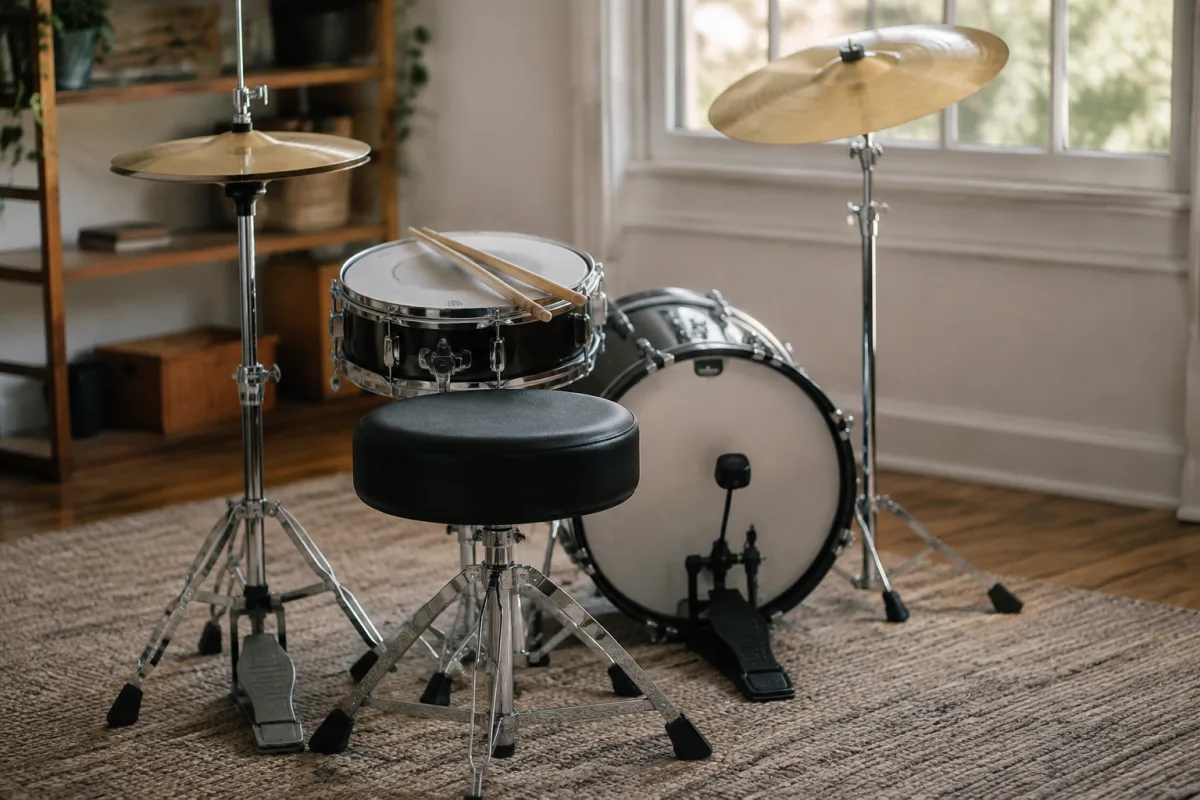
If you're thinking about starting drums but worried about space, noise, or investment, a portable drum kit might be perfect for you. These compact electronic kits deliver genuine fun and real drumming practice without needing a basement studio. This guide walks a nervous beginner through everything you need to know to make your first portable drum kit experience enjoyable and successful.
What Makes Portable Drum Kits Different From Acoustic Drums
Portable drum kits use electronic pads and sounds instead of acoustic shells and cymbals. This means they're dramatically quieter, smaller, and cheaper than acoustic kits. You can play silently with headphones, or plug into speakers for full volume. They're perfect for flats, home studios, or bedrooms. The learning experience is nearly identical to acoustic drums—you still develop hand-foot coordination, timing, and rhythm. However, the feel is different. Electronic pads require a different touch than acoustic drums. This isn't worse; it's just different. Many drummers start portable and transition to acoustic once they're confident in their skills.
Understanding Your First Portable Kit's Key Components
A basic portable drum kit includes drum pads (typically kick, snare, and toms), cymbals pads (hi-hat and crash), a sound module (the brain that produces sounds), and a stand. Some kits bundle these together; some are sold separately. For beginners, all-in-one bundles are ideal—everything is designed to work together and you don't need to figure out compatibility. The stand determines how everything is positioned. Cheaper stands can feel flimsy or wobbly, which makes playing less enjoyable. Budget a bit more for a solid stand if your kit allows it. A stable kit feels professional and encourages regular practice.
Space Considerations: Measuring Your Playing Area
Even portable kits need space. Most take up roughly the footprint of a small desk—maybe 2 metres by 1 metre for the complete setup including the throne. Before buying, measure your actual playing space and visualise the kit. If you're in a small flat, check whether you can leave the kit assembled or need to break it down after each session. This affects enjoyment and how often you'll actually play. Nothing kills motivation faster than a kit that's annoying to set up and pack away. Some drummers get fold-away stands specifically to make storage easier.
Sound Quality and Built-In Sounds
Electronic drum kits come with pre-recorded sounds. Budget kits have basic, synthetic sounds that can feel sterile. Mid-range kits offer realistic drum and cymbal samples that sound musical and satisfying. High-end kits offer hundreds of sounds and deep customisation. For beginners, good-quality samples matter for motivation. If your kit sounds terrible, you won't enjoy practising. Listen to demos of the specific kit you're considering. YouTube has plenty of demos where drummers play the same rhythm on different kits. This shows you exactly what each kit sounds like in real playing, not just marketing videos.
Connectivity: Headphones and Speakers
One major advantage of portable kits is playing silently with headphones. This is a game-changer for flat-dwellers and late-night practice sessions. Check that your kit has a standard headphone jack (3.5mm or 6.3mm). Some budget kits use proprietary connectors or have poor audio quality through headphones. Also confirm whether the kit accepts external speakers if you want to play louder. Most modern portable kits have line-out connectors for this, but verify before buying. The ability to practice silently is often the difference between daily practice and never touching the kit.
Throne and Ergonomics: Don't Underestimate Comfort
A cheap, wobbly throne makes drumming uncomfortable and kills practice motivation. Your feet can't stay steady and your posture suffers. A quality drum throne costs £30-60 and makes an enormous difference. It should adjust to a comfortable height where your thighs are roughly parallel to the ground. Test the throne before buying if possible. A throne that looks fine but feels unstable will frustrate you every time you play. Comfort and stability matter more than you'd think.
Common Beginner Mistakes to Avoid
The biggest mistake beginners make is buying the absolute cheapest kit. Budget kits often have poor pad sensitivity, which makes them frustrating to play. Your timing efforts get interpreted incorrectly by the pads. This is demoralising and makes learning harder. Spend a bit more and get a kit with reliable pad sensitivity. Another frequent error is ignoring headphone quality. Many budget kits come with cheap headphones that sound awful. Buy quality headphones separately—it transforms the practice experience.
Many beginners also set up their kit incorrectly, creating awkward angles and poor posture. Spend 10 minutes arranging everything so it feels natural. Your kick pad should be playable without straining your ankle; your snare pad should be at a comfortable striking height. The cymbals should be at angles that feel natural. Correct setup makes learning faster and prevents injury. Finally, beginners often abandon drum kits because they don't commit to regular practice. Set a realistic schedule—even 20 minutes daily is better than 90 minutes once a week. Small, consistent practice builds skill steadily.
Learning Progression: What to Expect
Week one, you'll just explore sounds and play around. Week two and three, focus on basic coordination—kick and snare together. Within a month, you can play simple rhythms. After three months of regular practice, you can genuinely play songs. This is fast progress and incredibly motivating. Portable drum kits accelerate this process because you can practice whenever you want, without disturbing neighbours. This means more frequent sessions and faster improvement.
Troubleshooting and Reliability
Most portable kits are reliable if you treat them reasonably. Keep them away from moisture and direct sunlight. Pads eventually wear out (after hundreds of hours of playing), but replacement pads are cheap. If a pad stops responding, it's usually a connection issue—wiggle the cable. Modern kits rarely fail unexpectedly. Read reviews before buying and check warranty coverage. Many manufacturers offer two-year warranty on electronic components.
Progressing Beyond the Beginner Kit
Many drummers start on portable kits and either stay with them or eventually transition to acoustic drums once they're confident in their skills and understand what they want from drumming. This progression is totally normal and healthy. Your first portable kit is genuinely useful—it's not a stepping stone you'll regret. Thousands of professional drummers practice regularly on portable kits regardless of their acoustic setup.
Starting with a portable drum kit is smart, fun, and achievable. Choose a kit with good pad response and sound quality, set it up ergonomically, and commit to regular practice. You'll be genuinely drumming within weeks. Avoid the beginner pitfalls, treat your kit reasonably, and it will serve you for years. For in-depth information on everything portable drum kits offer, check out our complete guide to portable drum kits.



Comments