


Pad MIDI article
The Complete Guide to Pad Midi
Pad MIDI controllers provide intuitive interfaces for triggering sounds and controlling parameters in modern music production. Essential tools for hip-hop, electronic and experimental music creation.
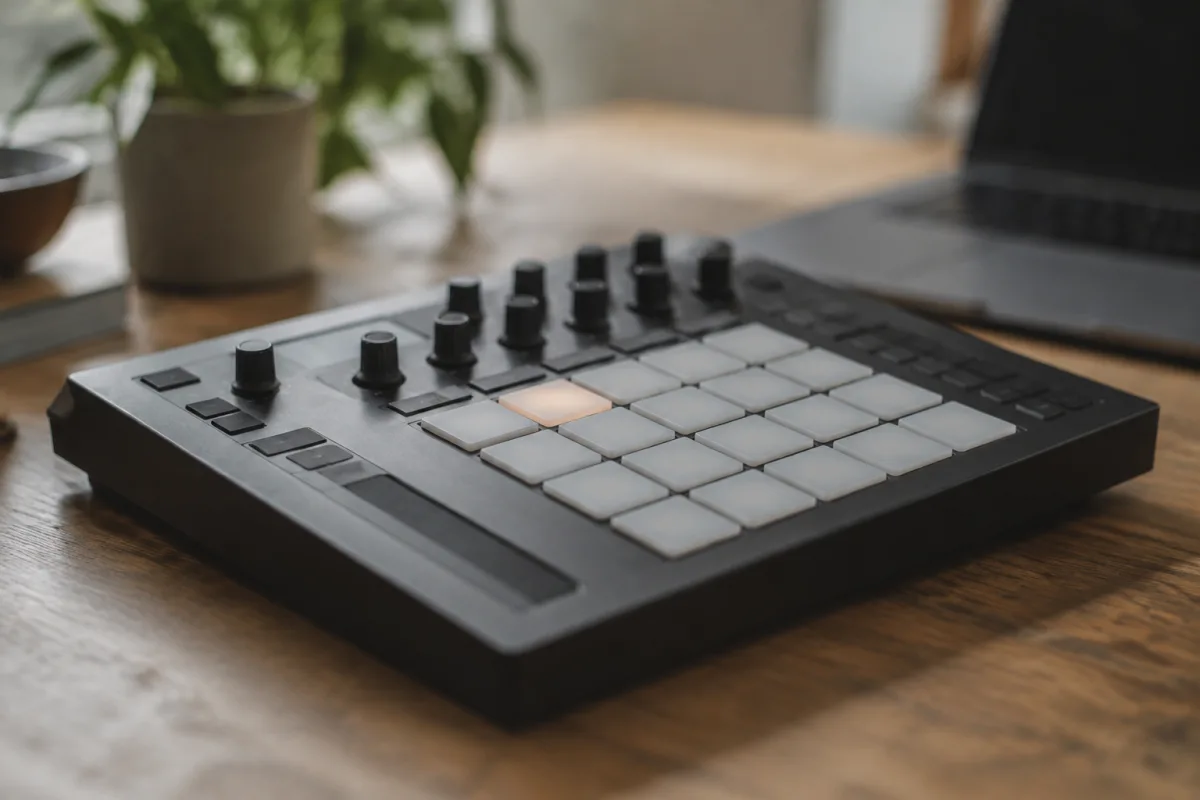
MIDI controllers with touch-sensitive pad interfaces have revolutionised modern music production, providing intuitive instruments for triggering sounds, controlling parameters and performing live. These compact, portable devices connect to computers, synthesisers and samplers, unlocking creative possibilities across diverse musical genres. Whether producing hip-hop, electronic music or exploring experimental sound design, understanding pad MIDI controllers reveals why these tools have become essential in contemporary music production.
Understanding MIDI Pads and Their Function
MIDI pad controllers transmit musical data through MIDI protocol, triggering software instruments or external synthesisers. Touch-sensitive pads detect strike velocity, translating finger dynamics into corresponding sound characteristics. The responsiveness of quality pad interfaces enables expressive performance that rivals traditional acoustic instruments in terms of nuance and control.
Modern pad MIDI controllers typically feature colour-coded pads providing visual feedback during performance. Built-in displays show parameter information and status indicators. Some models incorporate full keyboards or additional controllers, extending functionality beyond percussion-like pad performance. This versatility makes pad controllers suitable for diverse production workflows.
Hardware versus Software Pad Controllers
Standalone pad MIDI controllers connect via USB or wireless protocols to computers running music production software. Integrated controllers combine pads with keyboards, faders and knobs in single devices. Software-based pad instruments run entirely within digital audio workstations, eliminating hardware dependencies. Each approach offers distinct advantages depending on production workflow and performance requirements.
Common Pad Controller Configurations
Most pad MIDI controllers feature 8-16 touch-sensitive pads arranged in grids. Eight-pad configurations provide focused performance interface suitable for percussion-focused performance. Sixteen-pad layouts offer greater complexity, enabling more elaborate performance routines and production capabilities. Professional controllers sometimes feature 32 or more pads for comprehensive sound triggering and control.
Typical features include:
- Touch-sensitive pads with programmable velocity sensitivity
- Colour-coded visual feedback for performance guidance
- Programmable buttons for performance mode selection
- Faders or rotary encoders for real-time parameter control
- Display screens showing active parameters and status information
- MIDI connectivity options (USB, 5-pin DIN, wireless)
Applications in Electronic Music Production
Hip-hop and trap production extensively employs pad MIDI controllers for drum programming and live beat-making. Electronic music producers use pads for triggering synthesiser voices and controlling effect parameters. Electronic performers integrate pad controllers into live rigs for responsive, dynamic performance capabilities. This versatility across genres demonstrates the fundamental importance of pad interfaces in contemporary music creation.
Integration with Digital Audio Workstations
Modern digital audio workstations recognise pad MIDI controllers automatically, eliminating complex driver installation. Built-in instrument libraries and effect processors respond immediately to pad strikes and controller gestures. Customisable key mapping allows users to assign specific functions to individual pads based on workflow preferences. This deep software integration makes pad controllers powerful performance and production tools within familiar production environments.
Performance and Live Applications
Touring electronic musicians incorporate pad controllers into live rigs for real-time sound manipulation and performance. The responsive nature of quality pads enables expressive performance rivalling traditional instruments. Smaller portable models fit easily into travel cases, making them practical for gigging musicians. Professional performers report that quality pad controllers transform live electronic performance possibilities.
Learning Curve and Accessibility
Pad controllers offer intuitive interfaces that musicians without keyboard experience can learn quickly. The visual layout provides immediate feedback about available sounds and controls. Performance techniques from acoustic percussion transfer readily to pad performance, lowering barriers to learning. This accessibility has made pad controllers popular entry points into electronic music production for musicians with diverse backgrounds.
Advanced Features and Customisation
Professional pad controllers feature extensive programmability allowing complex performance routines. Assignable parameters enable customising pads to respond specifically to production workflow requirements. Advanced controllers include built-in sequencers, step editors and looping functions, transforming them into standalone production instruments. These extended capabilities appeal to experienced producers seeking sophisticated tools for demanding production tasks.
Conclusion
Pad MIDI controllers represent essential tools in contemporary music production, providing intuitive interfaces for triggering sounds and controlling parameters. From hip-hop beat-making to experimental electronic music, these versatile instruments enable creative expression across genres. Whether integrating into studio workflows or performing live, pad controllers deliver responsive, expressive performance capabilities that modern producers and performers rely on daily.


Comments