


Oscillator Module Buying guide
Oscillator Module: A Complete Buyer's Guide
An oscillator module is the sound source at the heart of Eurorack. This guide helps you understand types, features, and trade-offs to pick the right one.
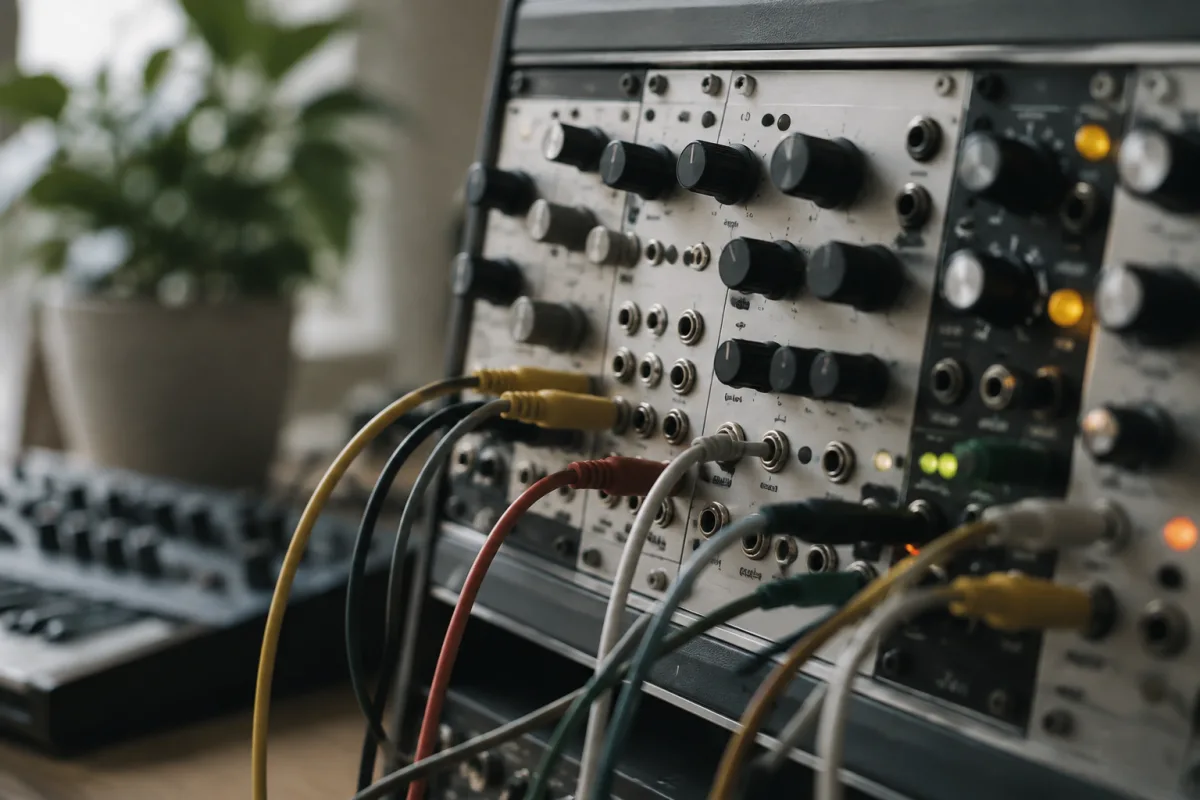
An oscillator module (VCO) is the sound source at the heart of any modular synthesizer. Whether you're building your first Eurorack system or expanding an existing one, choosing the right oscillator can define the character of everything you create. This buying guide helps you understand the different types, features, and trade-offs—so you can pick an oscillator that matches your sound and budget.
The Role of an Oscillator
An oscillator generates raw sound waves at a pitch you control via a keyboard or control voltage. The shape of the wave—sine, square, sawtooth, triangle—determines the timbre (tone quality). Different waveforms suit different purposes: sine waves are pure and mellow; sawtooth waves are bright and buzzy; square waves are hollow. A good oscillator lets you blend or switch between these waveforms in real time, giving you tonal flexibility.
In a Eurorack system, the oscillator is the first stop: it generates the raw material that you then shape with filters, effects, and envelopes. The quality and features of your oscillator therefore ripple through your entire patch.
Types of Oscillators
Analog oscillators use analog circuitry to generate waves. They're warm, rich, and slightly imperfect—this imperfection is often prized as "character." Analog oscillators typically cost £80–200 per module and consume more case space (8–16 HP). Examples: Doepfer A-110, Make Noise Teletype Oscillator (expensive but revered).
Digital oscillators use digital processing to generate waves. They're stable, can generate complex waveforms, and often include features like wavetable morphing (blending between dozens of waveforms). Digital oscillators cost £40–150 and are compact (8–10 HP). Mutable Instruments Braids is the entry-level standard: £75, compact, reliable, and sounds excellent.
Wavetable oscillators store multiple waveforms and let you morph or step between them. This opens up evolving, complex tones impossible with fixed waveforms. Examples: Mutable Instruments Wavetable Oscillator or Intellijel Dixie II+. Cost: £80–150.
Key Features to Evaluate
Beyond type, compare these features:
- Waveform selection: Sine, square, sawtooth, triangle are the basics. Some oscillators add pulse width (PWM), which modulates the square wave. Look for oscillators that let you blend waveforms smoothly, not just switch between them.
- Size and power consumption: Oscillators range from 6–16 HP and draw 30–200 mA from your case power supply. Check that your case can supply enough power; undersized power supplies are a common pitfall.
- Pitch control methods: Most oscillators respond to 1V/octave CV (control voltage), which is the Eurorack standard. Check this; if it uses a different standard, it won't play nicely with your keyboard or sequencer.
- Fine-tuning capability: After power-up, oscillators can drift slightly out of tune. A fine-tune knob lets you dial in pitch precisely. Essential if you're matching your Eurorack to external gear.
- Frequency range: Audio oscillators typically operate 20 Hz – 20 kHz. Some include "sub-oscillator" outputs (lower frequencies for bass) or ultra-high frequencies. Understand what you need.
- Sync capability: Hard sync (resetting the wave at a specific point) creates aggressive, harmonically rich sounds. Soft sync is gentler. If you want classic synthesizer aggression, sync matters.
- Modulation inputs: Can you modulate pitch, waveform, or pulse width via control voltage? The more modulation options, the more expressive your oscillator.
Buying by Budget and Use
Budget (£40–60): Doepfer A-111, Intellijel Rubicon, or used Braids. Basic oscillators, solid features, affordable. Good for learners or second oscillators in a larger system.
Mid-range (£80–120): Mutable Instruments Braids, Intellijel Dixie II, or Doepfer A-111 with extra features. Excellent all-rounders with good sound and reliable features. Safe choice for beginners.
Premium (£150–250): Make Noise Rene 2, Intellijel Plonk, or Analog Systems oscillators. Advanced features, exceptional sound, beautiful hardware. For enthusiasts ready to invest.
New vs. Secondhand
Eurorack oscillators rarely fail; they hold their value well. Secondhand modules are often 20–30% cheaper and sound identical to new ones. If you find a Braids for £50–60 secondhand vs. £75 new, that's a smart buy. Check Reverb.com and local music shops for deals.
Making Your Choice
For your first oscillator, prioritize reliability, sound quality, and simplicity. A Mutable Instruments Braids or Doepfer A-110 won't disappoint. Once you understand how oscillators work and what you want from them, specialized options (wavetable, sync-heavy, analog purist) become interesting. Start simple, expand later.
The oscillator is your voice in Eurorack. Choose one that inspires you to play.


Comments