


Nektar MIDI Keyboard Buying guide
Nektar Midi Keyboard: A Complete Buyer's Guide
Nektar MIDI keyboards excel for DAW-based production with dedicated controls and software integration. This guide helps you choose the right model for your workflow and budget.
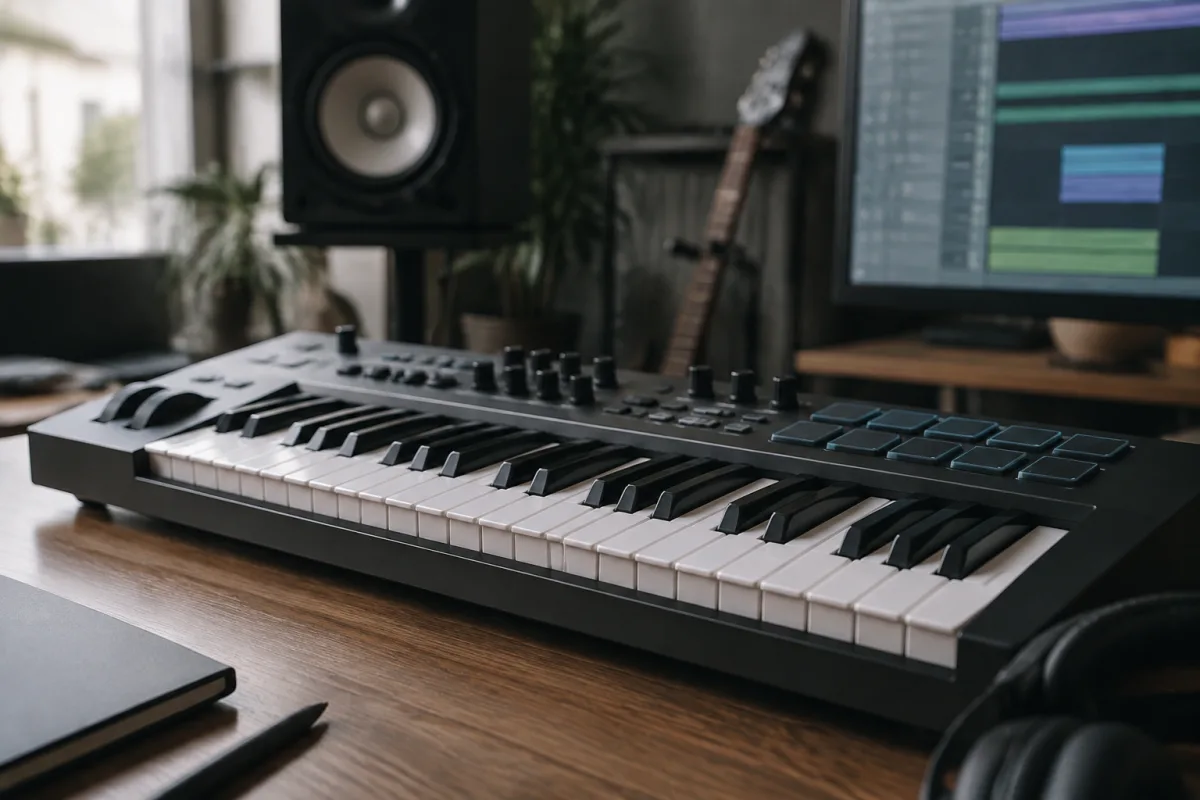
Nektar MIDI keyboards occupy a fascinating niche in the controller market. They're not traditional piano-style keyboards—they're deeply integrated MIDI controllers designed specifically for DAW (Digital Audio Workstation) production and software synthesis. If you're considering buying a Nektar MIDI keyboard, you're evaluating an instrument built for hands-on workflow integration rather than traditional note-playing capability.
Understanding Nektar's Design Philosophy
Nektar controllers prioritise software integration and workflow efficiency over piano-style playing experience. Every model includes dedicated DAW controls—faders, knobs, transport buttons, and pads—configured for specific software like Ableton Live, Logic Pro, or Cubase. This isn't a compromise; it's a deliberate design choice focused on reducing hand movement between keyboard and mouse.
When buying a Nektar keyboard, you're investing in studio efficiency. You'll reduce time clicking menu items and increase time creating music. This workflow advantage justifies the premium over basic MIDI controllers.
Key Varieties and Their Purposes
Nektar offers distinct product lines. The Panorama series provides extensive DAW controls with full keyboard action. The Deepmind keyboard integrates synthesizer engine with production controls. Smaller models like the Roadrunner offer minimal footprint with essential controls. Understanding which line matches your workflow is crucial when buying.
For DAW-first producers (those primarily using software instruments), Panorama models deliver exceptional value. For hardware synthesizer players who want DAW control, Deepmind bridges both worlds. For mobile producers needing compact solutions, smaller models suffice.
Integration and Software Compatibility
Nektar keyboards ship with detailed DAW integration for major software. Ableton Live integration is exceptional—the keyboard controls major production parameters without configuration. Logic Pro and Cubase integration varies by model; check compatibility specifically for your software before buying.
Standard MIDI implementation means the keyboard works with any software via generic MIDI, but you lose optimised controls. Buying Nektar primarily benefits users already committed to DAW ecosystems it's optimised for.
Build Quality and Longevity
Nektar controllers use quality construction with responsive faders, knobs, and buttons that survive years of studio use. The keyboards generally feature durable plastic construction that withstands transport and daily abuse. Compared to budget controllers that feel fragile, Nektar products inspire confidence.
Support is reliable. Firmware updates continue years after purchase, adding features and compatibility. If components fail, Nektar customer service remains accessible and responsive.
Keyboard Action Quality
Nektar keyboards generally don't position themselves as piano-quality instruments. The keys are semi-weighted or unweighted, suitable for triggering software instruments and clips rather than playing expressive passages. If you're buying primarily to play piano-style music, Nektar isn't optimal.
For producing beats, programming synth lines, and controlling DAW functions, the keyboard action is genuinely adequate. The reduced key resistance actually accelerates rapid triggering and pattern creation—strengths of electronic music production.
Fader and Control Surface Efficiency
The real value in Nektar controllers lies in dedicated controls—eight or more faders, multiple knobs, transport buttons, and programmable pads. This hardware control surface dramatically improves workflow compared to menu-clicking through software.
When buying, count faders and knobs relevant to your music production. More controls enable more simultaneous parameter manipulation. Fewer controls demand more menu navigation. Match control count to your production style and software capabilities.
Size and Studio Space
Nektar keyboards range from compact 25-key units to full 61-key instruments with extensive control surfaces. Compact models save desk space but limit keyboard playability. Full-size models provide keyboard range but demand significant workspace.
Be realistic about studio space. A 61-key Panorama is genuinely large. If desk space is limited, smaller Nektar models actually provide better workflow integration than undersized full keyboards.
Budget Considerations by Category
Compact Nektar controllers (25-key) range from £200-£350. Entry-level Panorama keyboards (49-key) cost £400-£600. Full-featured instruments (61-key Panorama) reach £700-£1000. Pro models with extensive controls exceed £1000.
Buying budget Nektar models delivers core workflow benefits without the premium for professional-level controls. For most DAW producers, mid-range 49-key or 61-key models provide optimal value—sufficient controls without excessive features.
Playing Versus Production Workflow
Nektar keyboards excel for beat-making, synth programming, and production where hands-on fader/knob manipulation matters. They're less ideal for performing live or playing expressive keyboard passages. When buying, honestly assess whether your primary use is production or performance. If performance is primary, traditional keyboard controllers might suit better.
Comparison to Akai, Alesis, and Native Instruments
Competitors like Akai's Force and Native Instruments' Komplete Kontrol offer similar workflow integration with varying strengths. Akai emphasises production-focused design with groovebox elements. Native Instruments prioritises deep software ecosystem integration. Nektar balances keyboard playability with DAW control better than most.
When buying, test controllers side-by-side if possible. Workflow preferences are personal. Some producers prefer Nektar's balance; others gravitate toward Akai's production focus or Native Instruments' software depth.
After-Purchase Integration and Learning
Nektar keyboards include detailed software integration guides and learning videos. Expect 2-3 hours to fully configure the keyboard for your specific DAW and workflow. The learning curve is genuine but worthwhile—proper configuration dramatically improves daily production efficiency.
Join Nektar user communities online. Experienced producers share custom configurations and workflow optimizations that dramatically accelerate your mastery.
Expandability Considerations
Some Nektar models offer MIDI expandability, letting you add additional controllers or foot switches for enhanced control. Check whether your target model supports expansion before buying, especially if you anticipate future workflow evolution.
Explore our comprehensive Nektar MIDI keyboard guide for detailed model comparisons and professional recommendations.
Buying a Nektar MIDI keyboard is an investment in production efficiency. You're choosing an instrument that reduces workflow friction and enables faster creative realisation. Start with a model matching your current DAW and available studio space. The most expensive Nektar is worthless if its controls don't match your production style or software. The modest Nektar that feels intuitive and integrates seamlessly with your workflow becomes indispensable.


Comments