


Monophonic Synth article
Monophonic Synth for Beginners: A Complete Guide
A monophonic synth plays one note at a time, making it perfect for learning synthesis fundamentals. This guide covers setup and basic sound creation.
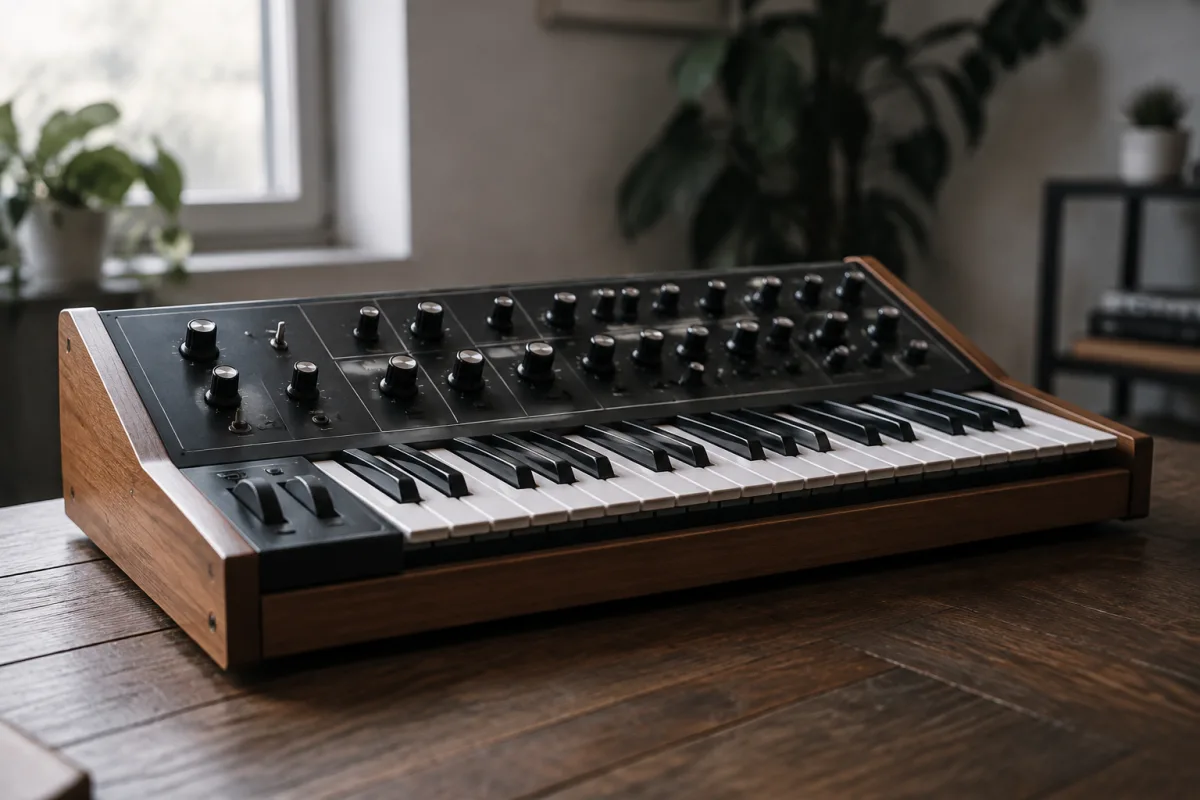
Getting Started with a Monophonic Synth: A Beginner's Guide
A monophonic synth plays one note at a time, which makes it simpler to understand than polysynths that play multiple notes simultaneously. If you're exploring synthesisers and wondering where to begin, a monophonic synth is an excellent starting point. This guide walks you through what a monophonic synth does, how to make basic sounds, and why starting mono might be smarter than diving into complex multi-note gear.
What Makes a Monophonic Synth Different?
A monophonic synth produces sound one note at a time. Play a note and it sounds; play another note and the first stops. This limitation forces simplicity: you focus on creating a single, expressive voice rather than juggling multiple simultaneous sounds. For learning synthesis, this is brilliant. You understand how each control affects the sound without complexity hiding the relationships between parameters. As you gain experience, you can move to polyphonic synths, but starting mono teaches you the fundamentals faster.
Understanding the Basic Monophonic Synth Architecture
Oscillator
The oscillator is the sound generator. It produces a raw waveform (sawtooth, square, triangle, sine). Different waveforms have different tonal characteristics. A sawtooth sounds bright and buzzy; a sine wave sounds pure and smooth. On a monophonic synth, there's usually one main oscillator, sometimes with a sub-oscillator adding bass. This simplicity makes learning the relationship between waveform and tone immediate.
Filter
The filter sculpts the oscillator's harsh raw sound into something musical. A low-pass filter removes high frequencies, making the sound darker and warmer. A high-pass filter removes lows, making it brighter. On a monophonic synth, understanding the filter is crucial—it's where synthesis becomes creative. Turning the filter knob while playing a note lets you hear directly how it shapes tone.
Envelope
The envelope controls how sound evolves over time: how it attacks (starts), sustains (holds), and releases (fades). Monophonic synths usually have an ADSR envelope (Attack, Decay, Sustain, Release). Learning to adjust these four parameters is fundamental to synthesis. With just one voice, you focus entirely on these relationships.
LFO (Low-Frequency Oscillator)
The LFO creates modulation—rhythmic changes to a parameter. It can wobble the filter, vibrate the pitch, or pulse the amplitude. On a monophonic synth, LFO effects are obvious and immediate. Hearing the LFO sweep the filter while playing teaches you what modulation does faster than reading about it.
Setting Up Your Monophonic Synth
- Plug in power. Most monophonic synths run on a wall adapter or batteries. Check your model.
- Connect audio output to a speaker or amplifier. A simple powered speaker works fine.
- Turn on the synth. Wait for startup; you might hear a tone immediately or silence depending on settings.
- Set the filter cutoff to 12 o'clock (middle). This is your starting point.
- Set volume to a low level. You can turn it up safely once you hear what's happening.
- Play a key or press a button. You should hear a sound. If not, check that the oscillator waveform is selected and the filter isn't closed completely.
First Steps: Making Basic Sounds
Step 1: Choose a Waveform
Start with a square wave. It's pure, not too bright, and teaches you clearly. Experiment with sawtooth next—it's brighter and fuller. Leave sine waves for later—they're subtle and less beginner-friendly.
Step 2: Adjust the Filter
While holding a note, slowly turn the filter cutoff knob. You'll hear the sound change from bright to dark. This is the heart of synthesis. Get comfortable with this relationship before moving to anything else.
Step 3: Try the Envelope
Play a note and watch (or listen to) how it sounds over time. If it sounds flat, adjust the Attack (make it slower so sound fades in). If it stops too abruptly, increase the Release so it fades longer. Start with Decay and Sustain at zero; they're secondary for learning.
Step 4: Explore the LFO
Turn the LFO rate to a slow speed (around 1–5 Hz). Modulate the filter cutoff. You'll hear the filter sweep up and down rhythmically. This is synthesis becoming musical and expressive.
Common Beginner Mistakes
Twisting Every Knob Randomly
Resist the temptation. A monophonic synth is designed to teach you one thing at a time. Master the filter, then the envelope, then the LFO. Random knob-turning obscures what's actually happening.
Expecting Instant Professional Sounds
Synthesis is a skill. Creating a sound that inspires you takes practice and patience. Spend a week just making weird sounds—no judgement. Understanding how parameters interact matters more than sounding "good" early on.
Ignoring Your Ears
Read the manual, sure, but play and listen. A monophonic synth teaches through direct feedback. If you turn the filter and the sound changes, you're learning. Trust that more than memorised facts.
Setting Volume Too Low
You won't hear subtle changes if the volume is too quiet. Set output to a comfortable listening level—loud enough to hear clearly but not painfully loud. This lets you hear what the synth is actually doing.
Why Start Mono Before Poly?
Polyphonic synths (playing multiple notes) add complexity that obscures the fundamentals. When you can't play chords, you focus on creating expressive single-voice sounds. You learn phrasing, dynamics, and performance expression naturally. After six months on a monophonic synth, moving to polyphonic gear feels natural; jumping to poly first is overwhelming.
Patch Synthesis vs. Menu Diving
Some monophonic synths are "patch synths"—you see and touch every control. Others hide parameters in menus. For a beginner, patch synths are far better because you can see relationships between controls. If choosing between two monophonic synths, prefer the one with visible knobs and sliders.
Adding Expression: Velocity, Bend, Modulation
After basic synthesis, explore velocity (playing keys harder or softer), pitch bend, and modulation wheels. These add human expression to your sounds. A monophonic synth's simple architecture makes these features accessible—you're not juggling multiple voices while learning expression.
Moving Beyond Monophonic
After a few months of monophonic exploration, you'll know what matters to you: Do you want polyphony? Do you need effects? Do you want more oscillators? A polyphonic synth becomes a natural next step once you understand these fundamentals. But start mono—it's where synthesis truly makes sense.


Comments