


Monophonic Synth Buying guide
Monophonic Synth: A Complete Buyer's Guide
Choosing the right monophonic synth means understanding oscillator character, filter quality, modulation depth, and how it integrates with your setup. This buying guide walks you through every decision that matters.
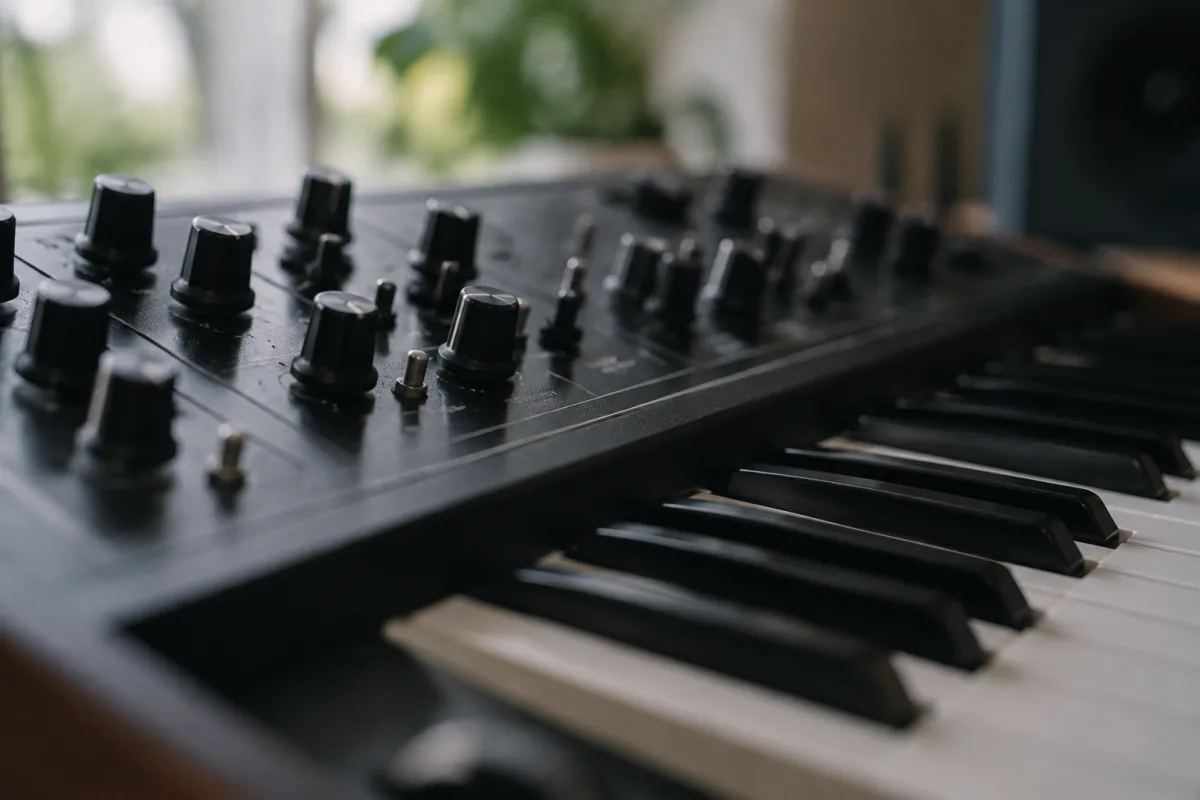
Buying a monophonic synth seems straightforward—it only plays one note at a time, so how complicated can it be? In reality, what matters when choosing a monophonic synth is understanding its sound character, keyboard capabilities, modulation options, and how it fits your music. This guide cuts through the marketing and focuses on the practical specs you actually need to evaluate before spending money on a monophonic synth.
Price Ranges and What They Mean
Monophonic synths start around £150 for basic machines with limited modulation and jump to £500-£1000 for well-featured instruments with proper control. Pro-level monosynths exceed £2000. The sweet spot for most people—solid sound, good controls, lasting value—sits between £300 and £800. Below £300, you're compromising on sound quality or control depth. Above £1000, you're often paying for brand heritage, rare designs, or pro-level build quality rather than genuinely better sound for most applications.
A used classic like a Moog Mother-32 or Korg Monotron often holds value and costs less than comparable new machines with similar character. Check resale prices before buying new—monophonic synths with established reputations rarely lose more than 15-20% value if kept in decent condition.
Oscillator Quality and Character
The oscillator is the heart of any monophonic synth. Check what waveforms it produces—sawtooth, square, triangle, and pulse width modulation (PWM) are standard. Some machines add noise or sub-bass oscillators. The oscillator tuning stability matters more than you might think. Vintage-style synths often drift slightly, which can be charming but problematic in a studio setting. Modern machines track pitch more reliably, which matters if you're sequencing or playing alongside click tracks.
Listen to demo videos and audio samples. The same waveforms sound radically different depending on the oscillator design—a Moog oscillator has a character you can recognize instantly, whilst a Korg oscillator has different harmonic richness. This is where most of the personality comes from.
Filter Quality Is Non-Negotiable
The filter shapes your sound more than almost anything else on a monophonic synth. A cheap, buzzy filter ruins even a decent oscillator. Moog-style ladder filters are warm and self-resonant, excellent for bass and evolving textures. Steiner-Parker filters are brighter and more aggressive. State-variable filters offer more flexibility but less character. Understand which type the synth uses and whether it suits your music. Listen carefully to how it responds when you push the resonance—a good filter self-oscillates cleanly and adds thickness even at low cutoff frequencies.
Filter envelope depth and modulation options matter equally. You want enough envelope range to create dramatic filter sweeps if you choose to. Check whether you can modulate the filter cutoff via LFO, envelope, and keyboard tracking—these options dramatically expand what the monophonic synth can do sonically.
Envelope and Modulation Capabilities
A monophonic synth lives or dies by its modulation options. At minimum, you need a proper amplitude envelope (ADSR: Attack, Decay, Sustain, Release) and a filter envelope, both with enough range and speed to create interesting timbres. LFO (Low Frequency Oscillator) capabilities matter hugely—can you modulate pitch, filter, and amplitude independently? Some monophonic synths limit you to one LFO; better machines offer multiple LFOs with different speeds, or synced timing options.
Look for arpeggiator or sequencer functionality if you want melodic patterns beyond single-note lines. Some machines offer step sequencers built-in; others require external control via MIDI. If you're buying a hardware synth, built-in sequencing justifies spending extra because it keeps your setup simple and creative.
Keyboard and Control Surface Evaluation
Keyboard quality varies wildly. Budget machines have cheap keys that feel plasticky and unmotivating. Semi-professional synths usually have better-weighted keys. Playing a monophonic synth in person—if possible—matters because the keyboard feel influences your desire to pick it up and actually play it. Aftertouch (pressure sensitivity after striking a key) is a nice bonus; velocity sensitivity is essential if you're controlling dynamics expressively.
Check the knob and slider quality. Scratchy, unstable pots on a synth that costs £500+ is unacceptable. Real-time tweaking requires tactile feedback and precision. Rubber knobs age better than plastic. Sliders are more intuitive for macro tweaking but take up more panel space.
Connection and Integration Options
MIDI compatibility is critical for modern work. Every monophonic synth should accept MIDI from a controller or sequencer. Check whether it sends MIDI data too—this matters less but can be useful. Audio outputs should include individual outs or at least balanced stereo outputs, not just cheap headphone jacks. If you're recording or performing, you need professional connectivity.
USB connectivity simplifies laptop integration. Some synths power from USB; others use USB solely for software updates. Audio-over-USB is convenient if you're recording directly into a computer. Sync options—clock in/out, trigger inputs—matter if you're syncing with drum machines or sequencers. A synth that plays well with your existing setup is worth more than specifications suggest.
Sound Comparison Before Buying
Specifications tell you what features exist; they don't tell you if you'll love playing it. YouTube sound demos are imperfect but useful. Listen to the monophonic synth played by multiple people—different players reveal different character. Notice how much warmth it has at bass frequencies, how crisp the high-end gets, and how the filter responds under dynamic playing. Does it sound thin at higher pitch ranges or warm throughout?
If possible, visit a shop and play the actual machine for 15 minutes. Your hands will tell you more than any review. Does the keyboard feel responsive? Does tweaking controls feel intuitive or fiddly? Are you excited to play it or frustrated by the ergonomics? These tactile responses matter enormously because a monophonic synth that discourages playing is money wasted.
Build Quality and Reliability
Plastic bodies are fine if the internals are solid. Wood or metal enclosures feel premium but add cost. Check reviews for reliability—some synths develop tuning instability or pot noise over time. Famous brands like Moog, Korg, and Roland have earned reputations partly because their older machines still work. Smaller manufacturers sometimes offer unique sound at lower cost but less support history. Factor in whether you can easily repair or service a monophonic synth if something fails.
Warranty coverage matters less if a machine is made to last but more if you're buying an experimental design or Chinese manufacture you can't verify. Most quality synths come with 1-2 year warranties.
When to Buy New vs. Used
Established models like the Moog Mother-32, Arturia Microbrute, or Nord Lead A hold value and perform reliably. Buying used can save 20-30% on discontinued models. Check for worn controls, dead pots, or tuning drift when evaluating used machines. Test all functions before handing over money. New machines offer current features and full warranty but cost more.
Rare vintage machines—classic Moogs or Oberheims—cost considerably more used than new budget alternatives, but the sound and build quality justify it if you specifically want that character. Know why you're choosing vintage: tonal character, reliability, or just status. All three are valid; honesty helps you avoid overpaying for something you don't need.
Common Pitfalls to Avoid
Don't buy based on specs alone—two monophonic synths with identical specifications can sound radically different based on oscillator and filter design. Don't assume more features mean better sound; sometimes a machine with a brilliant filter and two waveforms outperforms something with modular patching options. Avoid machines with only plastic keys and thin enclosures if you plan to play regularly—they feel cheap and discourage use. Don't overlook MIDI compatibility; modern workflow almost always involves some external control.
Watch out for machines that require extensive menu diving to change basic parameters. A monophonic synth should let you tweak major controls—filter cutoff, envelope, resonance—without reaching for menus. If you can't access key controls intuitively, creativity suffers.
Conclusion
Buying a monophonic synth is an investment in sound character and creative tools. Focus on filter quality and oscillator character above all, ensure MIDI compatibility and proper envelope/LFO capabilities, and spend enough to get reliable build and intuitive controls. Listen to multiple demos, play one in person if possible, and understand the price-to-quality threshold in your budget range. A well-chosen monophonic synth becomes a lasting tool that inspires creativity for years. Want to understand the broader landscape? Explore the ultimate guide to monophonic synth for deeper context.



Comments