


MIDI Keyboard Weighted article
Midi Keyboard Weighted for Beginners: A Complete Guide
A complete guide for beginners starting on weighted MIDI keyboards—understanding weighted action, building proper technique, and making your first musical productions.
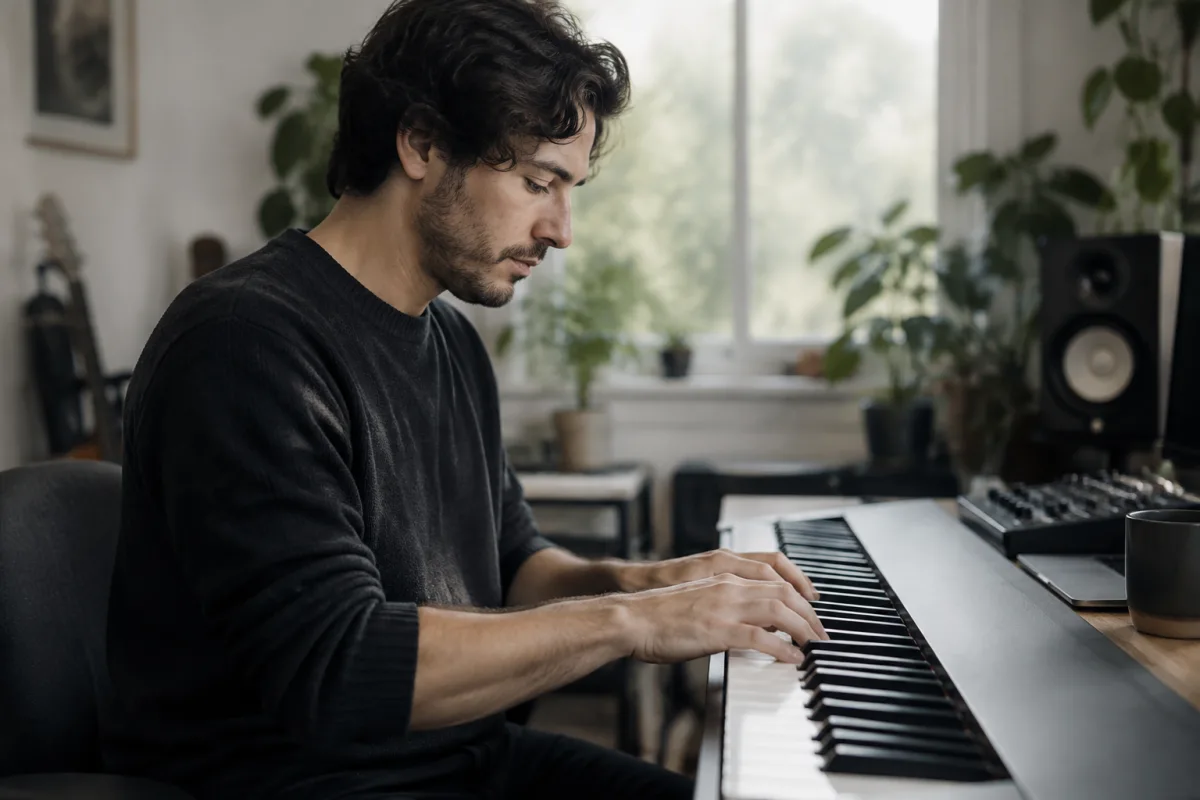
Learning on a weighted MIDI keyboard might seem odd if you're used to unweighted synth keys. The resistance, the touch sensitivity, the piano-like feel—all of it can feel unfamiliar at first. But for beginners, a weighted MIDI keyboard offers something genuinely valuable: a path into music production that feels musical and rewarding rather than technical. This guide walks you through what to expect, why weighted keyboards matter, and how to get started confidently.
Understanding What "Weighted" Means
A weighted MIDI keyboard has keys that resist your touch, mimicking the feel of an acoustic piano. When you press a key, it doesn't instantly hit the bottom—there's resistance you must overcome. This is authentically challenging at first. Your fingers, accustomed to lighter synth keys or computer keyboards, have to work harder.
The reason for this design is genuinely interesting: a weighted MIDI keyboard teaches proper technique. Piano players develop finger strength and control through the weighted action. Those skills transfer to any keyboard you play later. A weighted MIDI keyboard, despite being a electronic instrument, bridges the gap between acoustic piano and digital music production.
Unweighted keys (on standard MIDI keyboards) require minimal finger effort and respond instantly. They're faster and more forgiving for beginners, but they don't build the finger strength or technique that a weighted MIDI keyboard develops. Think of it like learning on an instrument that makes good technique a natural requirement, rather than an option.
Why Beginners Should Consider a Weighted MIDI Keyboard
If you're starting in music production and want your foundation to feel musical rather than purely technical, a weighted MIDI keyboard is genuinely worth considering. Playing one engages your hands and builds muscle memory. When you later move to a piano or perform live, that foundation gives you real capability.
The other benefit: a weighted MIDI keyboard sounds more expressive in production. Because you're naturally playing with more control and dynamics, your MIDI performances have more musicality. Beginners using unweighted keyboards often play technically correct but emotionally flat parts; weighted keys encourage natural dynamics and feel.
Learning on a weighted MIDI keyboard also means you're not learning bad habits. Unweighted keyboards sometimes encourage sloppy technique because they're so forgiving. A weighted MIDI keyboard forces better habits from day one—and habits built early become your foundation forever.
Getting Your First Sounds: The Learning Curve
Your first time playing a weighted MIDI keyboard will feel demanding. Your fingers will tire quickly. Playing fast passages feels awkward. You might actually get frustrated within the first few days. This is completely normal and temporary.
Expect a brief adjustment period—usually one to two weeks—where your fingers acclimatise to the resistance and build necessary strength. After that, the weighted action becomes natural. Within a month of consistent practice, you'll find unweighted keyboards feel frustratingly insubstantial and unresponsive. Your hands adapt quickly.
Start by playing simple melodies slowly and deliberately. Focus on feeling the action beneath your fingers rather than playing fast. Practise scales and arpeggios—they're tedious but genuinely build strength and familiarity with the weighted MIDI keyboard's feel. This foundation makes everything else easier.
Touch Sensitivity and Expressive Playing
A weighted MIDI keyboard usually includes aftertouch or velocity sensitivity—responding to how hard you press keys. This is where expression enters your playing. A light touch produces a softer sound; a heavier touch produces louder, more vibrant tones. This responsiveness makes playing musical rather than robotic.
Beginners often play everything at a consistent volume initially. Learning to vary your touch on a weighted MIDI keyboard is genuinely valuable. It teaches you to be expressive naturally, without thinking about automation or effects afterwards. This skill transfers everywhere—to any instrument, to any DAW, to any production context.
Experiment with different touch dynamics on your weighted MIDI keyboard. Play the same phrase lightly, then heavily. Notice how the sound changes. This experimentation builds musical instinct and makes you a better player almost by accident.
Choosing Your First Weighted MIDI Keyboard
When you're selecting a weighted MIDI keyboard as a beginner, start with 61 keys rather than the full 88-key weighted model. Sixty-one keys give you enough range for learning and production work without taking up excessive desk space. After a year or so, you'll know whether upgrading to a full-size weighted MIDI keyboard makes sense for your workflow.
The quality of the weighted action matters. Budget-friendly weighted MIDI keyboards sometimes use cheaper mechanisms that feel stiff or poorly balanced. Test several if possible and choose one where the weighted action feels smooth and responsive. You're investing in an interface you'll use daily for months and years—it's worth getting right.
Also check the software bundle. Most weighted MIDI keyboards include bundled DAW software (production software) and instrument sounds. As a beginner, you probably don't need premium bundles, but having included software means you can start producing immediately without extra purchases.
Common Beginner Mistakes with Weighted MIDI Keyboards
The biggest mistake is assuming a weighted MIDI keyboard is "better" for everyone. They're genuinely brilliant for certain players and less ideal for others. Some beginners prefer the immediacy of unweighted keys. Some want flexibility and portability that unweighted keyboards offer. A weighted MIDI keyboard is a specific choice, not a universal upgrade—be sure it actually suits you.
Another common error is expecting perfect piano feel from a weighted MIDI keyboard. The resistance is piano-like, but the action is never identical to an acoustic piano. It's a compromise—a weighted MIDI keyboard is genuinely a hybrid instrument. Accepting that rather than fighting it leads to better learning.
Many beginners also get discouraged by hand fatigue in the first few days. This is completely temporary, and pushing through it (gently) is how your hands adapt. If you get sore, take a break rather than forcing through pain. But mild fatigue is expected and normal—it's your hands building strength.
Finally, some beginners underestimate the importance of proper posture when playing a weighted MIDI keyboard. The resistance means poor technique becomes more obvious and sometimes causes wrist strain. Learn proper hand position early: shoulders relaxed, wrists straight, fingers curved. Good technique on a weighted MIDI keyboard prevents injury and accelerates improvement.
Building Your Practice Routine
Consistent daily practice on a weighted MIDI keyboard beats occasional long sessions. Fifteen to thirty minutes daily builds strength and muscle memory more effectively than three hours on Saturday. Your hands strengthen gradually through repetition, not intensity.
Start each session warming up with scales and simple exercises on your weighted MIDI keyboard. Move to learning melodies or chords. End with something fun—a song you love or a production project. This structure keeps practice engaging and progressive.
Use notation or visual guides initially. A weighted MIDI keyboard is genuinely more forgiving when you're learning to read music or follow tab because the resistance forces deliberate, controlled playing.
To deepen your understanding of weighted MIDI keyboards and explore advanced techniques, check out our complete guide to weighted MIDI keyboards.
Your Weighted MIDI Keyboard Journey
A weighted MIDI keyboard is a genuinely smart choice for beginners serious about developing real keyboard technique. Yes, the learning curve is steeper than unweighted keys. Yes, your hands will feel the effort initially. But within weeks, that effort builds genuine capability and musical instinct. You're learning on an instrument that rewards good technique and makes expressive, musical playing feel natural. That foundation will serve you for life, whether you're producing in a DAW or eventually playing acoustic keyboards. Embrace the weighted action, be patient with the adjustment period, and trust that the effort is building real skill.



Comments