


MIDI Keyboard Weighted Buying guide
Midi Keyboard Weighted: A Complete Buyer's Guide
Choosing a weighted MIDI keyboard? Our guide covers key mechanisms, specs that matter, price tiers, and common mistakes to avoid.
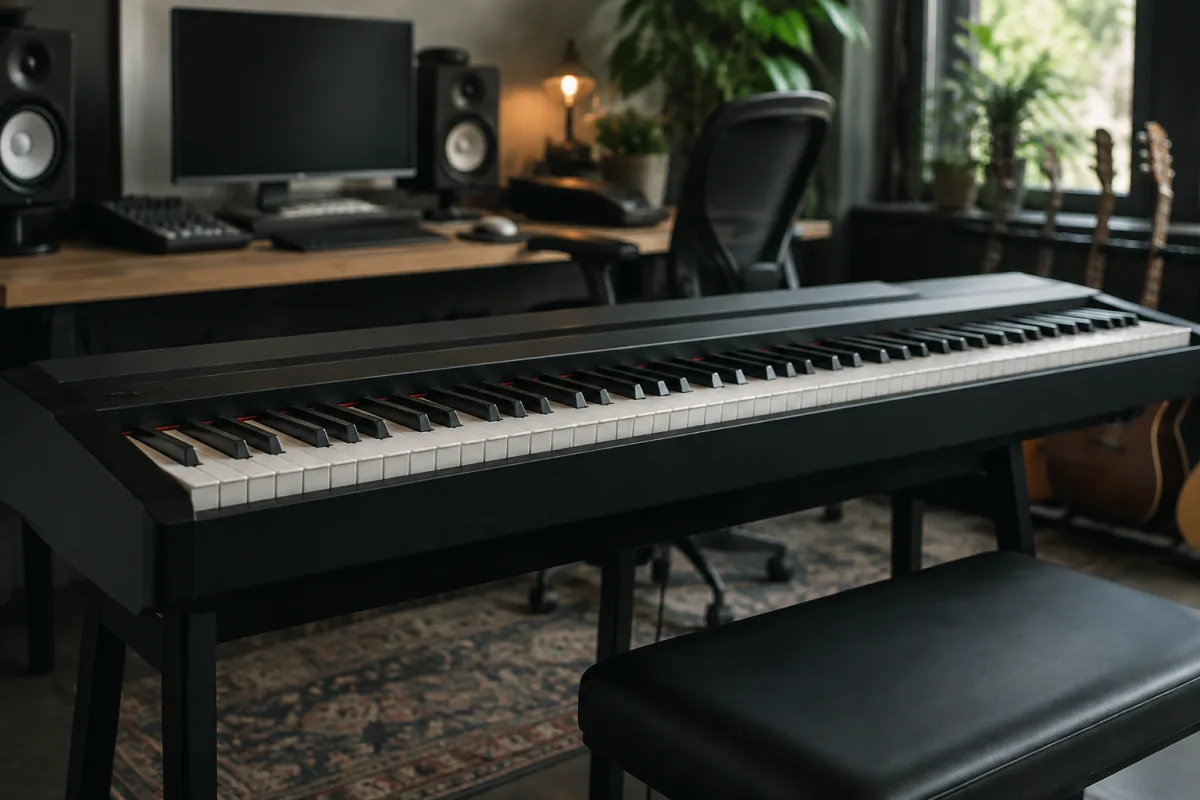
A weighted MIDI keyboard transforms music production. Unlike unweighted keys that respond instantly, a weighted MIDI keyboard replicates piano resistance, forcing you to develop proper technique and adding expressive control to your recordings. But choosing a weighted MIDI keyboard requires understanding how weight mechanisms work, what specifications actually matter, and which common pitfalls waste money. This practical guide helps you invest wisely in a weighted MIDI keyboard that suits your production style and budget.
Understanding Weighted MIDI Keyboards: Why Weight Matters
A weighted MIDI keyboard uses springs and counterweights to simulate piano key resistance. Press a key, and it demands real finger force and time to descend. Release it, and it springs back realistically. This mechanism develops your piano technique—proper finger strength, touch control, and expressiveness. Compare unweighted keys (light, responsive, arcade-like) to weighted keys (realistic, demanding, musical). Producers using weighted MIDI keyboards often record more dynamic, human performances because the instrument responds to subtle variations in how hard you strike each key. If you're serious about keyboard work, a weighted MIDI keyboard isn't luxury—it's foundational.
Key Weight Categories
Not all weighted MIDI keyboards offer the same resistance. Understanding categories helps you choose appropriately:
- Semi-Weighted: Lighter resistance than fully weighted, compromising between portability and realism. A good middle ground for producers working in smaller spaces or prioritising portability over absolute piano authenticity.
- Fully Weighted (Graded): Professional standard. Lower keys feel heavier (mimicking acoustic pianos where lower strings resist more); upper keys feel lighter. This graded weighting develops nuanced technique. Most professional weighted MIDI keyboards use graded weighting.
- Hammer Action: Premium option using actual hammers (like acoustic pianos) for the most authentic key mechanism. Expensive and less portable, but delivers uncompromising realism. Reserved for producers investing seriously in keyboard work.
Critical Specifications for Weighted MIDI Keyboards
- Key Count: 88-key weighted MIDI keyboards are professional standard, matching acoustic piano layout. Some producers prefer 61 or 76 keys for space-saving. Don't compromise on key count if you're learning piano technique—88 keys are essential.
- Touch Sensitivity: All weighted MIDI keyboards should offer velocity sensitivity (volume responds to how hard you play). Test whether the curve feels natural to your playing style. Some keyboards offer adjustable sensitivity curves—valuable for matching your DAW's virtual instruments.
- Aftertouch: Channel pressure (polyphonic) or velocity aftertouch lets you modulate sound after pressing keys. Not essential, but adds expressiveness. Look for this in mid-range and professional weighted MIDI keyboards.
- Connectivity: USB connectivity lets you connect directly to computers. MIDI In/Out with traditional 5-pin DIN connectors adds flexibility with older gear. Current weighted MIDI keyboards typically include both.
- Build Quality: Test key springs—do they feel consistent across the entire keyboard? Cheap weighted MIDI keyboards sometimes have loose or inconsistent weighting. Play multiple keys before committing.
- Sound Sources: Many weighted MIDI keyboards include onboard sounds. Evaluate whether you'll use these or rely entirely on software instruments. Built-in sounds add cost but offer emergency playback when your computer fails.
Price Tiers: Budget, Professional, and Premium Weighted MIDI Keyboards
| Tier | Price Range | Description | Best For |
|---|---|---|---|
| Budget Semi-Weighted | £200-400 | 61 or 76 keys, semi-weighted action, basic connectivity | Bedroom producers, learning musicians, tight budgets |
| Mid-Range Weighted | £400-900 | 88-key graded-weighted action, USB, quality build | Professional producers, recording studios, serious learners |
| Professional Weighted | £900-2000 | 88-key hammer action, premium materials, comprehensive connectivity | Concert pianists, commercial studios, touring musicians |
| Premium Flagship | £2000+ | Top-tier hammer action, luxury finishes, master-class features | Collectors, elite recording studios, concert halls |
Common Pitfalls When Buying a Weighted MIDI Keyboard
- Confusing "weighted" with other controls: A weighted MIDI keyboard's key resistance is fundamentally different from touch sensitivity or fader weight. Verify the keyboard actually has weighted keys before purchasing.
- Buying hammer action when semi-weighted suffices: Premium hammer action weights £500+ more but offers minimal benefit if your music prioritises speed (electronic music, rapid performances). Match weight mechanism to your needs.
- Ignoring space constraints: An 88-key weighted MIDI keyboard spans 5 feet and weighs 25+ kilograms. If your studio space is tiny, consider 61 or 76 keys rather than struggling with an oversized instrument.
- Overlooking MIDI implementation quality: A weighted MIDI keyboard with poor MIDI response (latency, inconsistent data transmission) frustrates you constantly. Test MIDI response with your specific DAW before buying.
- Prioritising onboard sounds over key mechanism: Onboard sounds become irrelevant once you discover your preferred software instruments. A weighted MIDI keyboard with mediocre keys and amazing sounds is still disappointing. Prioritise key quality.
- Skipping the hands-on test: Play multiple weighted MIDI keyboards before committing. Weight feel is personal—some people prefer heavier keys, others lighter. Testing prevents regrettable purchases.
- Buying used weighted MIDI keyboards without thorough testing: Worn springs wear inconsistently. Test all keys individually. Listen for squeaks or rattles. Verify USB connectivity and MIDI response before purchasing used equipment.
Weighted MIDI Keyboards for Learning Piano vs. Production
If you're learning piano technique, a weighted MIDI keyboard is non-negotiable. Semi-weighted won't develop proper technique. A professional graded-weighted keyboard (88 keys) at £500-900 is a smart investment. If you're using a weighted MIDI keyboard purely for production (triggering synths, creating beats), lighter semi-weighted options work perfectly. Match your purchase to your primary use case.
Integration Into Your DAW
Your weighted MIDI keyboard needs seamless DAW integration. Test it with your specific software before buying. Some keyboards achieve zero-latency response; others introduce slight delay. MIDI learn functions (assigning knobs and faders to virtual instrument parameters) add tremendous workflow value. Ensure your weighted MIDI keyboard supports these features.
Maintenance and Longevity
Weighted MIDI keyboards are sophisticated instruments. Keep them away from spills and dust. Occasionally wipe keys with a soft cloth. Never attempt DIY key mechanism repairs—spring-based weighting is precise and easy to damage. Professional servicing costs money, so choose quality equipment initially and maintain it carefully.
Making Your Purchase Decision
Define your primary use case: learning piano, production, or both. Determine your budget and weighting preference (semi-weighted, graded-weighted, or hammer action). Research specific weighted MIDI keyboard models within your price range. Visit music shops and play them. Watch professional reviews. Only commit once you've tested multiple options and feel confident in your choice. For comprehensive guidance on specific weighted MIDI keyboard models and production-focused recommendations, explore our complete guide to weighted MIDI keyboards, which covers all price ranges and use cases in detail.
Your Investment in Quality
A weighted MIDI keyboard is a long-term investment in your musical development. Quality instruments feel better, last longer, and inspire consistent use. Resist the temptation to buy the cheapest semi-weighted option "just to see if you like keyboards"—you'll outgrow it immediately. Invest in a proper weighted MIDI keyboard. Your playing will improve, your recordings will sound more musical, and you'll use the instrument for years to come.


Comments