


MIDI Drum Pads article
Midi Drum Pads for Beginners: A Complete Guide
Want to make beats? MIDI drum pads are the perfect entry into music production. Learn how to start creating rhythms with this beginner guide.
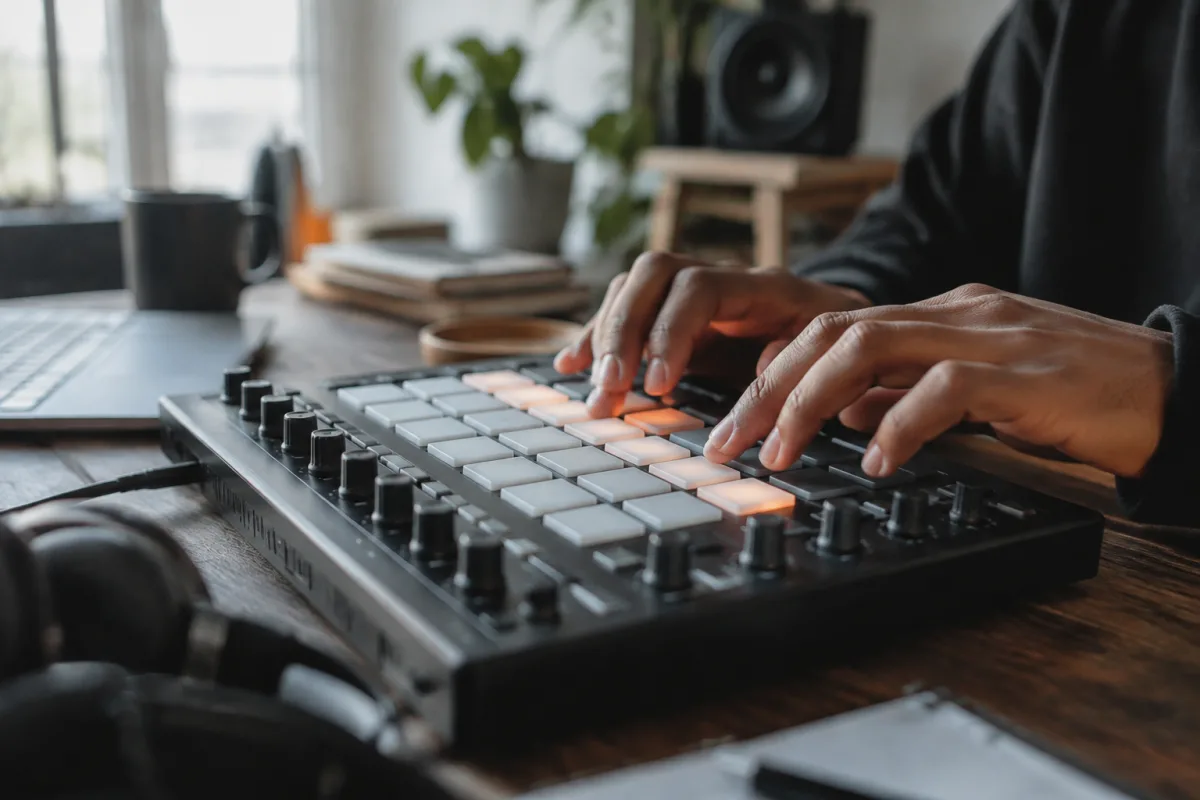
Making beats seems intimidating if you're new to music production, but MIDI drum pads demystify the process completely. These intuitive instruments let you create drum patterns without reading sheet music or understanding complex technology. If you've dreamed of producing your own beats but thought it was reserved for technical wizards, MIDI drum pads prove that assumption wrong. This beginner's guide removes barriers to starting your beat-making journey and shows why MIDI drum pads are the perfect entry point into music production.
Why MIDI Drum Pads Are Perfect for Beginning Producers
MIDI drum pads translate directly from real drums to electronic production. If you've ever tapped rhythms on tables or imagined beat patterns, MIDI drum pads let you realise those ideas immediately. Unlike learning traditional drumming, MIDI drum pads require minimal physical coordination—you just need to tap pads in time with music.
The psychological appeal of MIDI drum pads shouldn't be underestimated. Within minutes of unboxing, you can play drum sounds and create simple patterns. This immediate gratification motivates continued learning far more than months of technical setup would. MIDI drum pads deliver genuine creative results quickly, inspiring confidence in beginners.
MIDI drum pads also cost far less than acoustic drum kits, require minimal space, and create no noise disturbance. These practical advantages make MIDI drum pads viable for apartment dwellers and bedroom producers where acoustic drums would be impossible. The barrier to entry is genuinely low with MIDI drum pads.
Understanding MIDI Drum Pads Basics
MIDI drum pads themselves don't produce sound—they send electronic signals telling music software which drum sounds to play. This distinction matters for beginning producers learning about MIDI drum pads. Your computer or music production hardware interprets signals from your MIDI drum pads, then generates drum sounds.
This separation between controller and sound engine (MIDI drum pads and software) offers tremendous flexibility. One set of MIDI drum pads can trigger thousands of different drum kits, patterns, and sounds depending on your software. This versatility makes MIDI drum pads ideal for exploring production styles without purchasing multiple controllers.
Connect your MIDI drum pads to a computer running music production software—often free or inexpensive options like Ableton Live Intro, FL Studio, or REAPER—and you're ready to start creating. The learning curve is remarkably gentle with quality MIDI drum pads.
Getting Started with Your First MIDI Drum Pads
Begin by choosing MIDI drum pads sized appropriately for your hands and workspace. Larger MIDI drum pads offer more comfortable playing but require more desk space. Compact MIDI drum pads suit tight apartments or travel. Neither is inherently "better"—choose based on your situation and budget.
Your first session with MIDI drum pads should focus on familiarisation, not perfection. Tap pads, explore different sounds, play patterns without worrying about timing. Get comfortable with MIDI drum pads' responsiveness and feel. This relaxed exploration builds confidence more effectively than attempting technically perfect beats immediately.
Start by triggering simple drum patterns on your MIDI drum pads—kick, snare, hi-hat—matching patterns you know from songs you love. Recreating simple patterns on MIDI drum pads teaches rhythmic understanding whilst remaining manageable. Progress to original patterns as your confidence grows.
Essential Software to Pair with MIDI Drum Pads
You don't need expensive software to start with MIDI drum pads. Many quality free options exist: Ableton Live Intro Trial provides full functionality for 30 days with MIDI drum pads. FL Studio's trial version includes most features. Even free DAWs like Cakewalk by BandLab work excellently with MIDI drum pads.
Many MIDI drum pads models include bundled software—check whether your MIDI drum pads purchase includes a DAW or drum samples. Using included software removes decision paralysis and provides familiar tools optimised for your particular MIDI drum pads model.
Common Beginner Mistakes with MIDI Drum Pads
Many new producers feel pressured to sound professional immediately with MIDI drum pads. Your first beats won't sound like commercial releases—and that's completely normal. Accept that learning production on MIDI drum pads is a gradual process. Every producer you admire spent months making mediocre beats before developing skill.
Another common mistake involves overcomplicating patterns early. Beginners with MIDI drum pads often try creating elaborate drum patterns before understanding basic rhythm. Start simple—4-on-the-floor kicks with minimal layers. Gradually add complexity as MIDI drum pads control becomes comfortable.
Ignoring pad sensitivity and responsiveness is another pitfall. MIDI drum pads respond to how hard you hit them. Developing consistent striking technique matters for consistent results. Spending time understanding your MIDI drum pads' responsiveness pays dividends in playability.
Many beginners underestimate the importance of listening reference. Keep songs you admire playing alongside your MIDI drum pads practice. This trains your ear for rhythm, groove, and production style far more effectively than isolated practice.
Building Rhythm Understanding with MIDI Drum Pads
MIDI drum pads are exceptional tools for developing rhythmic understanding. Tapping patterns physically embeds rhythm into your body in ways listening alone cannot replicate. This kinesthetic learning accelerates rhythm mastery far beyond theoretical knowledge.
Practice simple time signatures first with your MIDI drum pads. Four-four time is nearly universal in popular music. Mastering 4/4 patterns on MIDI drum pads before exploring other time signatures prevents overwhelm.
Use MIDI drum pads to practice tempo steadiness. Most software includes metronomes—tap along with click tracks at various tempos using MIDI drum pads. This develops the internal timing that separates professional-sounding beats from amateur attempts.
Progression Beyond Basics
Once comfortable with simple patterns on MIDI drum pads, explore layering—combining multiple drum sounds to create more complex textures. Layer kick and bass patterns, add syncopated snares, introduce hi-hat variations. Each MIDI drum pads session can expand your approach.
Many producers eventually combine MIDI drum pads with melodic instruments or synthesizers. However, master MIDI drum pads fundamentals first. Complete patterns using drums alone teaches groove better than immediately layering melodic elements.
Some producers eventually transition to acoustic drums or electronic drum kits after developing skills on MIDI drum pads. The rhythm understanding learned translates completely. However, many professionals continue creating beats exclusively with MIDI drum pads throughout their careers.
Making Your Selection
Consider budget, workspace limitations, and preferred genres when choosing MIDI drum pads. Budget options (£50-100) offer surprising quality. Mid-range MIDI drum pads (£100-250) provide more buttons, better build quality, and included software. Premium MIDI drum pads (£250+) add features most beginners don't need immediately.
Focus on choosing MIDI drum pads with responsive pads and comfortable layout for your hands. Software and sounds matter less than MIDI drum pads responsiveness—you can always upgrade software or sounds later. For comprehensive information about MIDI drum pads options and features, visit our complete guide to MIDI drum pads.
The Beginner Producer's Mindset
Starting beat-making on MIDI drum pads requires embracing experimentation over perfection. Your first beats will sound amateur—everyone's do. Accept this reality and focus on learning. Each session on MIDI drum pads teaches something new. Progress compounds quickly when you maintain consistent practice with MIDI drum pads.
Connect with other producers learning MIDI drum pads. Online communities share patterns, tips, and encouragement. Hearing how others approach MIDI drum pads inspires creativity and prevents isolation during learning phases.
Conclusion
MIDI drum pads remove barriers to beat-making that have prevented aspiring producers from starting. These intuitive controllers deliver immediate creative satisfaction, cost affordably, require minimal space, and teach genuine rhythm and production skills. Your journey into beat production and music creation starts now with MIDI drum pads. Pick up your pads and make your first beat today.



Comments