


Piano Yamaha Silent article
Piano Yamaha Silent for Beginners: A Complete Guide
A Yamaha silent piano lets you practise authentic piano technique late at night without disturbing neighbours. This guide explains how it works and whether one suits your goals.
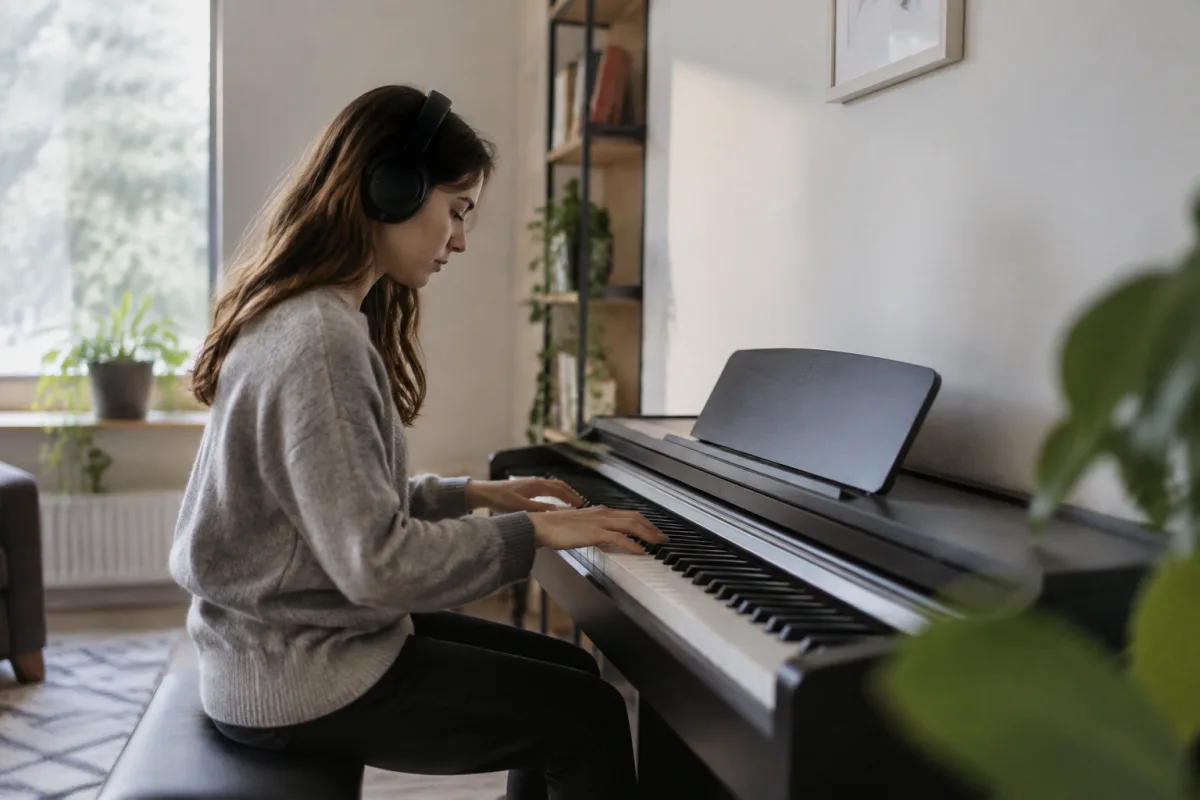
If you're a first-time piano player concerned about disturbing others, a Yamaha silent piano might feel like the perfect solution. These innovative instruments let you practise quietly while still providing the authentic piano feel and sound through headphones. This beginner's guide explains what a piano yamaha silent actually is, whether one suits your situation, and how to get the most from this technology.
Understanding Yamaha Silent Piano Technology
A piano yamaha silent is not a digital keyboard pretending to be a piano. It's a traditional acoustic piano fitted with sophisticated silent technology that records the motion of every key and pedal, then sends that data to high-quality piano samples through headphones. When you play a piano yamaha silent with the silent feature engaged, the acoustic strings still vibrate and the mechanism moves naturally—you feel authentic piano resistance and touch. The acoustic sound is simply muted at the source, replaced entirely by sampled sound through your headphones. This means practicing a piano yamaha silent at midnight won't wake your household, yet you're playing a real piano mechanism.
When a Yamaha Piano Makes Sense for Beginners
A piano yamaha silent is ideal if you live in a flat with neighbours, share a house with light sleepers, or want to practise late without noise. Traditional acoustic pianos are loud—typically 80–90 decibels even at moderate volume—making silent features invaluable in close quarters. If you're beginning piano lessons and worried about disturbing family, a piano yamaha silent lets you build daily practise habits without guilt. The authentic feel of a piano yamaha silent also makes your practise more musically meaningful than a thin digital keyboard, as you're developing genuine piano technique on real action.
Key Features of Yamaha Silent Pianos
Yamaha's silent technology includes several important features worth understanding. The silent system engages via a lever or switch, letting you toggle silently between silent mode and full acoustic sound—useful if you want acoustic practice sometimes. Recording and playback features let you record yourself on the piano yamaha silent and listen back through the same headphone connection, helping you assess your playing. Different piano sound samples are usually available; you might play Steinway samples one day and Bösendorfer samples another through the same piano yamaha silent. The pedal sensors capture your pedal movements faithfully, so soft pedal and sostenuto techniques work naturally.
Setting Up Your Yamaha Silent Piano for First Practise
When your piano yamaha silent arrives, the silent system will likely need configuration. Connect headphones to the designated jack on the control box (usually mounted under the piano or on the keyboard). Select your desired piano sound from the control panel—Yamaha typically offers several voices from classical grand piano samples. Adjust the volume to a comfortable level through your headphones; you want to hear yourself clearly without earache-inducing volume. Most piano yamaha silent models let you adjust tone and reverb settings; experiment to find sounds that feel responsive and encouraging as you learn.
Getting Comfortable With Headphone Practise
Practising on a piano yamaha silent through headphones feels different from acoustic practise at first. Some beginners find the slight latency (delay between pressing a key and hearing sound) unusual, though quality Yamaha systems minimise this. The isolation of headphones means you lose the acoustic feedback of hearing the piano resonate around you, which can feel odd initially. Spend your first week getting accustomed to this before worrying whether it's "right." Most learners adapt within days and come to prefer the isolation. As you progress, your piano yamaha silent's authentic action actually helps more than it hinders, since you're developing real piano technique despite practising silently.
Practising Quietly Without Sacrificing Musicality
One risk: treating a piano yamaha silent as permission to neglect dynamics and phrasing. Silent mode doesn't excuse sloppy technique. The piano yamaha silent faithfully records your key velocity (how hard you press), so your playing must be intentional and musical even through headphones. Record yourself and listen critically. You might discover sloppy passages that sound acceptable to your ears but terrible on playback—exactly what a piano yamaha silent is designed to reveal. Use this feedback to refine technique and build stronger musical habits.
The Silent Feature Alongside Acoustic Playing
A piano yamaha silent offers a unique advantage: you can switch between silent and acoustic modes. Use silent mode for late-night practise and routine drills, then engage acoustic mode to hear your piano's actual tone and develop ear training. Hearing the genuine acoustic instrument periodically helps you remember that your practice goal is eventually to play acoustically for listeners. Some pianists keep a piano yamaha silent specifically because this flexibility lets them practise whenever they want without sacrificing occasional acoustic joy.
Common Beginner Misconceptions
One misunderstanding: that a piano yamaha silent removes the challenge of playing quietly. It doesn't—you still learn to control dynamics and touch exactly as on an acoustic piano. The silent feature simply eliminates noise pollution, not the need for thoughtful playing. Another misconception: that because your piano yamaha silent mutes sound, you can practice carelessly. False—technique matters just as much. The action resistance is real, the pedal response authentic, and sloppy playing will feel sloppy whether or not you hear acoustic sound. A piano yamaha silent is not a practice shortcut; it's a tool for practising seriously in quiet.
Maintenance and Longevity
A piano yamaha silent requires less action from you than a fully acoustic piano—you needn't worry about the room's humidity affecting tonal quality, since headphone sound is digital. The acoustic mechanism still needs basic care: keep the fallboard closed when not playing, avoid liquids near the keyboard, and don't force the keys. The silent system's electronic components are reliable when treated gently. If your piano yamaha silent develops latency issues or the silent system stops responding, contact a qualified technician; these are rarely owner-serviceable.
Starting Your Yamaha Silent Piano Journey
A piano yamaha silent is a legitimate stepping stone into serious piano study. The quiet practise capability lets you build the daily habit essential to learning; the authentic action ensures your technique transfers later to acoustic pianos. Whether you pursue piano seriously or simply enjoy learning, a piano yamaha silent removes the noise-guilt barrier that stops many beginning players. Give yourself a few weeks to adjust to headphone-based practicing, then trust that the real piano mechanism beneath your fingers is making you a genuine pianist, even when no one else can hear it.



Comments