


Nord Grand Buying guide
Nord Grand: A Complete Buyer's Guide
Is the Nord Grand right for you? This buying guide covers specifications, pricing, comparisons to alternatives, and practical considerations before investing.
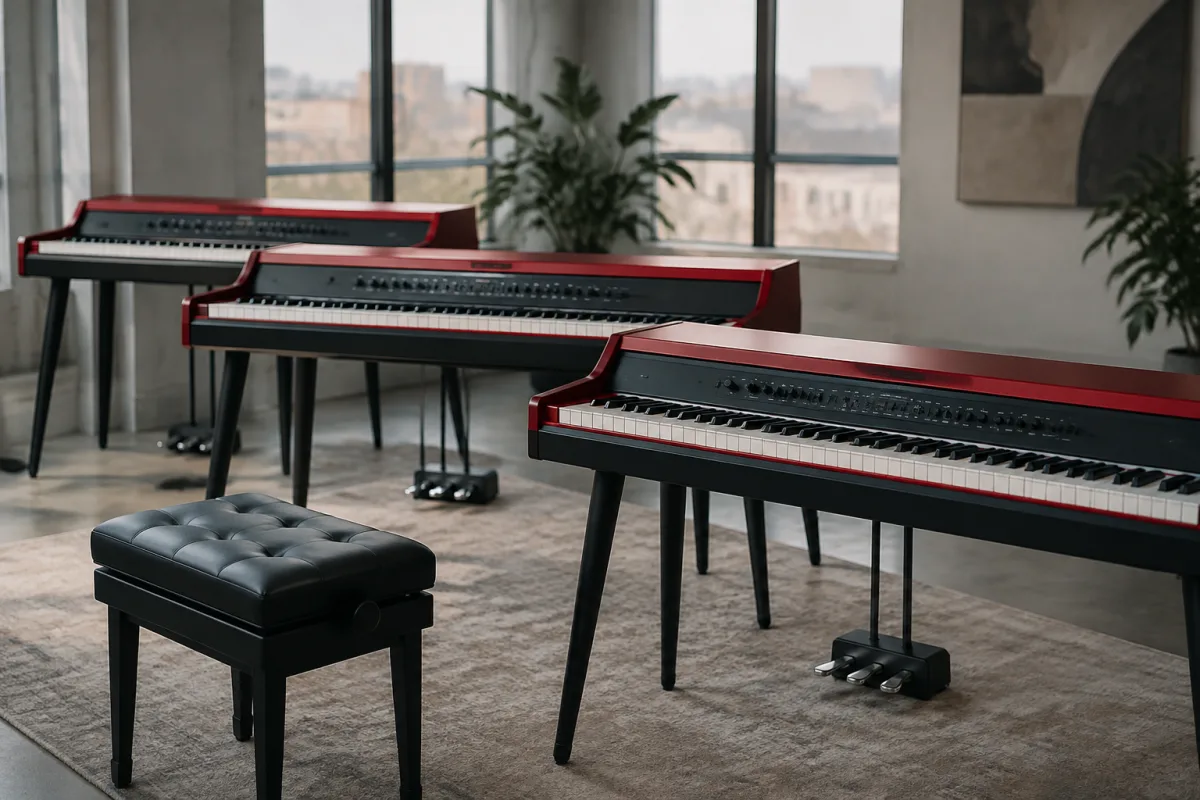
If you're in the market for a stage piano with authentic acoustic piano feel and sound, the Nord Grand sits at a premium price point alongside equally serious instruments. Before investing £4,000–5,000, you need to understand what the Nord Grand actually delivers, how it compares to alternatives at that price tier, and whether its specific strengths align with your needs. This buying guide cuts through marketing claims and focuses on the practical specifications and performance factors that matter when you're choosing a Nord Grand.
Understanding Nord Grand Positioning and Price Tier
The Nord Grand occupies a specific market position: premium stage piano for professional touring and studio use. It's expensive, which immediately means you should understand whether that price is justified for your particular workflow. Nord positions the Grand as a lower-cost alternative to full 88-key weighted keyboard systems (Yamaha CFX, Steinway & Sons facsimiles), marketed at touring pianists, session musicians, and serious home studio users who need authentic acoustic piano feel and sound without shipping a real concert grand.
At this price tier, you're not buying because it's the cheapest option. You're buying because the Nord Grand offers specific features and sound quality you can't find in budget stage pianos. Understanding what those features actually are saves you money by confirming whether they matter for your music.
Key Specifications: What to Evaluate
When you're deciding whether to buy a Nord Grand, these specifications deserve serious attention:
| Specification | Why It Matters | Nord Grand Approach |
|---|---|---|
| Keyboard Action | How the keyboard feels under your fingers determines playability and expression. Weighted actions mimic acoustic piano; lighter actions feel more like synthesizers. | Nord Grand uses Kawai Grand Feel II action—fully weighted, wooden keys with escapement. This feels closest to an acoustic piano. |
| Piano Samples/Models | The quality of sampled or modeled pianos determines tonal authenticity. More models offer versatility; quality matters more than quantity. | Nord Grand includes iconic pianos (Steinway, Yamaha CFX, Bösendorfer) modeled carefully. Three high-quality models rather than dozens of mediocre ones. |
| Sustain Pedal Response | Real piano sustain pedal behavior is complex. Budget stage pianos often oversimplify it. Authentic implementation matters for realistic playing. | Nord Grand's half-pedal support and soft-pedal behavior closely match acoustic pianos. |
| Sound Engine | How the piano generates tone (sampled, modeled, hybrid) affects authenticity and CPU load if used in other contexts. | Nord Grand uses a hybrid approach combining samples and modeling for realism without excessive memory footprint. |
| Built-in Speakers | Whether amplification is integrated or requires external gear affects portability and setup time for gigs. | Nord Grand includes integrated speakers but professional touring typically bypasses them in favour of PA systems. |
| MIDI Integration | For studio and software integration, Nord Grand MIDI capabilities determine workflow efficiency. | Nord Grand supports MIDI in/out and integrates well with DAWs and external gear. |
Price Tiers and Comparison to Alternatives
When you're deciding whether Nord Grand's premium price is justified, compare across three tiers:
- Budget stage pianos (£800–1,500): Basic weighted action, standard piano sounds, limited customisation. Suitable for amateurs and casual gigging. Sound and feel are "acceptable" but noticeably compromised compared to acoustic pianos.
- Mid-range professional pianos (£2,000–3,500): Improved weighted actions, better samples, more controls. Serious performers and session musicians typically work here. Sound quality is respectable; feel approaches acoustic pianos.
- Premium professional pianos (£4,000–6,000+): This is Nord Grand territory. Authentic weighted actions (Kawai, Fatar, Yamaha), high-quality sampled or modeled pianos, extensive customisation. You're paying for feel, sound authenticity, and professional reliability. Touring performers and serious studio work justifies this tier.
Nord Grand sits comfortably in the premium tier, priced similarly to Yamaha CP-40, Korg Nautilus, and Roland FP-90X. Each has specific strengths; Nord Grand's strength is piano authenticity specifically.
Common Reasons Buyers Choose Nord Grand (And Reasons They Regret It)
Understanding buyer motivations clarifies whether it's right for you:
- For authentic piano sound: Justified. Nord's piano models are genuinely excellent. If piano authenticity is paramount, Nord Grand is a solid choice.
- For maximum portability: Not justified. Nord Grand is still heavy and bulky for a stage instrument. Lighter alternatives exist if portability is critical.
- For versatile synthesis and sound design: Not justified. Nord Grand is a piano-focused instrument. Korg Nautilus offers broader synthesis. Choose Nord Grand only if you specifically need a piano.
- For touch-and-feel that approaches a real concert grand: Justified. The Kawai action and escapement mechanism make it credibly close to an acoustic piano. Pianists transitioning between acoustic and Nord Grand notice the difference but adapt quickly.
- For studio MIDI controller: Partially justified. Nord Grand works as a MIDI controller, but dedicated controllers (weighted 88-key systems) might be more economical for studio-only use.
- For touring gigs where weight and setup time matter: Needs evaluation. Nord Grand is moderately portable but heavier than lighter alternatives (Nord Stage, Yamaha CP40). If you're flying frequently and need rapid setup, lighter options exist.
Practical Pitfalls When Buying a Nord Grand
These mistakes consistently trap buyers at this price tier:
- Assuming three piano models limits you: For stage and professional use, three carefully-crafted pianos (Steinway, CFX, Bösendorfer) cover 95 percent of real-world needs. Korg's 40+ piano sounds often deliver diminishing returns. Quality over quantity here.
- Underestimating maintenance and support costs: Premium stage pianos benefit from occasional professional servicing. At this price tier, budget for support and occasional repairs. Nord's support is solid, but it's still a cost.
- Ignoring the action weight during purchase: The Kawai action is excellent but heavy. Pianists accustomed to lighter actions might find the Nord Grand fatiguing during long sessions. Test it thoroughly before committing.
- Assuming integrated speakers are adequate for gigging: For solo performing, built-in speakers work. For band contexts, you're routing through a PA system anyway. Don't pay for speakers you won't use.
- Comparing Nord Grand exclusively to acoustic pianos: That's not the right comparison. Compare to other stage pianos in the £3,500–5,000 tier. Versus acoustic pianos, Nord Grand is objectively a compromise. Versus stage pianos, it's excellent.
- Not accounting for the learning curve: Nord Grand is powerful and customisable. Mastering all its features takes time. Simpler instruments might suit you better if you need immediate usability.
Testing and Evaluating a Nord Grand Before Purchase
At this price point, thorough testing before purchasing is essential. Here's what to assess:
- Touch and response across the full keyboard: Play scales from lowest to highest note. Do the keys feel consistent throughout? Does escapement work reliably? Is touch sensitivity responsive?
- Each piano model at various volumes: Play soft passages and loud passages on each of the three pianos. Does tone remain consistent and realistic at all volumes?
- Sustain and soft pedal behaviour: Engage sustain at different points during playing. Does it behave like an acoustic piano (sustaining only notes played after the pedal engages)? Does soft pedal shift the tone realistically?
- Stage noise: Listen carefully for mechanical noise from the action mechanism. Is it silent or can you hear key clicks and mechanical sounds? (Some pianists prefer absolute silence; others tolerate minor mechanical noise.)
- Integration with your setup: If you'll use Nord Grand with external gear (amplifiers, effects, MIDI controllers), test those connections. Does MIDI work reliably? Do connections feel secure?
Integration With Your Workflow
Before buying, ensure Nord Grand integrates with your actual playing situation:
- Are you performing solo or in bands? Nord Grand works well for both, but setup/teardown differ significantly.
- Will you transport it regularly? If yes, weight and case concerns matter. If stationary (studio or venue-based), less critical.
- Do you need synthesis and sound design flexibility, or is piano authenticity your primary need? Nord Grand excels at pianos; it's not a full synthesizer.
- Is MIDI integration important to you? Nord Grand's MIDI implementation is solid but not cutting-edge.
Financial and Practical Reality Check
Buying a Nord Grand is a significant investment. Ask yourself honestly:
- Do you need this instrument now, or is a more affordable option sufficient while you develop your playing?
- Can you afford repairs and occasional servicing (budget £500–1,500 over 5 years)?
- Is the specific piano authenticity worth the extra cost versus mid-range alternatives?
- Will you use this instrument professionally enough to justify the investment through income it generates?
If you answer "yes" to most of these, Nord Grand makes financial sense. If you're hedging, it probably doesn't.
Expansion and Future Considerations
For a more comprehensive exploration of Nord Grand specifications, detailed model comparisons, advanced techniques, and alternatives at similar price points, the complete guide to Nord Grand provides extensive technical information and professional workflows.
Conclusion: Premium Price Reflects Premium Piano
The Nord Grand's premium price tag reflects genuine strengths: authentic piano keyboard action, high-quality piano samples, professional reliability, and touring-proven durability. It's not the cheapest stage piano, nor is it the most affordable way to own a good piano. It occupies a specific niche: for professional pianists and serious performers who need stage piano authenticity without owning an acoustic grand. If that describes you, the Nord Grand is worth the investment. If you're uncertain whether you need professional-grade authenticity, evaluate mid-range alternatives first. Either way, avoid impulse buying at this price tier. Test thoroughly, understand your actual needs, and commit only when you're genuinely confident the Nord Grand serves your music.


Comments