


Korg Mono article
Korg Mono for Beginners: A Complete Guide
Synthesisers intimidate beginners, but a Korg Mono makes learning synthesis simple and enjoyable. This guide demystifies synthesis and gets you making sounds immediately.
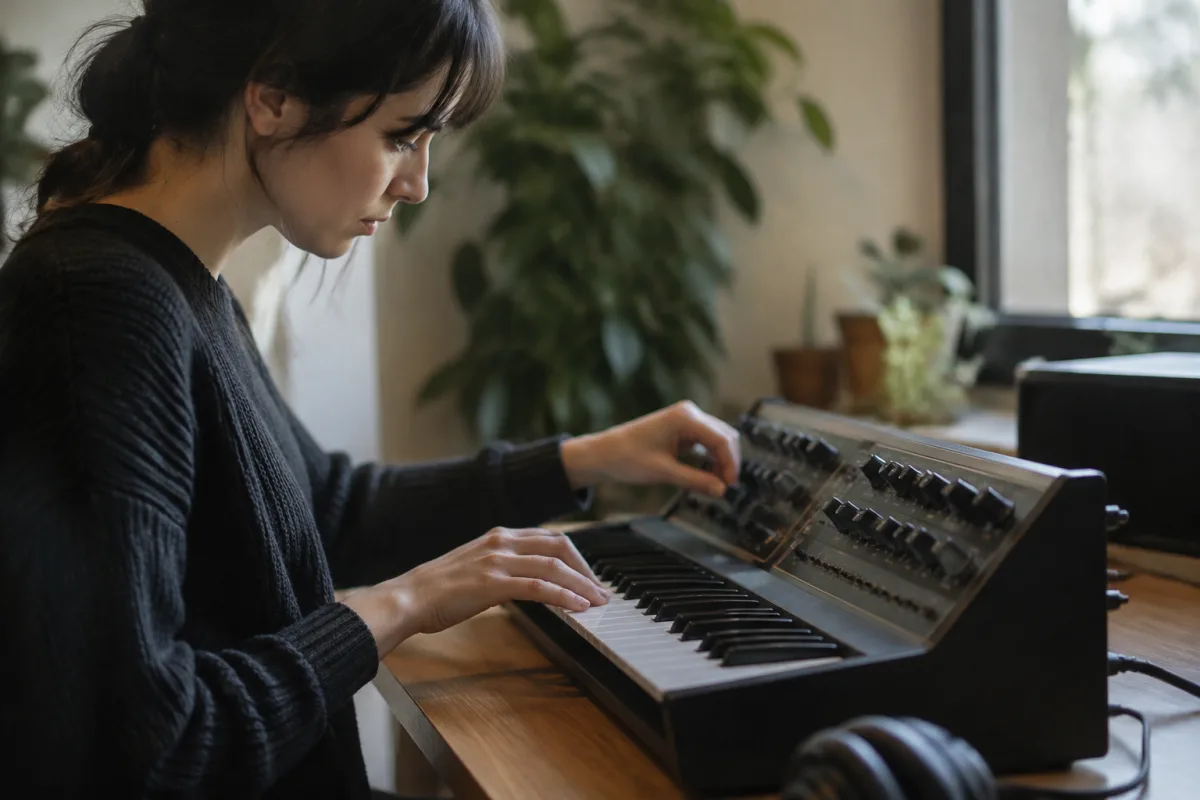
The Korg Mono is your gateway into analogue synthesizer synthesis. But if you've never owned a synth before, walking into the world of oscillators, filters, and envelopes feels terrifying. What exactly is a monophonic synthesizer? How do you actually make sounds with it? Why would you choose a Korg Mono over something else? This beginner's guide strips away the confusion and shows you how to approach the Korg Mono with confidence, even if you've never touched a synthesizer before.
What "Mono" Actually Means
Let's start with the term itself. "Monophonic" means the synthesizer can play one note at a time. That's the main limitation compared to polysynths (which play multiple notes simultaneously). But this limitation is actually a feature for beginners. It keeps the learning curve manageable and forces you to develop melodic sensibilities rather than getting lost in chord progressions. Many classic electronic music pieces were created on monophonic synths precisely because that constraint breeds creativity.
Why Beginners Often Feel Overwhelmed
The biggest mistake nervous beginners make is expecting to understand synthesis all at once. You'll look at the Korg Mono and see dozens of knobs, and panic sets in. "How can I possibly remember what each one does?" Here's the truth: you don't learn synthesis by memorising specs. You learn by playing, tweaking knobs, and listening to what changes. It's more like cooking than mathematics. Once you understand the basic framework, experimentation becomes the teacher.
Understanding the Korg Mono Range
Korg makes several mono synths, and the differences matter for beginners:
- Korg Monotron: Compact, affordable (£50–£100 secondhand), playable for learning basics. Limited but genuinely educational. Great starter choice.
- Korg Monotron Delay: Same as above but with built-in delay effects. Slightly more creative but same learning curve.
- Korg Volca Series (monophonic models): Slightly larger, more features, better build quality (£100–£150 new). Good for intermediate beginners investing more seriously.
- Korg Monotron Duo: Plays two notes simultaneously. Less monophonic but more flexible for melodies.
- Korg Monologue: Professional-quality monosynth (£300–£400). Significantly better build and sound quality, but overkill for absolute beginners.
For your first Korg Mono experience, a Monotron or Volca is perfect. Don't overspend on a Monologue until you know synth synthesis actually grabs you.
Core Synthesis Concepts: Simplified
You need to understand only three basic concepts to start:
- Oscillator: Generates the raw sound. Think of it as the "voice" of your synth.
- Filter: Shapes the sound by removing frequencies. Makes the sound brighter or darker.
- Envelope: Controls how the sound evolves over time. Attack (how fast it starts), sustain (how long it holds), release (how quickly it fades).
That's genuinely enough to start making interesting sounds. Every other control on the Korg Mono builds on these three foundations. Don't try to understand everything at once.
Your First Hour With Korg Mono: The Practical Approach
- Plug in and turn it on. Play some notes to hear the default sound.
- Adjust the filter cutoff knob slowly. Listen to the brightness change.
- Adjust the filter envelope (often labelled EG Intensity). Listen to how the attack and decay character change.
- Try changing the oscillator waveform (square, triangle, sawtooth if available). Each sounds different.
- Explore the LFO (Low-Frequency Oscillator) if available. This adds movement and modulation to sounds.
- Don't try to memorise anything. Just explore and listen.
After one hour, you'll have made multiple distinct sounds and understood basic synthesis. That's genuine progress.
Common Beginner Frustrations With Mono Synths
Watch out for these mental barriers:
"Why can't I play chords?" You can't because mono synths play one note at a time. But this isn't a bug—it's a feature that encourages melodic thinking. Many professionals prefer working with monosynths precisely because monophonic lines are more expressive.
"The default sound is boring." All synths need tweaking to sound interesting. That's not a design flaw—it's the point. Learning to sculpt sound is the whole goal.
"I'm touching things and nothing changes." Some controls are subtle. Try extreme settings first. Crank the filter cutoff all the way open, then all the way closed. You'll hear the difference and understand what that control does.
"This is just noise." Early synth exploration will create weird sounds. That's completely normal and actually where learning happens. Keep experimenting.
Essential Controls on a Korg Mono: What They Actually Do
These are the controls you'll use most:
- Oscillator waveform selector: Choose between waveforms (square, triangle, sawtooth, sine). Each sounds distinctly different.
- Filter cutoff: Brightens or darkens the sound. Open for bright, closed for dark.
- Filter resonance or emphasis: Adds prominence to frequencies near the cutoff point. Use subtly—too much sounds weird.
- Attack/Decay/Sustain/Release (ADSR): Controls how the sound develops from start to end. Experiment to understand how these shape dynamics.
- LFO rate: Speed of modulation effects. Slow creates sweeping changes; fast creates wobbles and trills.
- LFO depth or intensity: How much the LFO affects the sound. More depth equals more modulation.
Start with just these and ignore everything else until you're comfortable.
Common Mistakes Beginners Make
Avoid these early pitfalls:
Turning random knobs hoping something cool happens. This creates chaos. Change one control at a time and listen to what changes. This is how you learn.
Expecting synthesis to be intuitive instantly. It's not. There's a learning curve, and that's fine. Your first week will feel confusing, but by week three, patterns emerge and it clicks.
Not reading the manual. Korg Mono synths come with excellent manuals. Spend an hour reading it instead of random knob-twisting. You'll learn faster and more systematically.
Assuming you need to upgrade to a "better" synth immediately. A Korg Monotron or Volca can teach you everything you need to know about synthesis. Upgrade when you've mastered the basics and know what features you actually want.
Learning Resources Beyond the Manual
Once you own a Korg Mono, these resources accelerate learning:
- YouTube tutorials specifically for your model (e.g., "Korg Monotron tutorial"). Visual learning helps immensely.
- Online synthesis courses that explain oscillators, filters, and envelopes conceptually. This theoretical knowledge makes the knob-twisting make sense.
- Synthesizer communities on Reddit and forums. Other beginners share tips; experienced users answer questions patiently.
- Getting another beginner to learn alongside. Teaching someone else forces you to articulate understanding, which deepens it.
Moving From Korg Mono to More Complex Synthesis
After three to six months with a Korg Mono, you'll understand synthesis fundamentally. At that point, you might:
- Upgrade to a polysynth if you want to play chords.
- Add a sequencer to create rhythmic loops instead of just playing melodies live.
- Explore software synths, which offer infinite possibilities.
- Stick with monosynths because you genuinely love them (many professionals do).
But this is a decision for later. First, master the basics with your Korg Mono.
Connecting to Comprehensive Knowledge
This beginner's guide focuses on getting comfortable with a Korg Mono practically. For deeper exploration of Korg's synth range, advanced synthesis techniques, and how to integrate monosynths into larger setups, explore our complete guide to Korg Mono.
Your First Week: Realistic Expectations
Expect to feel confused initially. You'll make weird noises. You'll forget what each knob does. This is completely normal. By day five, you'll start recognising patterns. By week two, making intentional sounds becomes possible. By month two, you'll create sounds you're genuinely proud of. This progression is predictable and totally natural. Trust the process.


Comments