


Organ or Piano article
The Complete Guide to Organ Or Piano
Organs and pianos operate on fundamentally different principles and suit different musical contexts. Understand the mechanical, tonal and practical differences to make an informed instrument choice.
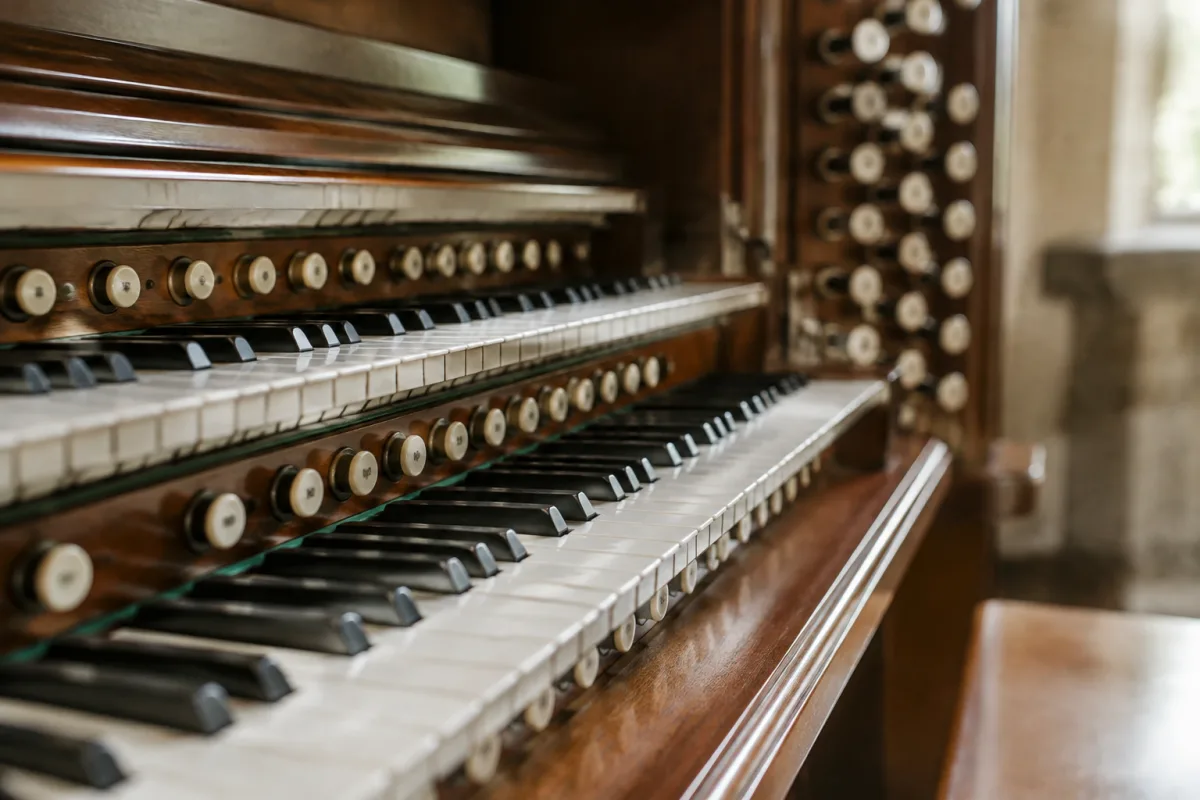
Choosing between an organ or a piano represents a significant decision for keyboard players and music students seeking a primary instrument. Though both employ keyboards, these instruments operate on fundamentally different principles, produce distinctly different sounds and suit different musical styles. Understanding the mechanical differences, tonal character, repertoire suitability and practical considerations helps you make an informed choice aligned with your musical ambitions and learning goals.
Fundamental Mechanical Differences
Piano: Hammer-Strike Mechanism
A piano produces sound through mechanical hammers striking strings. When you press a key, a complex mechanical system propels a hammer toward the corresponding strings, then immediately resets. The harder you strike a key, the harder the hammer hits the strings, producing louder volume. This direct mechanical connection between your finger pressure and sound intensity forms the core of piano technique: dynamic expression through touch.
The pedals extend piano expressive capability: the sustain pedal lifts dampers off strings, allowing notes to continue ringing; the soft pedal shifts the entire strike mechanism slightly, producing quieter tone; the sostenuto pedal sustains only selected notes. These mechanical systems have evolved over centuries and remain fundamental to how pianists express musical intention.
Organ: Air-Pressure Mechanism
An organ produces sound through air flowing through pipes of different shapes and sizes. When you press an organ key, you open a valve allowing air to flow through the corresponding pipe. The volume remains constant regardless of how hard you press the key—an organ simply cannot produce softer or louder tone through touch. Instead, organs employ drawbars or stops that add or remove entire ranks (sets) of pipes, allowing tonal character changes and volume control through registration rather than technique.
This mechanical difference profoundly affects how organists approach expression. An organist cannot rely on finger pressure to create dynamic variation; instead they manipulate registration (which pipes sound), use expression pedals (which control air flow) and employ timing and phrasing to create musical interest.
Tonal Character and Sound
Piano Tone
Pianos produce warm, resonant tone that decays gradually. A struck piano string vibrates at decreasing amplitude, the sound naturally fading over seconds. This decay characteristic is fundamental to piano music: composers write specific note lengths knowing that piano tone will sustain naturally even after releasing the key. The tone is fundamentally acoustic—real strings vibrating against a resonant soundboard.
Pianos span roughly eleven octaves, offering extraordinary range. The warmth of the lower register contrasts with bright, clear upper register tones, and composers exploit this entire range for sophisticated musical expression.
Organ Tone
Organ tone depends entirely on pipe design and registration choices. A pipe organ can produce everything from warm, mellow flute-like tones to bright, cutting reed sounds to mysterious string-like textures—far more tonal variety than a single piano. However, organ tone lacks the natural decay pianos possess; when you release an organ key, the sound stops immediately rather than fading gradually.
This fundamental difference affects musical interpretation significantly. Organ music relies on articulation (clear note separation) and registration changes for interest; piano music relies on decay and sustain. Early classical organ composers (like Bach) composed specifically for this characteristic.
Repertoire and Musical Style Suitability
Piano Repertoire
The piano boasts an enormous, diverse repertoire spanning classical sonatas and concertos through romantic virtuoso showpieces to contemporary jazz and popular music. Piano technique emphasises dynamic control, pedal manipulation and rapid passage work. Piano dominates popular music, musical theatre, contemporary jazz and virtually all popular entertainment settings. A pianist can sit at almost any piano and produce satisfactory results.
Organ Repertoire
Organ music centres primarily on classical/baroque repertoire (Bach dominates organ performance), liturgical music (organs provide church accompaniment) and to lesser extent popular/jazz applications. Organ technique emphasises registration management, foot coordination and continuous tone production. Organ playing demands understanding of a specific instrument's registration scheme; adapting to different organs requires knowing their particular stop arrangement.
Physical and Practical Considerations
Space Requirements
Acoustic pianos (the "real" piano type) occupy substantial space: roughly 1.5 metres width and 0.7 metres depth for baby grands (smaller type), more for larger models. Digital pianos compress to roughly keyboard footprint (1.5 m × 0.3 m). Organs, particularly pipe organs, occupy considerable space; digital organs reduce this substantially but still demand more space than keyboards.
Cost
Quality acoustic pianos cost from £5,000 to £50,000 or more. Digital pianos range from £500 to £10,000. Organs vary wildly: pipe organs cost upward of £20,000 (often much more); digital organs cost £2,000 to £15,000. Budget constraints significantly influence instrument choice.
Maintenance
Acoustic pianos require regular tuning (typically quarterly) and maintenance (string replacement, action regulation). Pipe organs require sophisticated maintenance and expert regulation. Digital instruments require minimal maintenance—essentially battery replacement and occasional cleaning.
Learning Curve and Technique Development
Piano technique emphasises control through dynamic finger pressure. Developing pianists invest substantial effort mastering touch sensitivity and pedal coordination. The learning curve is steep initially but feels musically natural—your fingers directly control tone production.
Organ technique emphasises registration management and coordination (many organists play with two hands on separate keyboards plus foot pedals controlling bass notes). The learning curve is gentler at beginning (no need to manage dynamics) but becomes complex when handling sophisticated registration and foot work.
Making Your Choice
Musical Style Preference
Choose piano if you're drawn to romantic concertos, jazz, contemporary pop, musical theatre or comprehensive classical repertoire. Choose organ if you're attracted to baroque music, liturgical contexts or want a distinctly different musical pathway.
Physical Considerations
Consider available space (pianos need roughly twice the footprint of an organ keyboard), budget (pianos are generally more affordable than pipe organs) and maintenance capacity (acoustic pianos demand regular professional tuning).
Long-Term Goals
Pianists have vastly more performance opportunities, broader repertoire and greater versatility across musical styles. Organists have deep, specialised pathways particularly in classical and liturgical contexts but fewer general opportunities. Your professional ambitions should guide choice.
Conclusion
Organs and pianos are fundamentally different instruments requiring different techniques and offering different musical possibilities. Pianos suit developing musicians exploring broad repertoire and contemporary music; organs suit players drawn to specialized classical/liturgical contexts and seeking a distinctive musical pathway. Neither choice is "better"—only better suited to individual musical ambitions, available resources and personal preferences. Understanding these fundamental differences ensures your choice aligns with your genuine musical interests and goals.



Comments