


Keyboard Sustain Pedals article
Keyboard Sustain Pedals for Beginners: A Complete Guide
A sustain pedal transforms how your keyboard sounds, but many beginners don't understand what it does. This guide explains sustain simply and shows you how to use it musically.
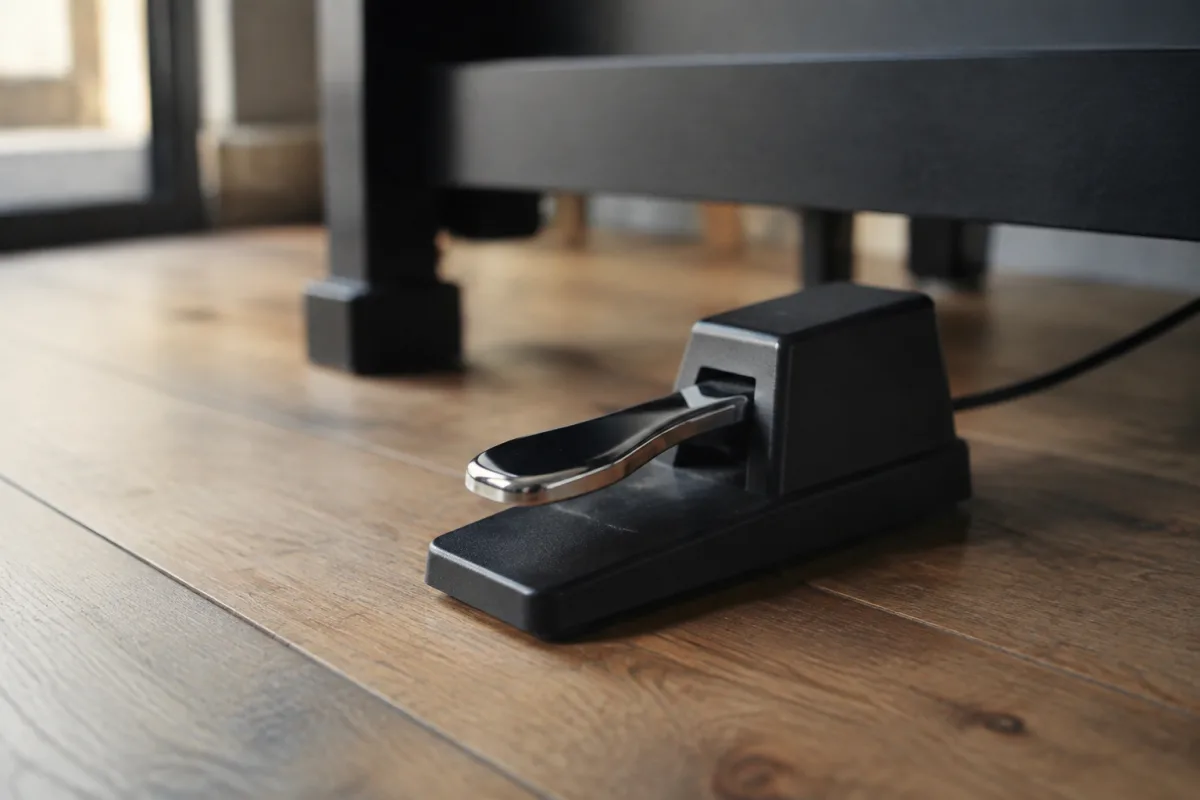
One pedal sitting beneath your keyboard might look simple, but the sustain pedal is one of the most expressive tools a pianist has. If you're new to keyboards or piano and wondering whether you need a sustain pedal, or how to use it properly, this beginner's guide explains what sustain does, how it works, and how to develop a natural feel for it. Spoiler: it's not as complicated as pianists make it sound.
What Does a Sustain Pedal Do?
On an acoustic piano, pressing the sustain pedal (also called the damper pedal) lifts the dampers away from the strings, allowing them to vibrate freely even after you release your fingers from the keys. This creates a warm, lingering sound. On a keyboard, the sustain pedal does the same thing electronically: it extends the length of every note you play.
Without sustain: each note ends abruptly when you release the key. With sustain: notes ring and blend into one another, creating warmth and texture. That's the difference between a thin, choppy sound and a lush, connected one.
Think of sustain as musical glue. It lets notes flow smoothly from one to another, creating the rich, singing quality you hear in professional pianists' recordings.
When Do You Need a Sustain Pedal?
Technically, you don't *need* a sustain pedal to play keyboard or piano. Many beginners start without one and do fine. But adding sustain opens up new expressive possibilities almost immediately:
- Ballads and classical pieces: If you're playing anything slow and emotional (Chopin, Elton John, or sad indie songs), sustain becomes essential. These pieces are written with the assumption that sustain is available.
- Pop and rock: Even upbeat songs often benefit from selective sustain, especially during verses or intros.
- Jazz and blues: Sustain helps you blend chords and create the smooth, sophisticated sound jazz is known for.
- Ambient and experimental: If you're exploring atmospheric sounds, sustain is your friend. It lets notes wash over one another.
If you're playing children's songs, marching pieces, or very bright, percussive styles, you might use less sustain. But for almost everything else, a sustain pedal vastly improves what you can express.
Types of Keyboard Sustain Pedals
Sustain pedals come in several varieties, and understanding the differences helps you choose one that fits your playing style:
Standard Pedal (On/Off)
This is the most common type. Press it down, sustain is on. Release it, sustain is off. It's simple and intuitive. Most beginners should start here. These pedals cost £15–50 and work with nearly every keyboard.
Half-Pedal (Continuous Sustain)
Some pedals allow continuous control: pressing halfway gives partial sustain; pressing fully gives maximum sustain. This mimics an acoustic piano's damper pedal more accurately. It's more expressive but takes time to master. Save this for after your first year of playing.
Piano-Style Pedal
These look and feel like piano pedals, with a larger footplate and a smooth action. They cost more (£80–200) but feel wonderful and can inspire more expressive playing. They're ideal if you're practising for acoustic piano or want to develop serious technique.
Portable Pedal
For travelling musicians or bedroom setups, compact sustain pedals exist (£20–40). They work well, though they feel less substantial than standard or piano-style pedals. They're fine for learning, but upgrade to a full-sized pedal once you're serious.
Getting Started with Your First Sustain Pedal
Setup
If your keyboard has a sustain pedal input (usually labelled "Sustain" or "Pedal"), connect your pedal there with the cable it ships with. Power on and you're ready. Most keyboards auto-detect the pedal; there's nothing to configure.
Your First Exercise
- Play a single note. Press middle C and release your finger immediately.
- Now play the same note and press the sustain pedal. Hold the pedal down. The note continues to sound even though your finger is gone.
- Release the sustain pedal. The note stops.
- Try a chord: Press a three-note chord (C-E-G), release your fingers, and press sustain. The chord rings. Release sustain, the chord stops.
That's all the basics. You've just learned what sustain does. Everything else is practice and feel.
The Right Feel for Sustain
Most beginners make the same mistake: they hold the sustain pedal down for entire sections of music, creating a muddy, undefined sound. Sustain isn't meant to be always-on. It's a tool you engage and release in response to the music.
Here's the principle: when you finish a chord or phrase and want it to linger, press sustain. When you start the next phrase and want a clean, fresh sound, release sustain. It's about creating space and texture, not blurring everything together.
A Practical Example
Imagine playing a four-bar ballad phrase:
- Bar 1: Play a chord, release sustain immediately (clean start).
- Bar 2: Same chord, now press sustain to let it linger.
- Bar 3: Play a new chord, release sustain again (fresh sound).
- Bar 4: New chord, press sustain as it ends.
The interplay between sustain on and off creates interest and keeps the sound from becoming mud. This pattern — on for some moments, off for others — is what you'll develop naturally as you play more.
Common Beginner Mistakes
Mistake 1: Using Sustain Constantly
Beginners often press sustain and leave it down for entire songs, thinking "more sustain = better sound". The result is a murky, undefined sound where every note blurs into the next. Sustain works best when it's dynamic — on when you want warmth, off when you want clarity.
Mistake 2: Changing the Pedal While Notes Are Playing
If you press sustain while a note is already sounding, the transition is jarring. The best practice is to press sustain *after* you release the keys. This creates a smooth, musical effect. Similarly, release sustain *before* you play new notes. The timing takes time to feel natural, but it's worth learning.
Mistake 3: Buying a Cheap Pedal and Giving Up
A £5 plastic pedal feels terrible and often doesn't trigger reliably. You might play correctly but the sustain doesn't respond, leading you to think you're doing something wrong. Invest in a decent pedal (£20–40 at minimum). It makes learning so much easier.
Mistake 4: Waiting Too Long to Start Using It
Many beginners use sustain only after months of practice. But sustain actually *helps* you learn phrasing faster. Using it from the start lets you focus on musicality rather than worrying about every note ending cleanly. Add sustain early and your progress accelerates.
Developing Your Sustain Technique
Once you've mastered the on/off basics, you can explore more nuanced use:
Selective Sustain
Play a chord, release sustain partway through the chord, then press it again to sustain only the lingering notes. This creates sophisticated textures and is what separates amateur from experienced players.
Half-Pedal (Once You're Ready)
If you've upgraded to a half-pedal or piano-style pedal, you can now use partial sustain — letting some notes decay while others sustain. It's more expressive but requires weeks of practice to feel natural.
Pedal Timing
The exact moment you press and release sustain becomes a musicality choice. Press it slightly late to avoid muddiness at the chord change; press it slightly early to emphasize the connection between phrases. These micro-adjustments are what give professional-sounding recordings their character.
Troubleshooting
Sustain Isn't Working
Check that the pedal is connected securely to your keyboard's sustain input. If still nothing, try a different cable. Some keyboards require you to enable sustain in the settings menu; check your manual. If all else fails, try the pedal on a different keyboard to confirm it's working.
Sustain Sounds Muddy or Unclear
You're probably using it too much. Release it between phrases. Sustain should enhance clarity, not destroy it. If even light sustain sounds off, try reducing the sustain level in your keyboard's settings (if available).
Moving Forward
The sustain pedal is often the first "real" expression tool beginners master. Learning to use it well changes how you hear music and gives you immediate access to deeper, more sophisticated sounds. Within a few weeks of regular practice, using sustain will feel as natural as pressing the keys themselves.
For a comprehensive exploration of how sustain pedals work in different contexts, their technical specifications, and advanced techniques for acoustic and digital pianos, the complete guide to keyboard sustain pedals covers the full scope.


Comments