


Keyboard Piano Cover Buying guide
Keyboard Piano Cover: A Complete Buyer's Guide
Protecting your keyboard requires the right cover type. This buying guide compares dust covers, padded bags, and cases to match your needs and budget.
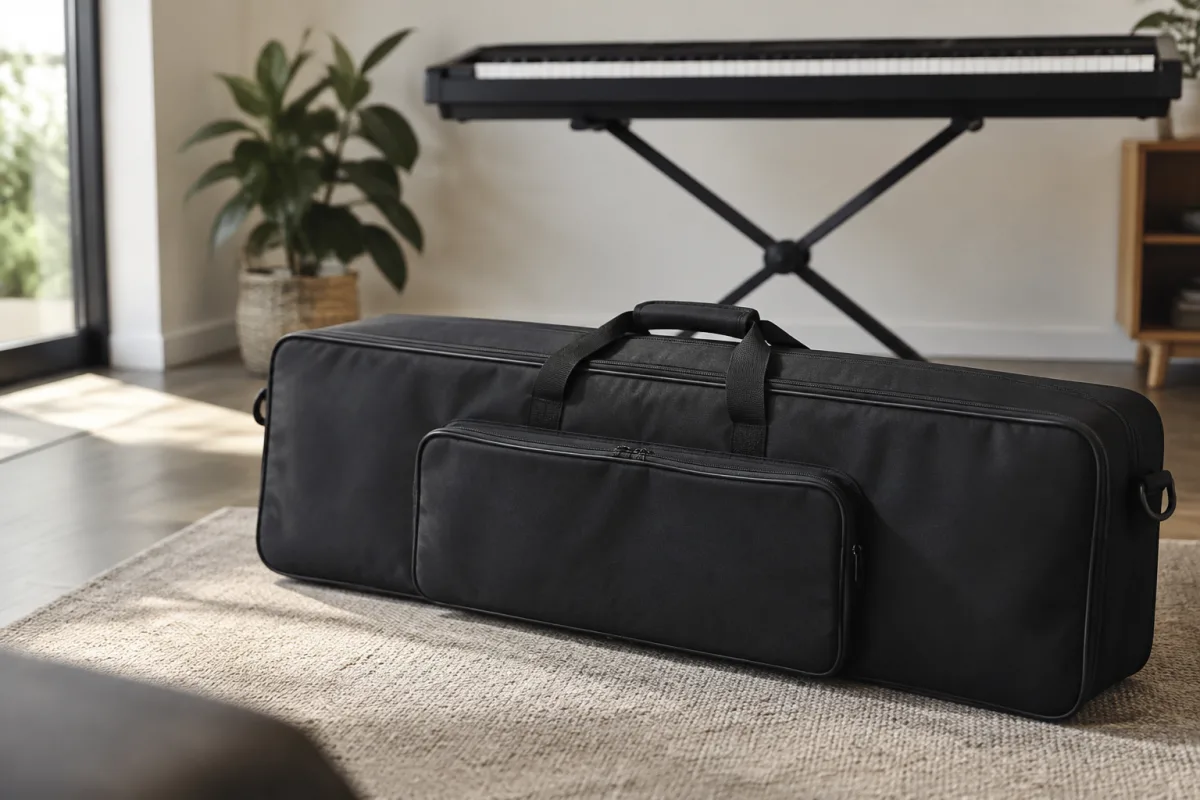
Protecting your keyboard or piano investment requires choosing the right cover. With options ranging from simple slip-on dust covers to heavy-duty hardshell cases, understanding what specs matter prevents overspending on unnecessary features or, worse, buying inadequate protection that leaves your instrument vulnerable. This guide covers practical buying considerations: cover types, materials, fit, and what to prioritise based on your use case.
Understanding Piano and Keyboard Cover Types
Keyboard covers fall into distinct categories: soft dust covers, padded gig bags, semi-rigid cases, and hardshell cases. Each serves a different purpose and price bracket. A dust cover (£20–50) is lightweight and portable but offers no impact protection — suitable for home studios where the keyboard stays put. A padded gig bag (£50–150) adds soft padding and handles for transport; ideal for gigging musicians. A semi-rigid case (£150–400) provides serious protection with some flexibility; professional touring musicians use these. Hardshell cases (£300–800+) offer maximum protection but are heavy and expensive.
Your choice depends on lifestyle. Home recording studio? A dust cover or padded bag suffices. Regular gigs with transport? A semi-rigid case. Professional touring or rental work? Hardshell is necessary. Matching protection to your actual risk prevents waste.
Dust Covers: Basic Protection at Low Cost
Dust covers are designed to keep your keyboard clean when not in use. They're not impact protection — a drop or bump will damage the instrument regardless of a dust cover. But they prevent dust accumulation, pet hair, and accidental spills, which justifies their modest cost.
Look for breathable fabric (nylon, microfiber) rather than plastic — plastic traps condensation and can promote mould. The cover should fit snugly to stay in place and be machine-washable. Check thickness; heavier fabric (600+ denier) resists tearing better than thin material. For a keyboard or 88-key stage piano, expect to pay £25–50 for a decent dust cover. Cheaper options (under £15) are thin and fragile.
Padded Gig Bags: Transport with Modest Protection
Padded gig bags add 5–10mm of cushioning and shoulder straps for carrying. They're ideal for musicians who gig regularly but travel short distances (car to venue). They offer reasonable impact protection against minor drops and bumps but aren't meant for airline baggage or long-distance shipping.
Key specs: at least 10mm padding (less than that is barely padded), reinforced handles that won't tear, and internal dividers or straps to prevent the keyboard shifting during transport. The exterior should be durable nylon or canvas, not vinyl (which degrades in sunlight). For an 88-key keyboard, budget £80–150. Cheaper bags under £50 often have thin padding and flimsy handles.
Semi-Rigid and Hardshell Cases: Maximum Protection
Semi-rigid cases use a combination of padding and structural material (thin plywood or composite shells). They're significantly more durable than padded bags — they survive drops, professional touring, and heavy use. A hardshell case uses a moulded plastic or ABS shell, offering the highest protection but adding considerable weight and bulk.
For semi-rigid cases, check the structural material (quality cases use plywood; cheap ones use plastic strips that flex). Look for corner protection, internal padding at least 15mm thick, and a locking mechanism. Budget £150–400 depending on keyboard size. Hardshell cases cost £300–800+. Only choose hardshell if your keyboard is expensive (over £3000) and you travel frequently or professionally.
Fit and Compatibility: Measure Before Buying
The most common mistake is buying a cover that doesn't fit properly. A loose cover shifts during transport, offering little protection. An overly tight cover stresses the keyboard's casing and becomes frustrating to install and remove daily.
Measure your keyboard's length, width, and height (including any mounting stand if you use one). Cross-reference these dimensions with the cover's interior dimensions — there should be 1–2 inches of clearance on all sides. Many generic "88-key" covers don't account for stand height or extended sustain pedals, leading to fit problems.
When possible, test the fit in person. If buying online, confirm the return policy — a cover that doesn't fit properly is useless, and you'll want to exchange it without penalty.
Material Quality and Durability
Material directly affects longevity. For padded bags and cases, nylon is superior to vinyl — it resists tearing, UV damage, and staining better. Canvas is durable but heavy; microfiber is lightweight but can pill easily. Check the padding material: closed-cell foam (dense and protective) lasts longer than open-cell foam (which compresses over time).
Zippers matter. Heavy-duty YKK or similar branded zippers outperform generic hardware. Cheap zippers jam, separate, or fail within a year. Metal hardware (handles, brackets) is more reliable than plastic.
Weather Resistance and Storage
If your keyboard travels outdoors or sits in a damp environment, water resistance becomes critical. Look for covers treated with water-repellent coatings or sealed seams. However, no soft cover is truly waterproof — prolonged rain will eventually soak through padding. For weather protection, hardshell cases with sealed edges are genuinely effective.
For storage in humid basements or garages, choose breathable fabric over plastic to prevent condensation buildup. Store the keyboard in its cover when not in use for extended periods (weeks or months).
Price Tiers and Value Propositions
Under £30: Basic dust covers. Low durability, minimal protection. Acceptable for home-only keyboards that rarely move.
£30–80: Budget padded bags. Thin padding, basic construction. Suitable for occasional local gigging.
£80–200: Quality padded bags and entry-level semi-rigid cases. Good durability and protection. Best value for most musicians.
£200–400: Professional semi-rigid cases. Excellent protection, premium materials. Worth it for regular touring.
£400+: Hardshell cases and custom solutions. Maximum protection, professional-grade. Only necessary for expensive instruments or frequent airline travel.
Common Buying Mistakes
Don't buy based on aesthetics alone. A pretty cover that doesn't fit or doesn't protect is a wasted purchase. Prioritise function over appearance.
Avoid "universal" covers that claim to fit multiple keyboard sizes. They rarely fit any size well. Measure your instrument and buy a model designed for its dimensions.
Don't confuse "waterproof" with "water-resistant." Most soft covers are water-resistant (they delay moisture penetration but don't prevent it). Only hardshell cases with sealed seams are truly waterproof.
And don't skimp if your keyboard is valuable. A £3000+ instrument deserves at least a £150–200 padded case. The protection investment pays for itself through avoided damage claims and instrument longevity.
Matching Coverage to Your Lifestyle
Home studio musician working locally? A £30–50 dust cover plus a £80–120 padded bag covers both storage and transport needs. Regular gigging in your city? Invest in a £150–200 semi-rigid case. Professional touring or shipping? Budget for a £300–400+ hardshell case with professional packing.
Cross-link: For detailed specifications and comparisons of keyboard and piano cover models, read our complete guide to keyboard and piano covers.
Protecting Your Investment
Choosing appropriate cover protection is one of the cheapest ways to preserve your keyboard's condition and resale value. The right cover for your lifestyle prevents regretted damage, eliminates stress during transport, and extends your instrument's lifespan. Measure carefully, prioritise durability over decoration, and buy once rather than replacing inadequate covers repeatedly.



Comments