


Behringer Guitar Pedals article
Behringer Guitar Pedals for Beginners: A Complete Guide
Behringer guitar pedals are affordable and beginner-friendly. This guide covers setup, first effects to try and what to expect from budget gear.
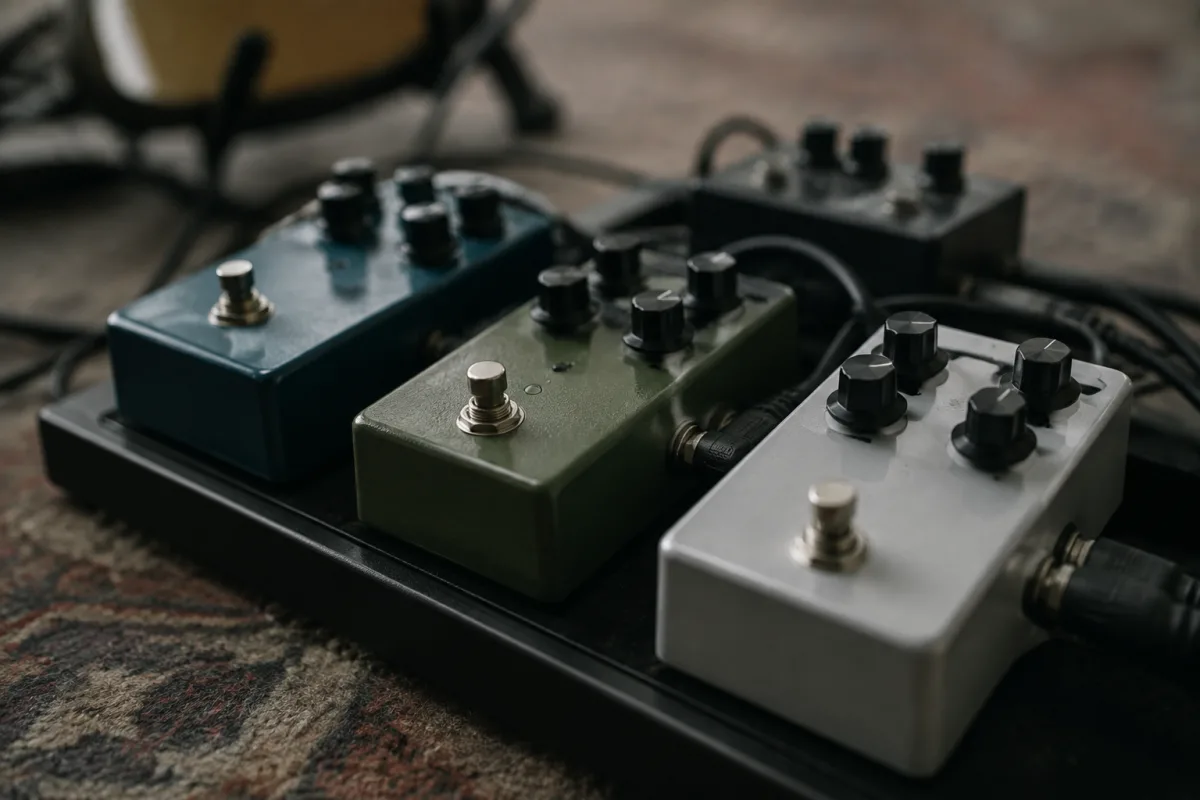
If you’re looking to explore effects pedals without spending a fortune, Behringer guitar pedals are probably in your crosshairs. Behringer makes budget effects that sound better than their price suggests, which makes them perfect for beginners curious about tone-shaping. You won’t get boutique sound quality, but you’ll get genuine effects that inspire experimentation. This guide shows you how to start with Behringer guitar pedals without overthinking it.
Why Behringer Guitar Pedals Are Good for Beginners
Behringer is known for affordable gear. A Behringer effects pedal costs £30–£80, compared to £150+ for equivalent name brands. The reputation? They sound lo-fi-ish but surprisingly usable. For beginners, this is perfect—you get to explore effects, learn how they work and discover what you like, without the guilt if you don’t use them.
The main advantage: Behringer guitar pedals lower the barrier to entry. Curious about distortion? Try a Behringer one for £40. If you hate it, you didn’t lose £150. If you love it, upgrade to a pro pedal later. This experimental approach teaches you what you actually want.
Behringer guitar pedals are also surprisingly durable. They’re used in rehearsal rooms, schools and touring rigs because they survive abuse. As a beginner, you get a pedal that won’t break when you accidentally kick it.
The Best Behringer Guitar Pedals for Beginners
Behringer makes over 50 effect pedals. Start with one of these:
- SF300 Distortion: A classic. Heavy, aggressive, impossible to get wrong. Turn it on and your guitar sounds bigger. Great first distortion pedal. £30–£40.
- OD400 Overdrive: Milder than distortion. Pushes your amp into a driven, crunchy tone without full saturation. Good for rock and blues. £30–£40.
- UC200 Ultra Chorus: Creates the shimmer/width chorus effect. Weird at first, addictive once you dial it in. Teaches you what chorus does. £35–£45.
- FZ1 Fuzz: Thick, buzzy, retro. Less practical than distortion but incredibly fun. Try it and learn why fuzz matters in tone. £40–£50.
- FB1030 Flanger: A swooshing, filtered sound. Less essential than distortion but great for learning modulation effects. £35–£45.
Pick one. Don’t buy five at once. Master one effect, understand how it works, then add another if you want to. This approach teaches you faster than hoarding pedals.
Setting Up Your First Behringer Guitar Pedal
- Connect it: Guitar cable into the input, output to your amp (or next pedal). Simple.
- Power it: Most Behringer guitar pedals use a 9V battery or centre-negative power adapter. A battery works; a power supply saves money long-term.
- Turn on the footswitch: The LED light tells you if the pedal is active. Press it to toggle the effect on and off.
- Adjust the knobs slowly: Most Behringer guitar pedals have 3–5 controls. Start with them at middle positions. Twist one knob at a time and listen to what it does.
That’s the whole setup. Behringer guitar pedals are straightforward.
Understanding Behringer Pedal Controls
Every Behringer guitar pedal has different knobs, but these are common:
- Level/Gain: How much of the effect is applied or how loud it is. Start at 50% and adjust from there.
- Tone: Whether the effect is bright or warm. Experiment to find what suits your guitar and amp.
- Intensity/Drive/Depth: How heavy or extreme the effect is. Low = subtle. High = extreme. Beginners often go full blast; resist that. Subtlety sounds better.
- Speed/Rate: On time-based effects (chorus, flanger, delay), this controls how fast the effect modulates. Slow = smooth. Fast = dramatic.
Don’t memorise this. Just twist a knob and listen. That’s how you learn what it does.
Common Beginner Mistakes With Behringer Guitar Pedals
- Assuming low price means low quality: Behringer guitar pedals are cheap but functional. They sound lo-fi, sure, but lo-fi isn’t bad—it’s just a character. Many great songs use budget gear. Use your ears, not the price tag.
- Running all the knobs at maximum: A Behringer guitar pedal at full intensity usually sounds worse, not better. Start at 50% on all knobs. Most effects sound musical with restraint.
- Buying five pedals at once: You don’t need a pedalboard on day one. Buy one Behringer pedal. Understand it. Then add another. This teaches you what you actually like instead of impulse-buying stuff you’ll never use.
- Expecting professional tone: A £40 Behringer distortion doesn’t sound like a £200 one. But it sounds like a distortion pedal. It does the job. Accept the character and move on.
- Forgetting it’s on: Behringer guitar pedals have an LED that lights when active, but it’s easy to forget during a song. Check visually if you’re unsure.
Behringer vs. More Expensive Pedals: What’s the Difference?
A £60 Behringer distortion and a £200 Tube Screamer both add distortion, but they sound different:
- Behringer: More aggressive, thicker, lo-fi-ish character. Some players love this. Others find it too heavy.
- Expensive pedal: Usually smoother, more refined, more subtle tone-shaping. Higher-quality components mean less noise and more durability.
For beginners, this difference is less important than learning whether you like distortion at all. Start with Behringer. If you love the effect and hate the character, upgrade later. This is smart buying.
Building a Pedalboard With Behringer Guitar Pedals
Once you’ve tried a few Behringer pedals, you might want to combine them. Here’s a simple starter board:
- Input: Guitar cable from guitar
- First pedal: Distortion or overdrive (adds dirt)
- Second pedal: Chorus or reverb (adds space)
- Output: Cable to amp
That’s a complete signal chain. Add more pedals as you understand what you want. A basic pedalboard costs £40–£80. Save it for later—patch cables add up.
Power and Batteries for Behringer Guitar Pedals
Most run on 9V batteries. Batteries last 2–4 months of regular playing. If you use pedals daily, buy a power supply (£15–£30). A single power supply can run 4–6 pedals, saving money and eliminating dead batteries mid-song.
Troubleshooting Your Behringer Guitar Pedal
No sound at all? Check that the cable is plugged in properly at both ends. Try plugging directly into the amp (bypass the pedal) to confirm your guitar works. If it does, the pedal might have a dead battery—replace it or plug in a power supply.
Sound is distorted/clipped? The input level is too high. Lower the gain/level knob or the input gain on your amp.
Effect sounds weak? The level/mix knob might be too low. Turn it up. If that doesn’t help, the pedal might be in bypass—check the LED light.
For a detailed look at the full range of Behringer guitar pedals, see our complete guide to Behringer guitar pedals.
Your First Week With Behringer Guitar Pedals
Day 1: Connect the pedal and explore the knobs. Get comfortable turning it on and off.
Day 2–3: Find settings that sound good to you. Don’t overthink it—trust your ears.
Day 4–7: Use the pedal in actual songs. Notice where it adds to your playing and where it distracts. Decide if you like the effect or if you want to try something different.
By the end of a week, you know whether you want to keep exploring this effect or move on. That’s the whole goal.
Conclusion: Behringer Guitar Pedals Are Experiment-Friendly
Behringer guitar pedals remove the guilt from experimentation. Curious about a fuzz pedal? Try one for £40. Hate it? Move on without remorse. Love it? Great, you discovered something. This exploratory approach is perfect for beginners because you learn what you actually like instead of guessing based on reviews. Start with one Behringer pedal, understand it deeply, and let curiosity guide the rest. That’s how you build a rig that reflects your actual playing style.



Comments