


Behringer Guitar Pedals Buying guide
Behringer Guitar Pedals: A Complete Buyer's Guide
Behringer guitar pedals offer budget-friendly effects without sacrificing sound quality. This guide helps you decide whether Behringer suits your needs and how to choose specific models.
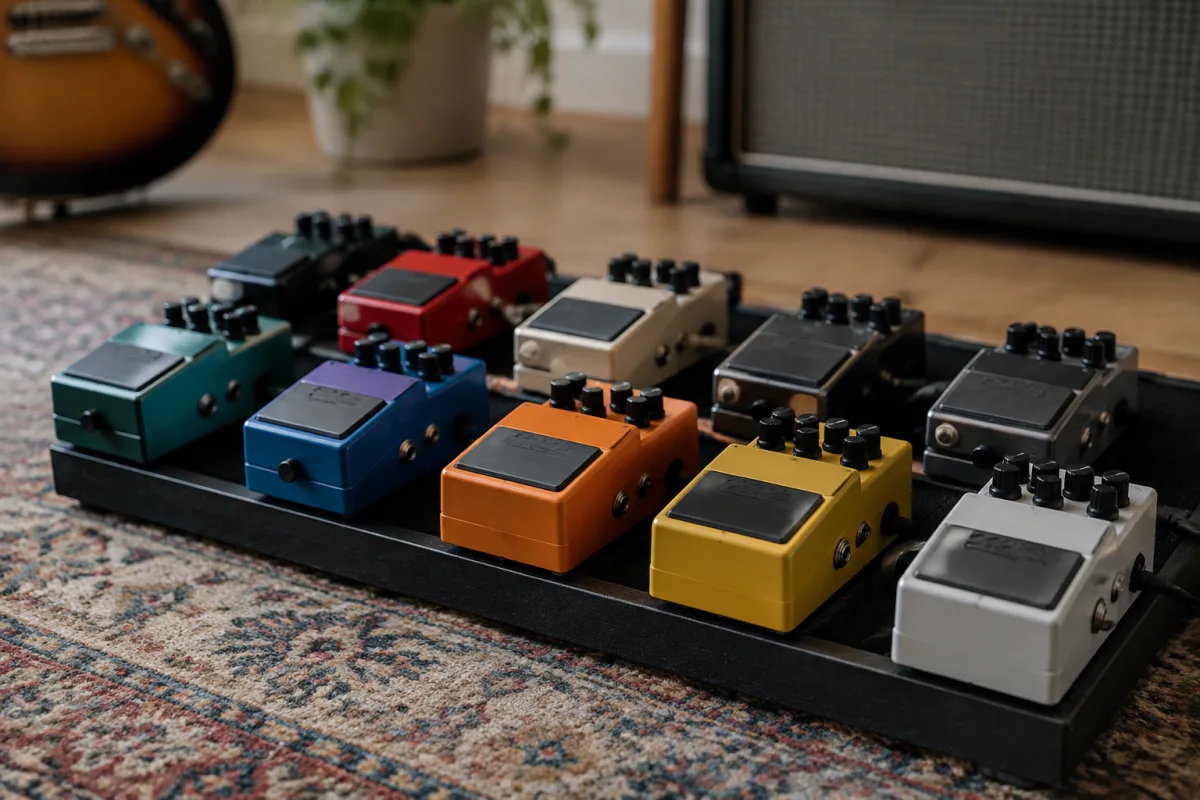
Behringer guitar pedals offer genuine value for budget-conscious guitarists, but "budget" doesn't mean "understanding what you're buying." Many players purchase Behringer pedals expecting boutique-quality effects and feel disappointed because they haven't grasped what these products actually deliver. Others dismiss Behringer out of snobbery despite genuinely appreciating effects at one-tenth boutique pricing. This guide cuts through Behringer guitar pedals preconceptions, helping you decide whether these effects suit your needs and how to select specific models that deliver actual value for your investment.
Understanding Behringer's Position in Guitar Pedal Market
Behringer manufactures budget-friendly effects equipment—synthesisers, mixers, audio interfaces, and guitar pedals—built on a philosophy of delivering professional-grade functionality at mass-market pricing. Their Behringer guitar pedals aren't cheap garbage; they're professionally-engineered effects at 10–30% of boutique brand pricing. The tradeoff is build quality and materials—not sound quality, which often rivals expensive competitors. Understanding this distinction prevents both unrealistic expectations and unfair dismissal.
Behringer Guitar Pedals Product Categories
Behringer manufactures several effect categories, each with different purchasing considerations.
| Pedal Type | Behringer Model | Use Case | Typical Price |
|---|---|---|---|
| Distortion/Overdrive | BD100, BD150, BDI21 | Lead tones, crunch, distortion | £30–£60 |
| Delay | DM100, DM110, DL100 | Echo effects, ambient sound | £40–£80 |
| Reverb | RV100, RV110 | Space and ambience | £40–£80 |
| Modulation | CH100, FL100, PH100 | Chorus, flange, phaser effects | £40–£70 |
| Multieffects | FCB1010, FBV2, X Air | Multiple effects, switching | £100–£400 |
Behringer Guitar Pedals Strengths Worth Understanding
Affordable Experimentation
Many guitarists hesitate purchasing expensive boutique pedals before knowing whether they'll actually use specific effects. Behringer guitar pedals solve this perfectly. Spend £40 on a reverb to test whether reverb suits your playing. If you adore it, upgrade to a boutique model later. If you rarely use it, you've only lost £40. That's genuine freedom to experiment without risking hundreds on unexplored effects.
Reasonable Sound Quality
Behringer distortion, reverb, and delay effects deliver competent sound. They're not indistinguishable from expensive competitors, but they're competent enough for learning, practice, and bedroom recording. Professional touring players seeking signature tones upgrade to boutique gear; bedroom players and learners find Behringer perfectly satisfactory.
Surprising Reliability
Behringer pedals don't fail often. They're not indestructible, but they're sturdy enough for regular playing and survive years of use with normal care. The stereotype of Behringer equipment failing immediately isn't supported by actual user experiences—these pedals simply work.
Behringer Guitar Pedals Limitations
Build Quality Differences
Behringer guitar pedals feel less premium than expensive effects. Plastic construction, smaller footswitches, and simplified controls are obviously visible. If you prioritise tactile, premium feel alongside effect quality, expensive pedals deliver more satisfying physical interaction. If you care solely about sonic results, Behringer limitations matter far less.
Limited Customisation
Complex reverbs and delays offer only basic parameter adjustment on Behringer versions. Boutique pedals often include extensive tweaking options. For guitarists wanting deep sound design capabilities, Behringer pedals feel restrictive. For players wanting straightforward, usable effects, Behringer simplicity is actually an advantage.
Resale Value Reality
Behringer guitar pedals don't hold resale value well. If you buy one, sell it later, you'll recoup only 30–50% of your investment. This matters less if you're buying for long-term use. It becomes significant if you're treating pedal purchases as trial investments before upgrading to boutique gear.
Price Tiers When Buying Behringer Guitar Pedals
Budget Tier: £30–£60
Basic Behringer distortion, overdrive, or single-effect pedals. Ideal for experimentation and learners. Build quality is obvious but adequate. Effects quality is functional.
Mid-Range Tier: £60–£150
More sophisticated Behringer delay, reverb, and modulation pedals. Better user interface, more parameters, occasionally better sound quality. Best value for serious hobbyists.
Premium Behringer: £150–£400
Multieffects units, expression pedals, and complex processors. Here Behringer competes more directly with expensive alternatives. These units deliver impressive functionality at reasonable cost.
Specific Behringer Guitar Pedals Worth Considering
Rather than recommending specific models (products change constantly), evaluate Behringer pedals by application. If you want distortion, evaluate Behringer's distortion-specific models. Comparing models within the same effect category helps identify which Behringer guitar pedals deliver the best value for your specific use.
Common Mistakes Buying Behringer Guitar Pedals
Assuming Budget Pricing Means Budget Quality
Behringer achieves low pricing through volume manufacturing, not inferior components. The distortion effect in a £40 Behringer pedal and a £150 boutique pedal works through identical electronic principles. The difference is refinement, customisation, and build materials—not fundamental effect quality.
Buying Behringer Multi-Effects When You Need Single Effects
Multi-effects boards offer many effects for one price. Tempting, but most guitarists use only 2–3 effects regularly. Buying a complex board to access rarely-used effects wastes money on unused features. Start with Behringer single-effect pedals matching your actual needs.
Expecting Behringer to Replace Boutique Gear on Professional Stages
Behringer guitar pedals suit practice, recording, and casual performance. Professional touring guitarists typically upgrade to more reliable, customisable equipment because they demand features Behringer doesn't prioritise. This isn't a fault—Behringer pedals accomplish a different goal.
Ignoring Used Boutique Alternatives
Before purchasing new Behringer guitar pedals, consider used boutique options at similar pricing. A used Boss, Electro-Harmonix, or MXR pedal often costs as much as new Behringer whilst delivering superior build quality and resale value. Check secondhand market before assuming Behringer is your only budget option.
Integration with Existing Pedalboards
Behringer guitar pedals use standard 9-volt power and 1/4-inch connectors—they integrate seamlessly with any pedalboard mixing Behringer and expensive effects. Sizing is slightly smaller than some premium pedals (they occupy less pedalboard space), which can be advantage or limitation depending on your setup. Verify physical dimensions if you're integrating Behringer pedals into an existing board.
Testing Behringer Guitar Pedals Before Committing
When possible, demo Behringer pedals before purchasing. Music shops often have them available to try. If buying online, verify return policies allowing testing at home. Behringer effects might feel or sound different in person than in YouTube reviews. Hands-on evaluation prevents surprises.
The Role of Behringer Guitar Pedals in Your Rig
Smart guitarists use Behringer pedals strategically—effect "flavours" they want without premium investment (reverb, delay, modulation), whilst investing in boutique gear for tone-shaping effects (distortion, overdrive) where subtle differences matter more. This hybrid approach maximises both budget-consciousness and sound quality.
For more detailed information about guitar effects equipment and options, explore the complete guide to Behringer guitar pedals.
Making Behringer Work for You
Behringer guitar pedals deliver genuine value when you understand exactly what they are: affordable, competent effects for experimentation, learning, and genuine musical results without premium pricing. Stop expecting them to match boutique gear; appreciate them for what they deliver at their price point. Then use them purposefully in your rig rather than hoping they substitute for expensive alternatives. That's when Behringer guitar pedals become genuinely useful tools rather than budget compromises.


Comments