


Behringer Guitar Effects Pedals article
Behringer Guitar Effects Pedals for Beginners: A Complete Guide
Master Behringer guitar effects pedals as a beginner. Understand signal flow, effect types, and start exploring tone shaping today.
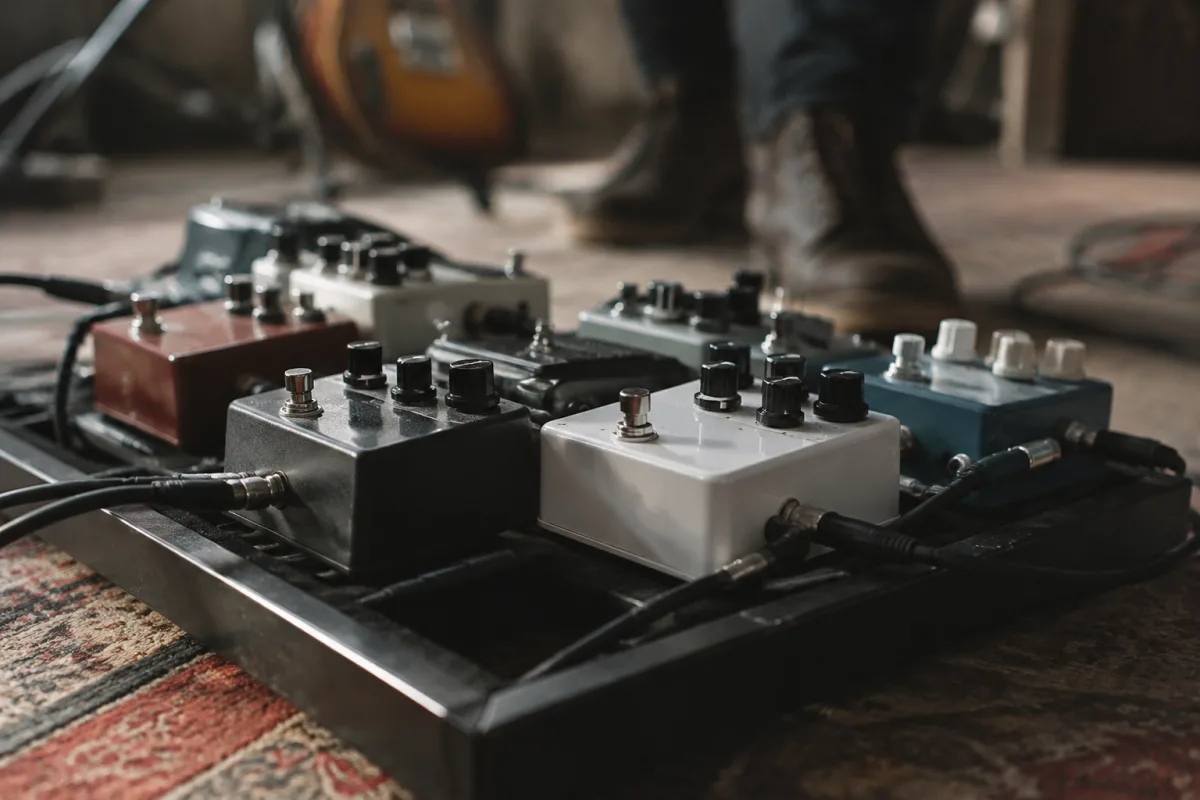
Exploring guitar effects for the first time can feel overwhelming. There are countless brands, countless pedal types, and countless possibilities for shaping your tone. The excellent news: Behringer guitar effects pedals make entering this world affordable and accessible for beginners. For decades, Behringer has delivered quality effects at budget prices, making it possible for every guitarist to experiment with sound-shaping without massive investment. Whether you're interested in distortion, reverb, delay, or any effect in between, Behringer guitar effects pedals offer a perfect starting point for your creative journey. This beginner's guide walks you through everything you need to know about getting started with Behringer effects.
Understanding What Behringer Guitar Effects Pedals Do
Before diving into specific Behringer guitar effects pedals, let's understand what effects actually are. A Behringer guitar effects pedal takes your guitar's signal and transforms it—adding distortion, creating echo and delay, generating modulation effects, or countless other sonic possibilities. The Behringer guitar effects pedal sits between your guitar and amplifier, allowing you to trigger effects by stepping on the pedal foot switch. Understanding this signal chain helps you appreciate why Behringer guitar effects pedals matter and how to incorporate them into your setup. Each Behringer guitar effects pedal effect type creates distinctly different sonic character; exploring them is part of developing your unique voice as a guitarist.
Entry-Level Behringer Guitar Effects Pedals for Beginners
Behringer offers several excellent options for guitarists starting their effects journey. The Behringer guitar effects pedals most beginners start with are usually single-effect units: distortion, overdrive, delay, or reverb. A single Behringer guitar effects pedal costs £20-40, making experimentation financially painless. This affordability means you can try different effects without fearing wasted investment. Many beginners start with a distortion pedal, then add other effects as they discover preferences. This gradual approach lets your Behringer guitar effects pedals collection grow organically. Alternatively, Behringer guitar effects pedals multi-effects units (all-in-one processors) offer tremendous variety in a single device, though beginner players often find this overwhelming. Start simple with individual Behringer guitar effects pedals; you can always expand later.
Connecting Your Behringer Guitar Effects Pedals
Setting up Behringer guitar effects pedals is straightforward. The basic signal chain goes: guitar into your first Behringer guitar effects pedal, then from that pedal into the next, and finally from your last Behringer guitar effects pedal into your amplifier. This daisy-chain connection is the standard setup. Use standard quarter-inch instrument cables to connect your Behringer guitar effects pedals. Many beginners worry about signal loss or degradation when using multiple Behringer guitar effects pedals; this is generally only an issue with extremely long cable runs or low-quality cables. Quality guitar cables work perfectly fine with Behringer guitar effects pedals, and the connection process is genuinely simple.
Essential First Behringer Guitar Effects Pedals Types
Different Behringer guitar effects pedals serve different purposes. A distortion or overdrive pedal adds aggression and sustain to your tone. This is often the first Behringer guitar effects pedal beginners purchase because it dramatically transforms the guitar sound. A delay pedal creates echo effects, adding space and dimension. Behringer guitar effects pedals with delay are intuitive and rewarding for beginners. A reverb pedal simulates the natural reflection of sound in spaces, adding ambience and depth. Many beginners underestimate how dramatically reverb transforms tone—a quality Behringer guitar effects pedal reverb unit provides surprising musical benefit. Modulation effects (chorus, flanger, phaser) add shimmer and motion. Start with one type of Behringer guitar effects pedal and explore thoroughly before adding others. This focused approach helps you develop real understanding rather than accumulating effects you don't fully use.
Learning Controls on Your Behringer Guitar Effects Pedals
Each Behringer guitar effects pedal type features different controls, but learning them is part of the fun. A typical Behringer guitar effects pedal has a foot switch (enabling/disabling the effect) and knobs controlling parameters like intensity, tone colour, or speed. The Behringer guitar effects pedals manual explains each control's function; read it thoroughly before your first practice session. Spend time experimenting with each Behringer guitar effects pedal control to understand how it affects your tone. Turn knobs gradually and listen carefully; you'll develop intuition for how each parameter shapes sound. This exploratory approach transforms Behringer guitar effects pedals from confusing tools into expressive instruments for shaping your personal tone.
Power Considerations for Behringer Guitar Effects Pedals
Most Behringer guitar effects pedals run on batteries or AC adapters. Battery-powered Behringer guitar effects pedals offer portability but require replacement regularly. AC-powered models need access to electrical outlets but never require battery replacement. Many beginners eventually move toward a power supply that runs multiple Behringer guitar effects pedals simultaneously; this is more convenient than managing individual batteries. Don't stress about power supply initially; use whatever powers your Behringer guitar effects pedals conveniently. As your collection grows, a dedicated power supply becomes worthwhile. Look for models that safely power multiple Behringer guitar effects pedals without noise or signal degradation.
Common Beginner Mistakes with Behringer Guitar Effects Pedals
- Overloading the signal: Too many Behringer guitar effects pedals in one chain can create muddy tone. Start with one or two and add gradually.
- Leaving effects on constantly: Using Behringer guitar effects pedals only when you specifically need them creates more musical interest than constant effect application.
- Ignoring the manual: Behringer guitar effects pedals documentation explains optimal settings. Read it before practice.
- Using low-quality cables: Poor cables degrade your Behringer guitar effects pedals signal quality. Invest in decent quarter-inch instrument cables.
- Excessive distortion stacking: Multiple distortion Behringer guitar effects pedals can create unmusical, chaotic tone. Use distortion deliberately.
- Neglecting the bypass option: Most Behringer guitar effects pedals allow true bypass (complete signal disconnection when off). Verify this feature exists on your Behringer guitar effects pedals.
Building Your Behringer Guitar Effects Pedals Collection Gradually
Rather than purchasing many Behringer guitar effects pedals immediately, build your collection gradually. Start with one effect you're genuinely excited about, then use it in every practice session and performance. Develop genuine mastery rather than collecting options. After a month, if you still find the effect musically useful, consider adding a second Behringer guitar effects pedal type. This measured approach prevents gear accumulation you'll never fully use. Many successful musicians work with surprisingly few Behringer guitar effects pedals because they've mastered the ones they own.
For comprehensive exploration of effect types and creative applications, visit our complete guide to Behringer guitar effects pedals, which covers advanced tone-shaping and genre-specific effects combinations.
Your Effects Journey Begins
Behringer guitar effects pedals open a universe of sonic possibility. Start simply, experiment fearlessly, and let your ears guide your choices. There's no "right" collection of Behringer guitar effects pedals—only what works for your music and your ears. Enjoy exploring the creative possibilities; the effects that resonate with you personally are always the best choices.


Comments