


Arturia Vintage Collection article
Arturia Vintage Collection for Beginners: A Complete Guide
A beginner's welcome to Arturia Vintage Collection. Learn your first steps, understand the basic controls, avoid common mistakes, and find courage in the learning journey.
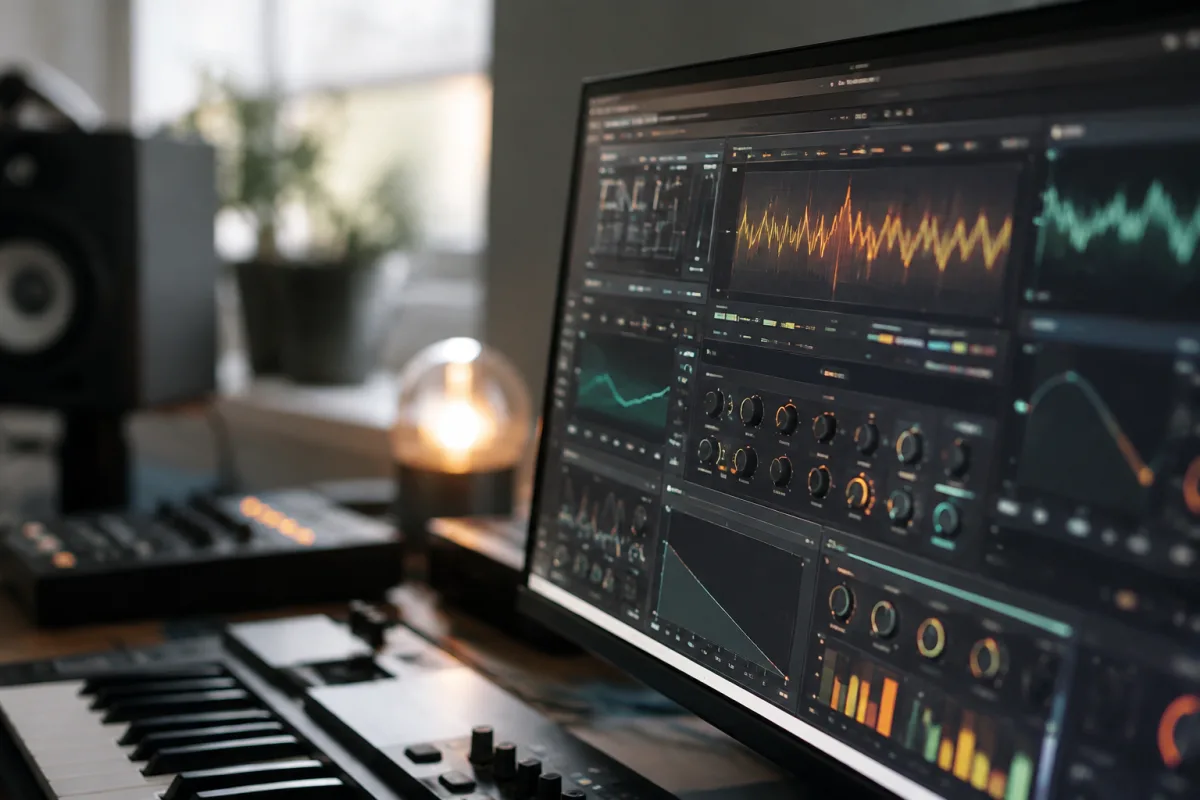
If you're nervous about diving into synthesis, Arturia Vintage Collection offers the gentlest possible entry point. These are software recreations of legendary synthesizers, and what makes them perfect for beginners is that someone else has already figured out the complexity. You get instruments that sound extraordinary right out of the box, with presets that teach you what's possible, and a learning curve that doesn't punish curiosity. You can start making sounds that inspire you within minutes, not months.
What Exactly Is the Arturia Vintage Collection?
Arturia Vintage Collection is a growing family of software synthesizers—VSTs running inside your DAW—that model classic, iconic instruments. Think Moog Minimoog (the synthesizer that defined electronic music), Buchla (the weird, wonderful modular instrument), ARP 2600 (compact and creative), and others. The beauty for beginners is that someone at Arturia spent years studying the original hardware, measuring circuits, recording sounds, and then rebuilding it in software. You're not starting from scratch with a blank synthesizer. You're learning on instruments with character, history and proven sonic personality.
Each Arturia Vintage Collection plugin includes hundreds of presets—starting points programmed by synthesizer experts. Want that warm, vintage bass? There's a preset. Fat pad with movement? Another one. Electronic lead with retro character? Covered. These aren't meant to be permanent—they're springboards for exploration. The real magic happens when you tweak them, experiment, and start building sounds yourself.
Your First Steps With Arturia Vintage Collection
Start with just one instrument. Don't buy the whole Vintage Collection bundle immediately. Pick one that calls to you—the Minimoog if you love classic bass sounds, the Juno-106 if you want lush, warm pads, the Prophet-VS if you're drawn to digital character. Learning one synthesizer properly teaches you principles that transfer to all others. One instrument, fully understood, beats five instruments understood halfway.
Load your chosen Arturia Vintage Collection plugin into your DAW. Open it. Spend an afternoon just playing presets. Don't change anything. Listen to what's possible. Play notes, hold chords, watch the graphics. This isn't aimless—you're training your ear to recognise sonic character and learning what synthesis can do. This step alone is worth an hour. Many beginners skip this and rush to tweaking; resist that urge.
Then pick a preset you love. Play it. Now change one thing. Just one. Maybe adjust the cutoff filter frequency (usually a big knob labelled Filter or Cutoff). Listen. Adjust further. Notice how the sound changes? That's synthesis fundamentals in real time. You're not reading textbooks—you're feeling how oscillators, filters and envelopes work together. Your Arturia Vintage Collection setup makes this tactile and intuitive.
Understanding the Common Controls
Every Arturia Vintage Collection synthesizer shares fundamental controls, which is reassuring for beginners. Oscillators generate raw sound. You'll see knobs for Oscillator 1, Oscillator 2, maybe a sub-oscillator. These generate waveforms—sawtooth, square, triangle, pulse. Don't memorise this; just experiment. Each waveform sounds different; play with them.
The Filter (usually labelled Cutoff and Resonance) is where magic happens for beginners. A high cutoff equals a bright, open sound. Lower it and things get dark, woody, or mysterious. Resonance adds emphasis around the cutoff frequency; higher resonance = more coloration. These two knobs alone let you shape sounds dramatically. Most presets in your Arturia Vintage Collection modulate the filter over time using the envelope (see below), which is why sounds evolve rather than staying static.
The Envelope controls how a sound evolves from the moment you press a key until you release it. Attack is how long the sound takes to reach full volume (quick attack = punchy; slow attack = gentle swells). Decay is how long it drops from peak to sustain level. Sustain is the level it holds while you're holding the key. Release is how long it takes to fade after you release the key. These four controls shape the "feel" of every sound in your Arturia Vintage Collection.
LFO (Low-Frequency Oscillator) adds movement. Set it to modulate the cutoff frequency and you get wobble and character. Set it to modulate pitch and you get vibrato. Most Arturia Vintage Collection presets use LFO subtly, which is why they sound alive rather than static. Again, resist the urge to understand this theoretically. Turn LFO on in your Arturia Vintage Collection, tweak rate and depth, hear the effect. That's education.
Common Beginner Mistakes to Avoid
The first mistake is trying to understand synthesis theory before playing. Don't read synthesizer manuals front to cover. Play first, understand second. Your Arturia Vintage Collection setup is your textbook, not the PDF. Hands-on learning sticks far better.
The second is adjusting too many things at once. Change one control, hear the result, change another. If you tweak five knobs in succession and hate the result, you won't know which change caused the problem. One change at a time teaches you genuine cause and effect. This seems obvious but beginners constantly violate it.
The third is assuming your Arturia Vintage Collection preset is final. Every preset is a starting point. The joy of synthesis is taking something that sounds good and making it yours. Tweak away. Save your versions. You're not breaking anything—synthesis is exactly this process of iteration and discovery.
The fourth mistake is comparing yourself to expert synthesizer designers. Someone published a video of a stunning pad sound they built with the same Arturia Vintage Collection plugin you're using. You won't build that same sound immediately. That's fine. They've had months or years of practice. Your job is to enjoy the journey, not match mastery. Every small sound you create teaches you something.
Encouraging Yourself Through the Learning Curve
Synthesis seems daunting from the outside. Everyone who's done it for years makes it sound harder than it actually is. Here's the truth: you can make genuinely good sounds within your first session using Arturia Vintage Collection presets and one hour of experimentation. You'll feel accomplished. You'll hear possibility. That momentum carries you forward.
Join communities. Arturia users forums, Reddit's synthesizer subreddits, Discord servers—real people using Arturia Vintage Collection share presets, techniques and encouragement. You're not alone, and beginners asking basic questions get warm, helpful responses far more often than not.
Record everything you create, even the failed experiments. Listen back later. You'll notice progress you didn't recognise in the moment. That feedback loop is incredibly motivating. Your Arturia Vintage Collection journey becomes visible.
Remember that synthesis is genuinely accessible now. Fifty years ago, synthesizers cost thousands and required degrees to operate. Your Arturia Vintage Collection plugin costs less than a good lunch and puts legendary instruments in your hands. That's extraordinary. Enjoy that privilege.
For deeper context on Arturia's instruments and the broader landscape of synthesizers they recreate, read the complete guide to Arturia Vintage Collection, which covers the brand, what each plugin offers and how it all fits together.
Starting your synthesis journey with Arturia Vintage Collection is genuinely encouraged. These are approachable, inspiring instruments that reward curiosity rather than punish it. Play, experiment, trust your ear, and you'll surprise yourself with what you create.


Comments