


Sizing a Violin Buying guide
Sizing A Violin: A Complete Buyer's Guide
Sizing a violin correctly is critical for comfortable playing and proper technique. Measure arm length, understand the fractional sizes available, and try before you buy.
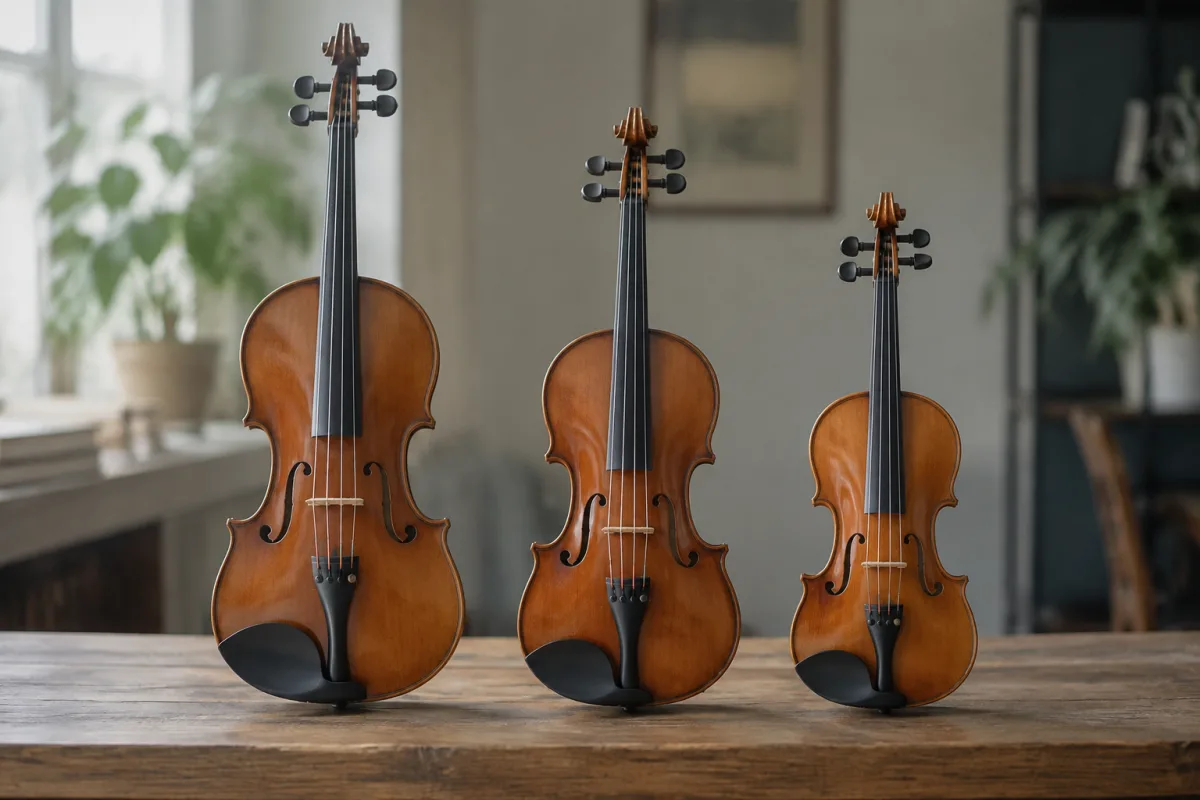
Sizing a violin correctly is one of the most crucial decisions a buyer will make—perhaps more important than the quality of the instrument itself. A violin that's too large will be exhausting to play; one that's too small will limit your progress and may damage your playing posture for years. This buying guide to sizing a violin explains how to measure correctly, what sizes exist, and how to choose the right fit for your body and circumstances.
Understanding the Standard Sizes
Violins come in a series of standardised sizes, expressed as fractions. A full-size adult violin is 4/4; everything else is measured as a proportion of that.
- 4/4 (full-size) — About 36 inches long. The standard for teenagers and adults with arm length 23 inches or more.
- 3/4 — About 33 inches long. For children roughly 9–12 years old, or adults with shorter arms (21–23 inches).
- 1/2 — About 30 inches long. For children aged 5–9, or those with arm length 18–21 inches.
- 1/4 — About 28 inches long. For very young beginners, typically 3–5 years old, arm length under 18 inches.
- 1/8, 1/10, 1/16 — Fractional sizes for exceptionally small children. Rarely needed for beginners outside early childhood music programmes.
The fractional names are merely convention; they don't represent the exact proportions of a full-size violin. What matters is that each size has a standard body length and string length that fits a particular arm reach.
How to Measure for the Right Size
Arm length is the most reliable measurement. Here's how to measure it accurately:
- Have the person stand with their left arm outstretched, fingers relaxed (not fully extended or bent).
- Measure from the centre of the chest, along the inside of the arm, to the base of the wrist (where the wrist meets the hand).
- Compare this measurement to the size chart below to find the right fit.
Sizing by Arm Length
- Under 18 inches: 1/4 size
- 18–21 inches: 1/2 size
- 21–23 inches: 3/4 size
- 23+ inches: 4/4 size
These ranges are guidelines, not absolutes. A 23-inch arm might play comfortably on either a 3/4 or a 4/4 depending on hand size and playing style. When in doubt, try both sizes before buying.
Key Specs to Check When Sizing
Beyond arm length, a few other factors influence sizing choices.
Body Length
This is the main physical measurement. A 4/4 body is typically 35.5–36.5 inches; a 3/4 is around 33 inches. Body length directly correlates with the stretch required to play higher positions on the fingerboard. Undersize, and you're cramped and limited; oversize, and you'll develop tension reaching across the neck.
String Length and Bridge Height
Longer strings (on larger violins) require more bow pressure and arm extension. Younger children tire quickly with full-size strings. The bridge height (distance from the fingerboard to the top of the bridge) also varies with size. A proper bridge height ensures playability without cramping the hand.
Weight
Smaller violins are lighter and less tiring to hold for young beginners. A 4/4 weighs roughly 14–16 ounces; a 1/2 might weigh 8–10 ounces. Weight matters more for younger players whose muscles are still developing.
Common Pitfalls When Sizing
- Buying "to grow into." A violin that's too large is uncomfortable and discourages young learners. The child will develop poor posture and tension trying to reach across an oversize neck. Buy the right size now; upgrade in 2–3 years as they grow.
- Relying only on age. Age is a rough guide, but arm length is more reliable. A tall 8-year-old may need a 3/4, while a smaller 10-year-old might still fit a 1/2. Measure first.
- Ignoring hand size. Some children have smaller hands relative to their arm length. They may play more comfortably on a fractional size even if their arm length suggests otherwise. Try before you buy.
- Assuming you'll know the right size without trying. Rental shops and reputable dealers will let you try multiple sizes. Use this opportunity to play or have a teacher assess fit. Online shopping for sizing is risky.
- Neglecting posture. Once sized, ensure the child's teacher checks posture from day one. A correct sitting position and hold prevent years of problem-solving later.
Price and Value by Size
Instrument cost sometimes varies by size, but not always predictably.
- Budget fractional sizes (1/4 to 1/2) — £100–£300. Often good value; many rental-grade models offer solid playability at this price. Buying new or used is both viable for beginners.
- Budget 3/4 and 4/4 — £150–£400. Entry-level sizes. Quality at this price is acceptable for learning but may show limitations as the player advances.
- Mid-range (all sizes) — £400–£1,200. Better tonal quality, more durable construction, and finishing. Most serious amateurs and semi-professionals play in this tier.
- Premium and professional — £1,500+. Handcrafted instruments and vintage masterpieces. Aimed at advanced amateurs, professionals, and collectors.
For young beginners, a rental is often the smartest choice: you can exchange sizes as the child grows without investing heavily. Once a child demonstrates commitment (usually after 2–3 years), buying a quality instrument makes more sense.
When to Upgrade Sizing
A child typically outgrows a fractional size every 2–3 years. Watch for signs:
- The child complains the violin feels cramped or too small.
- Their arm length has increased beyond the upper limit for that size.
- They're having difficulty reaching higher positions cleanly.
- A teacher notes posture problems due to the instrument being undersized.
When upgrading, allow time for adjustment. Moving from a 1/2 to a 3/4 (or 3/4 to 4/4) requires retrained muscle memory and intonation habits. A good teacher will help ease the transition.
Buying Checklist for Sizing
- Measure arm length accurately (chest to wrist, inside of arm).
- Try multiple sizes before deciding, ideally with a teacher present.
- Check that posture feels natural and the chin rest sits comfortably.
- Verify that the highest fret is reachable without excessive stretch.
- Confirm that the bridge height and string height are appropriate for hand size.
- Don't buy oversized expecting growth; buy the right fit for now.
- Consider renting fractional sizes for young beginners to avoid re-purchasing as they grow.
Bottom Line
Sizing a violin is primarily about measuring arm length, trying the candidate sizes in person, and ensuring posture feels natural and unstrained. Young beginners should play the size that fits them right now, not a size they'll grow into. For more background on how violins are constructed and tuned, check out our complete guide to sizing a violin.


Comments