


E Bow Guitar article
E Bow Guitar for Beginners: A Complete Guide
Using an E-Bow guitar for the first time feels like breaking the rules—because you are. This beginner's guide demystifies the tool and builds confidence to explore.

Using an E-Bow guitar tool for the first time can feel like you're breaking the rules of how guitars work—because you are, in the best possible way. The E-Bow is a handheld electronic bow that causes guitar strings to sustain and vibrate like a violin, creating tones that seem impossible from a guitar. If you're curious about expanding your sonic palette beyond traditional picking and strumming, the E-Bow guitar opens entirely new expressive territory. This beginner's guide demystifies the tool, walks you through your first session, and builds confidence to experiment with extended techniques.
What Is an E-Bow, and Why Use One on Guitar?
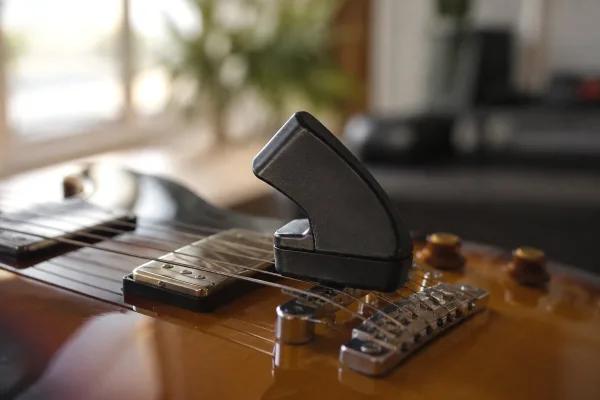
An E-Bow guitar device uses electromagnetism to induce sustained vibration in guitar strings. You hold it near a string, activate it, and the string vibrates continuously—sustaining indefinitely without you plucking or strumming. The result is a singing, violin-like tone that captivates listeners. Violinists have used bows for centuries to create this effect. The E-Bow guitar brings that expressive possibility to electric guitar.
Why would a beginner be interested in an E-Bow guitar? Because it's liberating. Traditional guitar technique focuses on attack and decay—pluck the note, let it ring, it fades. An E-Bow guitar eliminates decay. You're exploring texture, sustain, and dynamic expression in ways a pick never touches. For guitarists curious about new sounds, this is inspirational. For players interested in ambient music, film scoring, or experimental tones, an E-Bow guitar is essential.
Understanding Your E-Bow Guitar Device: How It Actually Works
The E-Bow guitar is smaller than you'd expect—roughly the size of a thick pen. Inside is a small magnet and circuit that creates an electromagnetic field. When you hold the E-Bow guitar near a vibrating string, that field interacts with the string's magnetic properties (especially on steel strings), inducing continuous vibration.
You don't need to understand the physics deeply. Just know this: the E-Bow guitar works best on steel strings (electric guitars, acoustic electrics with steel strings). It performs poorly or not at all on nylon strings. And battery power is essential—dead batteries mean no field, no vibration.
That's it. Simple device, powerful effect.
Your First E-Bow Guitar Experience: The Three-Step Learning Curve
Step 1: Power and positioning. Insert fresh batteries (usually 2xAA). Turn on the E-Bow guitar via the switch (you'll hear or feel a slight hum indicating activation). Hold it near a single string, roughly where a pick would strike. The optimal distance is about 1–2mm from the string. Too close and the string hits the casing. Too far and no vibration occurs. Adjust distance until you feel the string vibrating against the device.
Step 2: Activate sustained vibration. Once the string vibrates, move the E-Bow guitar very slowly up and down the string (like a violin bow). This controls the intensity of vibration and pitch character slightly. The string sustains indefinitely as long as the E-Bow guitar is active and positioned correctly.
Step 3: Release and transition. To stop the vibration, simply move the E-Bow guitar away from the string. The vibration stops immediately. This gives you precise control over attack and release.
That's genuinely all you need for a functional first session with an E-Bow guitar.
Tone Character and Expression with an E-Bow Guitar
An E-Bow guitar produces singing, sustained tones reminiscent of a bowed violin or cello. The character is warm, ethereal, and expressive. Unlike distortion or overdrive, which add aggression, an E-Bow guitar adds depth and texture.
Expression comes from how you move the device. Fast movement up and down intensifies vibration. Slow, controlled movement creates delicate, breathy tones. Tilting the device slightly changes harmonic content. These subtle variations give you incredible control over tone shaping—far more than a pick alone provides.
Common Beginner Mistakes with E-Bow Guitar Technique
These are slip-ups that catch newcomers:
Mistake: Holding the E-Bow guitar too far from the string. If vibration won't activate, the device is probably too far away. Closer than you think is usually correct. Adjust by millimetres. A tiny distance change makes huge differences.
Mistake: Holding the E-Bow guitar perpendicular to the string. Positioning matters. The device works best when held roughly parallel to the string, the way a violin bow would approach. Odd angles reduce effectiveness.
Mistake: Trying an E-Bow guitar on nylon strings. It won't work. The device relies on magnetic interaction with steel strings. Nylon strings contain no ferrous material for the magnetic field to engage. Use an E-Bow guitar only on steel-string instruments. This is a hard limit, not a challenge to overcome.
Mistake: Ignoring battery condition. Weak batteries produce weak field and erratic vibration. Always use fresh batteries for best results. Keep spares handy. An E-Bow guitar powered by dying batteries is frustrating and unreliable.
Mistake: Excessive motion and vigour. Beginners often move the E-Bow guitar too rapidly or aggressively, creating chaos instead of expression. Start slow. Gentle motion creates beautiful tones. Save vigorous playing for later, once you understand how the device responds to subtlety.
Mistake: Using an E-Bow guitar on every note. Novelty wears off fast if you use it constantly. The power of the E-Bow guitar is contrast. Play traditionally, then switch to E-Bow guitar for specific passages or solos. This creates impact.
Musical Applications for E-Bow Guitar Beginners
Start by exploring simple melodies on a single string using your E-Bow guitar. Simple ideas played with expression sound better than complex ideas played mechanically. Slow, sustained passages show off the device. Ambient soundscapes benefit massively from E-Bow guitar textures.
As you develop confidence, layer sustained tones over traditionally played rhythm parts. An E-Bow guitar lead over a picked rhythm creates compelling contrast. This combination defines many ambient and experimental arrangements.
Amplification and Effects with Your E-Bow Guitar
An E-Bow guitar can be used through any guitar amplifier just as you'd normally play. However, it truly shines with effects. Reverb and delay extend the sustained tones beautifully. Chorus or modulation adds dimension. Distortion or fuzz creates aggressive E-Bow guitar textures (experimental but effective). Explore slowly. Effects can enhance or completely transform E-Bow guitar character.
Maintenance and Care for E-Bow Guitar Devices
The E-Bow guitar is physically robust but requires basic care:
Replace batteries regularly. Weak batteries frustrate. Keep the device dry; moisture damages electronics. Store it in a padded pouch. Avoid dropping or excessive impact. Clean it occasionally with a dry cloth. These simple habits keep your E-Bow guitar functional for years.
The Learning Experience: Building Confidence with New Technique
Your first week with an E-Bow guitar involves experimentation. You'll produce unexpected tones, occasionally accidentally create feedback (play away from the amplifier if this happens), and gradually develop a feel for the device. This is exactly the right approach. The E-Bow guitar rewards experimentation and exploration.
Knowing Your Limitations and Embracing Them
An E-Bow guitar can't do everything. It's not suitable for fast, intricate lead passages (though players occasionally use it that way for effect). It can't replicate all string techniques. It has a specific, narrow purpose: sustained, expressive tones. Accept this limit and work within it. The best E-Bow guitar players understand it as a specialised tool, not a general guitar technique.
Inspiration and Creativity
The E-Bow guitar has inspired everyone from experimental prog rockers to ambient electronic pioneers. Research how professionals use it. Listen to recordings. This opens your ears to possibilities beyond obvious beginner approaches. Inspiration drives development faster than instruction alone.
Moving Forward
The complete guide to e-bow guitar explores advanced techniques, signal processing, and professional applications once you're ready to deepen your knowledge. But for now, focus on simple melodies, understanding device positioning, and enjoying the novelty and expression the E-Bow guitar brings to your playing.
A Tool for Sonic Exploration
The E-Bow guitar is a permission slip to break conventional guitar technique and explore new sonic territory. It's liberating, inspiring, and creative. Every guitarist benefits from occasionally stepping outside traditional playing, and the E-Bow guitar makes that step easy and rewarding. Your journey with this tool is about expanding what your instrument can do and what you can express through it.





Comments