


Sample Rate Buying guide
Sample Rate: A Complete Buyer's Guide
Confused about sample rate? This practical guide helps you choose between 44.1 kHz, 48 kHz, and 96 kHz based on your specific production needs, budget, and goals.
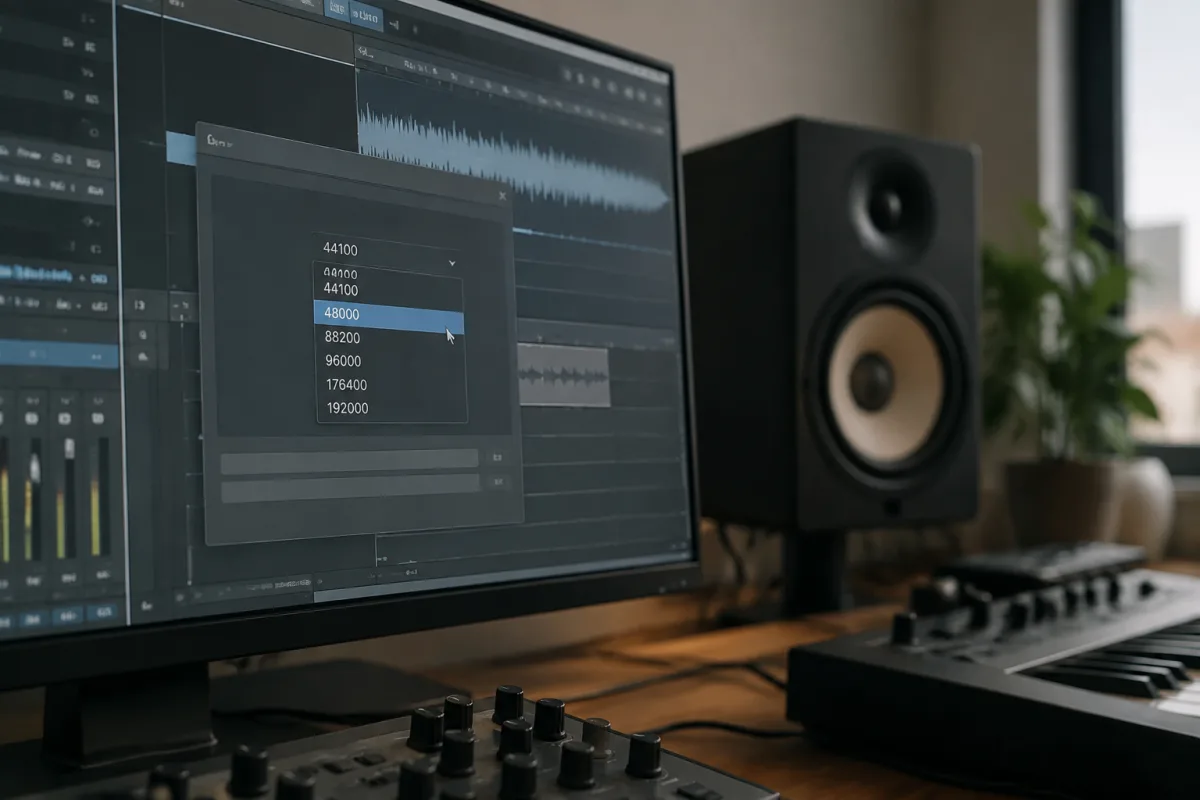
Setting up a new recording project or upgrading your studio? Sample rate decisions matter more than you might think, but they're often misunderstood. Getting it right at the start saves you frustrating conversions and quality compromises later. The good news is that for most producers and musicians, the choice is straightforward—you just need to understand what sample rate actually does and what the industry standards really deliver.
Understanding Sample Rate: The Basics You Need
Sample rate is the number of times per second your audio interface captures a snapshot of sound. Measured in kilohertz (kHz), it's fundamental to how digital audio works. Think of it like film frames—more frames per second capture finer detail. The same principle applies to audio: higher sample rates capture more frequency information, though the audible difference depends on your monitoring setup and how critical your ears are.
The Nyquist theorem tells us that a sample rate captures frequencies up to half its value. A 44.1 kHz sample rate captures up to roughly 22 kHz, which covers the human hearing range (typically 20 Hz to 20 kHz). A 48 kHz rate captures up to 24 kHz. A 96 kHz rate captures up to 48 kHz—well beyond human hearing, but with advantages in production workflows.
The Standard Options for Your Production Setup
Most professional and semi-professional work happens within these sample rates:
- 44.1 kHz: The CD standard since the 1980s. Perfect for music destined for streaming, download, or CD release. Many streaming platforms convert everything to 44.1 kHz anyway. Hardware is widely available and affordable.
- 48 kHz: The video standard and increasingly common in professional studios. Works beautifully for music production. Offers a tiny step above 44.1 kHz, with negligible audible difference for most ears, but slightly better headroom for processing.
- 96 kHz: Used in mastering, high-end production, and technical recording work. Provides more breathing room for extensive processing and filtering. True sonic benefit requires excellent monitoring equipment to hear. Doubles your storage and CPU requirements.
- 192 kHz: Rare in practical production. Marketing-driven more than sonically necessary. Only consider this if mastering for cinema, Dolby Atmos, or specific commercial requirements.
What Actually Matters When Choosing
Before you overthink this, ask yourself these questions:
- What's your final destination? Streaming platforms use 44.1 kHz. YouTube accepts multiple rates but converts. Film and video work demands 48 kHz. Mastering for vinyl? 44.1 kHz. This single question often determines your choice.
- What does your interface support? Most modern interfaces handle 44.1, 48, 96, and sometimes 192 kHz. Check before you buy. Older budget interfaces might max out at 48 kHz.
- What's your monitoring setup like? Hearing genuine benefits from 96 kHz requires quality studio monitors, a treated room, and trained ears. Laptop speakers and untreated bedrooms won't reveal much difference between 44.1 and 96 kHz.
- Are you collaborating with others? If you're receiving stems or files from other producers, matching their sample rate is essential. Mismatched rates create sync issues and quality loss during conversion.
The Practical Buying Guide
For bedroom producers and hobbyists: Go 44.1 kHz or 48 kHz. The difference between them is genuinely negligible. Many prefer 48 kHz because it's the video standard and offers subtle processing headroom. You won't hear meaningful difference, but you eliminate potential workflow problems. This suits 90% of bedroom producers perfectly.
For professional recording/mixing: Choose 48 kHz for general work or 96 kHz if you're doing extensive processing or expect high-end mastering later. 48 kHz is the safe professional standard—widely accepted, clearly audible to trained ears with proper monitoring, and doesn't bloat file sizes. 96 kHz makes sense if you're recording live instruments, doing heavy synthesis processing, or working on premium commercial projects.
For mastering houses: Ask your mastering engineer. If they don't have a preference, 96 kHz is increasingly standard. But many excellent mastering engineers work at 48 kHz or even 44.1 kHz and deliver stunning results.
For film/video work: 48 kHz is the standard. Your NLE expects it, your deliverables require it. This decision is already made.
Common Pitfalls to Avoid
Don't fall for these mistakes:
- Buying expensive gear assuming higher sample rates sound better: They don't—not reliably, not without proper monitoring. Save money elsewhere and invest in acoustic treatment instead.
- Recording at 192 kHz because "more is always better": It wastes storage, slows your CPU, complicates plugin compatibility, and delivers no practical benefit for most music. The original recording is still limited by your microphones and preamps—they're the real bottleneck.
- Ignoring your delivery platform: If your music ends on Spotify, it's being delivered at 44.1 or 48 kHz. Recording at 192 kHz adds no audible benefit and creates unnecessary conversion steps.
- Mismatching rates in a project: One track at 44.1 kHz and another at 48 kHz in the same DAW creates phase issues and quality loss. Pick one at the start and stick to it.
- Buying interfaces with restricted sample rate support: Cheap interfaces sometimes max out at 44.1 or 48 kHz. If you think you might work at 96 kHz later, spend a bit more upfront for an interface supporting it—upgrading is annoying and expensive.
The Buying Process: Step by Step
- Define your goal: What are you recording? Where will it live? Who will hear it?
- Match your platform: Streaming? 44.1 or 48 kHz. Video? 48 kHz. Cinema? 48 kHz or 96 kHz.
- Check your interface specs: Does it support your chosen rate? Does it support it reliably (some budget gear has quirky issues at certain rates)?
- Consider your workflow: Will you be receiving files from collaborators? Match their rates. Will you be exporting stems? Plan for eventual conversion.
- Set it in your DAW before recording: Changing sample rate mid-project requires bouncing, exporting, and re-importing—tedious and potentially quality-compromising. Get it right at the start.
- Stick with it: Unless there's a compelling reason to change, stay consistent throughout your mixing and mastering process.
Equipment Recommendations by Budget
Budget interfaces (£50-150): Usually support 44.1 and 48 kHz reliably. Some support 96 kHz. Check reviews for reliability at higher rates. Perfect for getting started.
Mid-range interfaces (£150-500): Solid support for 44.1, 48, and 96 kHz. Some support 192 kHz. This is where you get genuine reliability and low-latency performance. Good value for serious producers.
Professional interfaces (£500+): Full sample rate support from 44.1 to 192 kHz, often with switchable clock modes. Rock-solid performance. Only necessary if you're doing mastering-grade work or running large sessions regularly.
Making Your Final Decision
If you're still unsure: start at 48 kHz. It's the Goldilocks choice—exactly what professional studios use for general work, supported universally, future-proof, and no audible compromise versus higher rates for typical production environments. As your skills and requirements grow, you'll naturally understand when and why to use 96 kHz or other rates.
For deeper insight into how sample rate affects your entire workflow and what professional standards really require, read the complete guide to sample rate. That article covers advanced considerations and technical details once you're ready to get into the weeds.
Your sample rate choice is important, but it's not mystical. Armed with these practical guidelines, you can set up your studio confidently and focus on what really matters: making great music.



Comments