


One Shot Samples article
One Shot Samples for Beginners: A Complete Guide
One-shot samples are individual, unlooped sounds you layer to build custom arrangements. Learn how to find them, use them, and avoid the common mistakes.
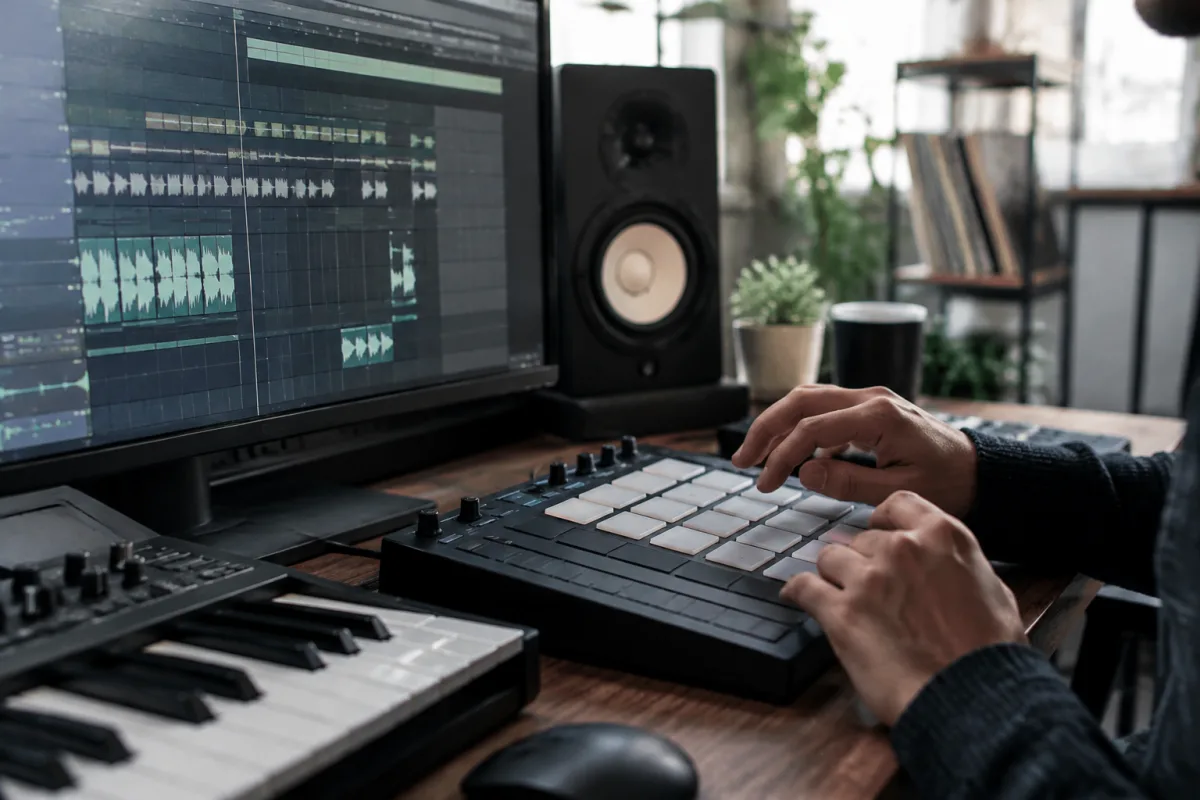
What Are One-Shot Samples?
A one-shot sample is a single, unlooped audio file—usually a drum hit, bass pluck, stab, or vocal snippet. Unlike loop packs that contain repeating patterns, one-shots are isolated sounds you layer and arrange freely. They're the building blocks of modern music production. For beginners, one-shots are liberating: you get professional-quality sounds without needing to record your own or spend hours sound-designing.
Why Beginners Love One-Shots
Recording a kick drum that sounds good requires a proper mic, decent room acoustics, and mixing skill. Downloading a one-shot kick? Drag it onto a track and you're done. The same applies to bass, snares, cymbals, brass stabs, vocal chops. A quality one-shot collection gives you instant access to sounds that would take professionals hours to capture or create.
They're also forgiving. Don't like a sound? Delete it and try another. Want to use the same kick throughout your track? Copy it as many times as you need. One-shots remove all the gatekeeping around "real" recording and let you focus on arrangement and creativity.
One-Shots vs. Loops: What's the Difference?
A loop is a repeating pattern—a two or four-bar drum break, a bass groove, a synth motif. Play it and it repeats endlessly. Useful for establishing rhythm instantly, but less flexible. A one-shot is a single event—a kick, a snare, a vocal "yeah"—that you trigger individually. This lets you build custom arrangements at any tempo without time-stretching.
Most professionals use both. One-shots for custom arrangements; loops for instant inspiration and layering underneath. Start with one-shots if you want total creative control.
Finding Quality One-Shot Collections
Look for packs that match your genre. A "Trap Drum One-Shots" collection contains hundreds of kicks, snares, hi-hats, and percussion samples typical of trap music. "Future Bass Bass One-Shots" gives you squishy, filtered bass sounds. Genre specificity matters: a country drum one-shot sounds out of place in electronic music, so curated packs save hours of hunting.
Sites like Splice, Loopmasters, Sonic Acadine, and specialist producers on Bandcamp all distribute one-shot collections. Many are free; paid packs range from £5–30 and often include hundreds of sounds. Start with free packs to understand what works for you, then explore paid options once you're confident.
Using Your First One-Shot Samples
Here's the beginner's workflow:
- Download and organize. Unzip your one-shot pack to a folder. Create subfolders for different sound types (kicks, snares, basses) so finding sounds is quick.
- Load into your DAW. Most DAWs let you drag samples directly into the arrange window. Alternatively, open them in your sampler plugin.
- Place on your timeline. Layer one-shots over your arrangement. A kick every four beats, snares on 2 and 4, hi-hats filling the spaces.
- Pitch and time-shift as needed. Most DAWs auto-warp one-shots to your project tempo. If a kick sounds slightly wrong in pitch, nudge it up or down a semitone or two.
Common Beginner Mistakes
Don't layer too many one-shots at once. Beginners often stack six kick drums, three snares, and a dozen percussion sounds at the same moment—the result is an incoherent mess. Restraint wins. Use two complementary kicks layered, one snare per beat, and sparse percussion. Leave space.
Don't assume one-shots need no editing. A downloaded kick may be too loud, too quiet, or slightly out of time. Use your DAW's gain envelope, timing tools, and fades to finesse them into place. That's where the craft comes in.
Don't ignore velocity and dynamics. In live drumming, not every kick hits with identical force. If you load the same one-shot every time, it sounds robotic. Subtly vary the volume or slightly offset the timing of repeated sounds. Imperfection sells the illusion.
Building Your First Track with One-Shots
Start simple. Lay down a kick pattern—every beat or every other beat. Add a snare on 2 and 4. Add hi-hats for texture. Once that groove feels solid, layer a bass one-shot or a melodic sample on top. Each piece serves a purpose. As you gain confidence, layer more complex patterns and experiment with different combinations.
Remember: the best arrangement is the one that serves the song, not the one with the most sounds. Professional tracks often sound "empty" when you solo individual layers—that's because they're composed with intention and space, not filler.
For detailed information on how one-shot samples fit into a broader production toolkit and advanced techniques for combining them with other sample types, see our complete guide to one-shot samples.


Comments